

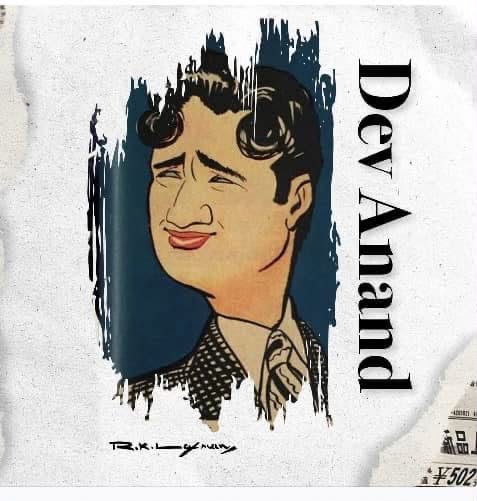
On September 26, Indian cinema pauses to honour the birth anniversary of a man who did not merely act in movies; he defined an era of urban swagger, unbridled optimism, and effortless sophistication. Dharamdev Pishorimal Anand—known simply to generations of film lovers as Dev Anand—was far more than a Matinee Idol. He was the perpetual youth of Hindi cinema, a filmmaker whose tilt of the head, rapid-fire dialogue delivery, and infectious zeal turned life into a continuous romance.
From Lahore to Bombay: The Architect of Dreams
Born in 1923 in Shakargarh (Gurdaspur district, Punjab), Dev Anand’s early life was rooted in academia. After completing his degree in English Literature from the prestigious Government College, Lahore, he arrived in Bombay in the early 1940s with little more than ambition and a passionate mind. Before lighting up the silver screen, he worked in the military censor’s office for a salary of Rs. 165 and as a clerk in an accounting firm.
Drawn to performance by the screen presence of Ashok Kumar, Dev Anand immersed himself in the Indian People’s Theatre Association (IPTA) alongside his elder brother, Chetan Anand. It was Ashok Kumar who spotted the charismatic young man hanging around film studios and gave him his breakthrough in Bombay Talkies’ Ziddi (1948). The film’s resounding success opened the gates to a career that would span over six decades and more than 100 films.
Driven by a vision to control his creative destiny, he co-founded Navketan Films in 1949 with Chetan Anand. Navketan became a cradle of cinematic innovation, introducing audiences to brilliant directors like Guru Dutt and Vijay Anand, and launching iconic stars such as Waheeda Rehman.
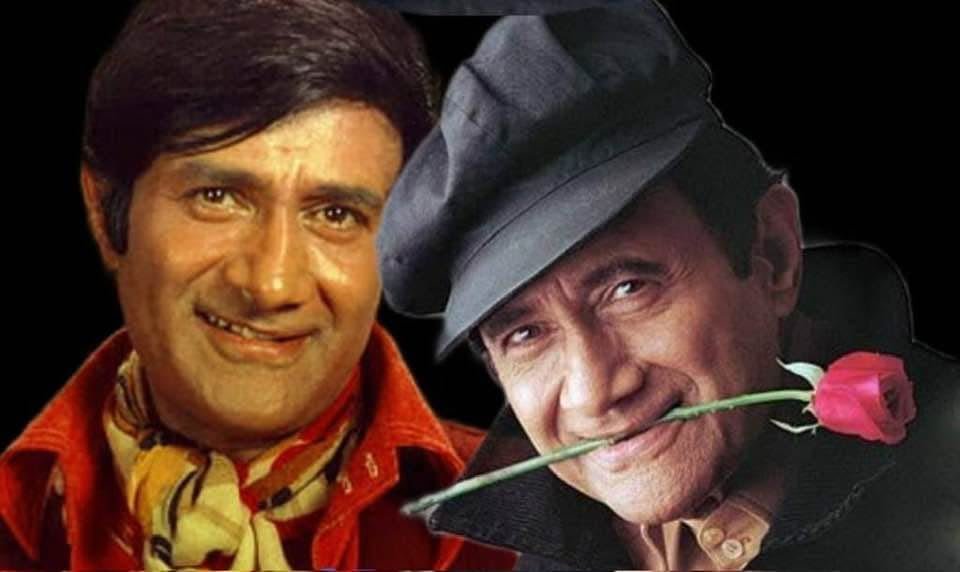
The Noir Anti-Hero and the Romantic Paradigm
In the 1950s, while the legendary trio of Indian cinema took shape—comprising Dilip Kumar, Raj Kapoor, and Dev Anand—Dev Anand carved out a distinct niche. While Dilip Kumar embodied tragedy and Raj Kapoor played the innocent tramp, Dev Anand was the sophisticated, urban hero navigating a changing world.
He moved fluidly between lighthearted romantic comedies and noir crime thrillers. Movies like Baazi (1951), Taxi Driver (1954), C.I.D. (1956), and Kala Bazar (1960) established him as the cool, morally complex anti-hero. Whether playing a small-time gambler, an absconding convict, or a black-marketeer, he brought an irresistible charm to gray characters that audiences could not help but root for.
Off-screen, his early romance with singer-actress Suraiya produced some of the decade’s most memorable romantic hits, including Vidya and Afsar. Though societal barriers kept them apart, their on-screen chemistry left an indelible mark on golden-era cinema. Dev Anand later found his lifelong companion in Kalpana Kartik, his co-star in Taxi Driver, marrying her in a quiet ceremony during the production of the film.
The Masterpiece of Philosophy and Style
As cinema transitioned into colour in the 1960s, Dev Anand’s stardom reached new heights. His collaborations with his brother, director Vijay Anand, produced some of the finest classics of Indian cinematic history. Chief among them was Guide (1965), based on R.K. Narayan’s novel. As Raju, a tour guide who evolves from a flawed, selfish lover into a revered spiritual guide, Dev Anand delivered a career-defining performance that transcended conventional hero tropes. Guide represented India at the Academy Awards and remains a milestone in narrative depth.
Films like Jewel Thief (1967) and Johny Mera Naam (1970) redefined the modern Indian thriller, blending mystery, style, and iconic musical scores. As a director, he broke ground with Hare Rama Hare Krishna (1971), tackling the hippie counterculture, youth rebellion, and familial ties with a fresh visual vocabulary.
Dev Anand’s career was equally defined by his exceptional musical sensibilities. In tandem with legendary composers like S.D. Burman, R.D. Burman, and Jaidev, and lyricists like Sahir Ludhianvi, Majrooh Sultanpuri, and Shailendra, he breathed life into scores that remain timeless. His character was as much defined by his iconic screen presence as by evergreen melodies such as “Abhi Na Jao Chhod Kar”, “Khoya Khoya Chand”, and “Pal Bhar Ke Liye”.
An Undying Spirit of Cinema
Dev Anand belonged to a rare league of artists who refused to look back or dwell on past glory. Even in his later decades, when he directed and acted opposite generations of younger actors, his infectious enthusiasm for making films never wavered. Honoured with the Padma Bhushan in 2001 and the Dadasaheb Phalke Award in 2002, he remained, above all, a tireless lover of life and cinema.
When he passed away in London in December 2011 at the age of 88, he left behind a legacy defined not by nostalgia, but by forward momentum. His life was the ultimate realization of his famous cinematic philosophy: to laugh off misfortune, chase the horizon, and live entirely in the moment.
On his birth anniversary, we celebrate not just an actor, but an eternal philosophy of joy—a man who truly romanced life until his final bow.

~Hasnain Naqvi is a former member of the history faculty at St. Xavier’s College, Mumbai….
The opinions expressed here are solely those of the author.