
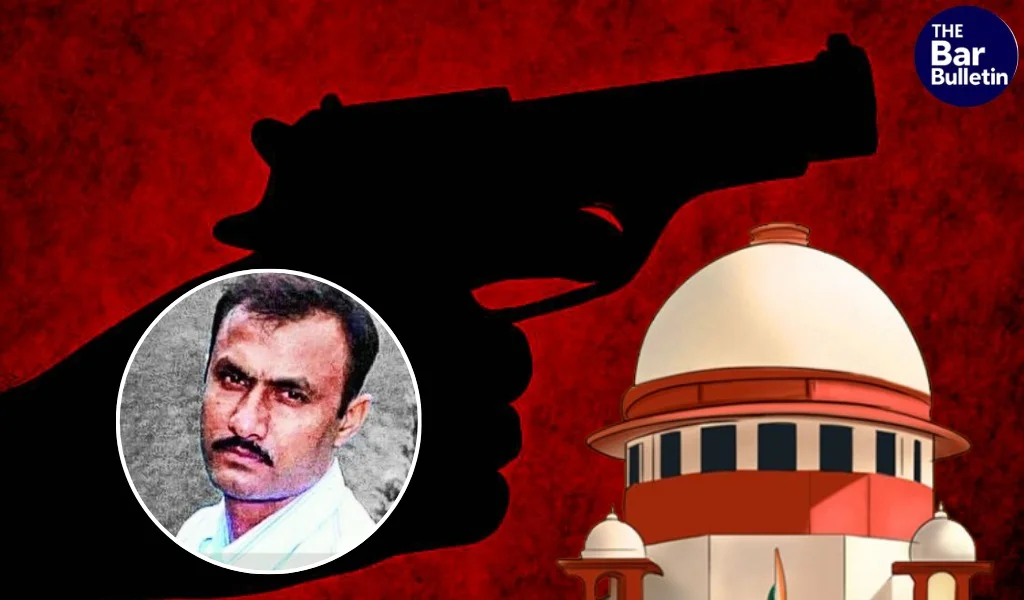
NEW DELHI: After hearing a challenge to the Bombay High Court order that upheld their acquittal, the Supreme Court has sought responses from the Central Bureau of Investigation (CBI) and 22 people acquitted in the Sohrabuddin Sheikh alleged “fake” encounter case.
The case was heard by the apex court on Monday (September 28). The court sought statements from some important witnesses for a limited examination of the acquittal verdict.
The challenge has been filed by Sohrabuddin’s brother Rubabuddin Shaikh against the Bombay High Court judgment of May 7, 2026. The high court had upheld the December 2018 verdict of the special CBI court that acquitted all 22 accused. The next hearing in the top court is scheduled for October 28.
The court has taken note of the fact that 92 prosecution witnesses turned hostile during the trial. The bench said it wanted to examine the statements of some important witnesses before proceeding with the challenge to the acquittals.
Chief Justice of India Justice Surya Kant said, “We want to examine the statements of some important witnesses.”
The court said that it was not calling for the entire record at this stage. It asked the parties to place before it the statements of three or four witnesses they consider most important.
It also made it clear that it would examine the acquittal decision on a limited record. It will not review one portion of the high court order, particularly paragraph 43, according to the submissions made during the hearing.
Justice Joymalya Bagchi referred to the fact that 92 witnesses had turned hostile during the trial. He said the issue also required examination from the perspective of whether the accused received a fair and proper trial.
The number of hostile witnesses had also featured prominently in the Bombay High Court judgment. The court recorded that 210 witnesses were examined during the trial and 92 did not support the prosecution case. It held that the prosecution could not establish the charges through the evidence placed before the trial court.
The High Court said the prosecution case relied on circumstantial evidence. It found that the alleged conspiracy to abduct and kill Sohrabuddin, his wife Kausar Bi and associate Tulsiram Prajapati had not been established against the accused.
The high court also rejected the argument that the trial could not have been fair simply because 92 witnesses turned hostile. Its judgment said the prosecution had cross-examined those witnesses after they denied supporting the prosecution case.
The court applied the criminal law principle that an accused is presumed innocent and that an acquittal strengthens that presumption.
What happened in the Sohrabuddin case
Sohrabuddin was killed in Gujarat in November 2005 in what the prosecution alleged was a fake encounter. His wife Kausar Bi was also killed. His associate Tulsiram Prajapati was shot dead in a separate encounter in the state in December 2006.
The investigation later moved to the CBI. The Supreme Court had ordered the cntral investigating agency to conduct further investigation in 2010 after Rubabuddin approached the court seeking a change in the investigation. The case was later transferred from Ahmedabad to Mumbai by the Supreme Court.
The trial involved 210 prosecution witnesses. The special CBI court acquitted 22 accused in December 2018 after finding that the prosecution had failed to establish the charges.
The 22 included 21 police personnel from Gujarat, Rajasthan and Andhra Pradesh. The prosecution case alleged that police personnel were involved in the abduction and killing of Sohrabuddin, Kausar Bi and Prajapati.
Sohrabuddin’s brothers Rubabuddin and Nayabuddin challenged the acquittals before the Bombay High Court. On May 7 this year, a division bench headed by Chief Justice Shree Chandrashekhar dismissed their appeals and upheld the trial court verdict.
The high court said the prosecution could not prove that Sohrabuddin and Kausar Bi had been abducted by Gujarat and Rajasthan police from a bus. It also found that the alleged conspiracy behind the killings had not been established through reliable evidence. The court described the prosecution case as dependent on circumstantial evidence and said that the chain required to establish guilt had not been proved beyond reasonable doubt.
The Supreme Court’s latest hearing now puts specific witness statements before the court. The judges have asked the parties to identify three or four witnesses whose evidence they consider most important. The next hearing is set for October 28.

We are a multimedia news network. Website : www.7xnews.com Based in New Delhi (India)
Youtube : umakantlakheraspeaks@gmail.com

