

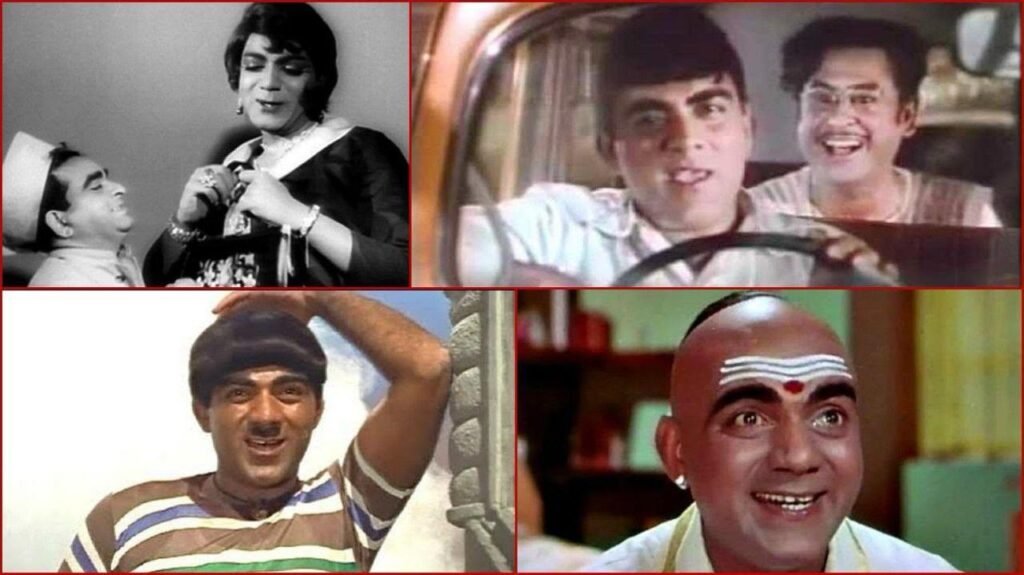
On September 29, 1932, Indian cinema was gifted one of its most luminous, revolutionary talents. Mehmood Ali—known simply and affectionately to generations of film lovers as Mehmood, or “Bhaijan”—was born into a world of stage and screen. Yet, few could have predicted that this young boy would grow up to fundamentally alter the architectural blueprint of Hindi mainstream cinema, elevating comedy from a peripheral sideshow into a box-office titan. On his birth anniversary, we celebrate not just the master of laughter, but a visionary filmmaker, mentor, and artist whose legacy continues to light up screens across the globe.
From Odd Jobs to the Silver Screen
Mehmood’s journey to superstardom was neither instant nor easy. Born into an artistic dynasty, he was the second of eight children to Latifunnisa and Mumtaz Ali, a celebrated actor and dancer of 1940s and 1950s cinema. Talent ran deep in the family—his sister Minoo Mumtaz would become an accomplished dancer and actress, while his younger brother Anwar Ali carved his own path as an actor and producer. Yet, lineage alone guaranteed no free passes.
As a child, Mehmood dipped his toes into film with a small role in the iconic Kismet (1943). But as he grew into adulthood, life demanded pragmatism. He drifted through a succession of odd jobs to keep poverty at bay—selling poultry on the streets and working as a chauffeur for director P.L. Santoshi. In an endearing twist of cinematic fate, decades later, Santoshi’s son, Rajkumar Santoshi, would cast Mehmood in Andaz Apna Apna (1994). He even worked as a table tennis coach for the legendary actress Meena Kumari.
His marriage to Meena Kumari’s younger sister, Madhu, and the birth of their eldest son, Masood, became the catalyst for his professional ambition. Driven by the urgent necessity to provide for his young family, Mehmood plunged back into the film industry. He began at the absolute bottom, playing uncredited bit roles: a killer in C.I.D. (1956), a peanut seller in Bimal Roy’s Do Bigha Zameen (1953), and a fleeting presence in Guru Dutt’s Pyaasa (1957). These early struggles did not embitter him; instead, they enriched his acute observation of human eccentricities—the very reservoir from which his comedic genius would soon draw.
The Sovereign of Slapstick and Substance
By the late 1950s, Mehmood’s magnetic presence could no longer be contained in the background. Supporting performances in films like Parvarish (1958), Qaidi No. 911 (1959), and Chhoti Behen (1959)—which earned him his first Filmfare nomination—announced the arrival of a major talent.
What set Mehmood apart was his uncanny ability to blend jaw-dropping physical slapstick, his mastery over vocal modulation, and brilliant mimicry. He brought regional accents alive on screen, most famously popularizing the melodic, street-smart Hyderabadi Urdu dialect that became his trademark. Whether playing the loyal, scheming best friend who rescues the romantic hero from sticky situations, or an eccentric romantic himself, he brought an irrepressible energy to every frame. His iconic screen pairings with actresses like Shubha Khote and Aruna Irani, along with fellow comedian I.S. Johar, delivered non-stop laughter and unforgettable box-office gold.
So formidable was his mastery over his craft that leading men of the era reportedly hesitated to share the frame with him, fearing that his sheer charisma would eclipse their star power. At the peak of his career, Mehmood achieved an unprecedented feat for a character artist: he became the highest-paid actor in Hindi cinema, often commanding a higher paycheck than the lead heroes. Directors began writing custom roles specifically around his persona, and music directors composed special song sequences designed exclusively for his energetic screen presence. Many of these musical gems were rendered immortal by the distinct voice of playback singer Manna Dey.
American actor Gregory Peck, upon meeting Mehmood during a visit to India, famously remarked that the Indian actor was “too handsome to be a comedian”—a testament to Mehmood’s striking looks, which he willingly subordinated to the art of the absurd. Over his career, he amassed 25 Filmfare Award nominations—19 for Best Performance in a Comic Role and 6 for Best Supporting Actor—winning three, establishing him as the definitive ambassador of joy.
A Visionary Filmmaker with a Social Heart
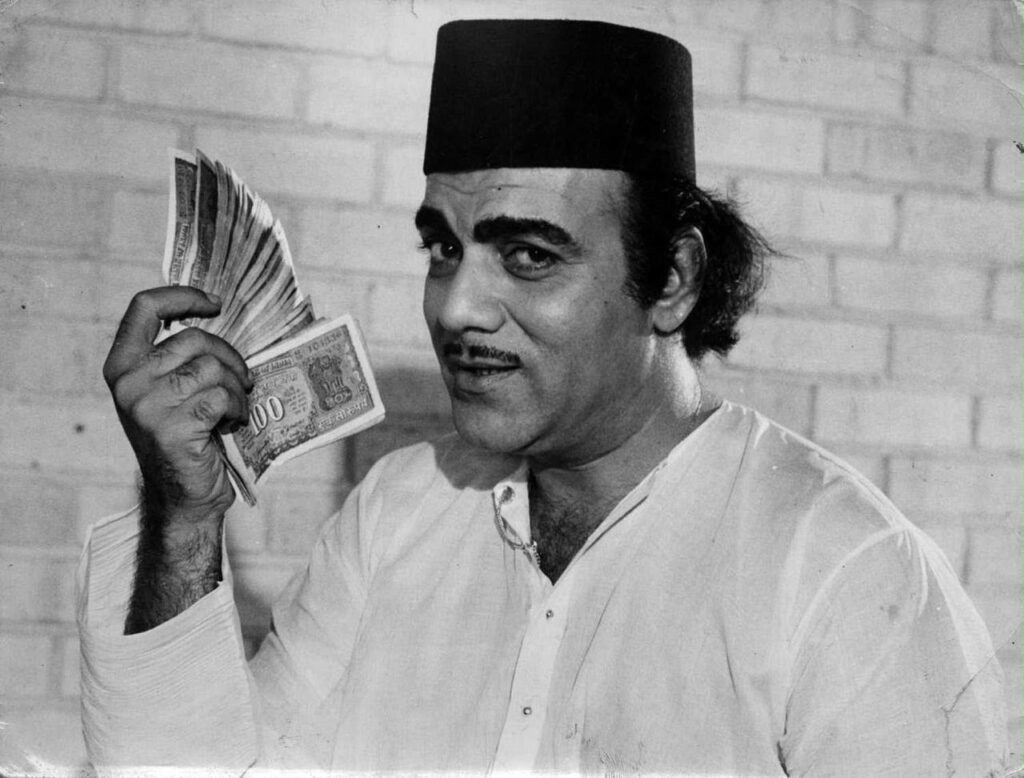
Mehmood’s ambitions extended far beyond the realm of acting. He was a pioneering producer and director who understood the pulse of the audience better than most. He made his debut as a producer with Chhote Nawab (1961) and turned director with the smash-hit comedy-thriller Bhoot Bangla (1965).
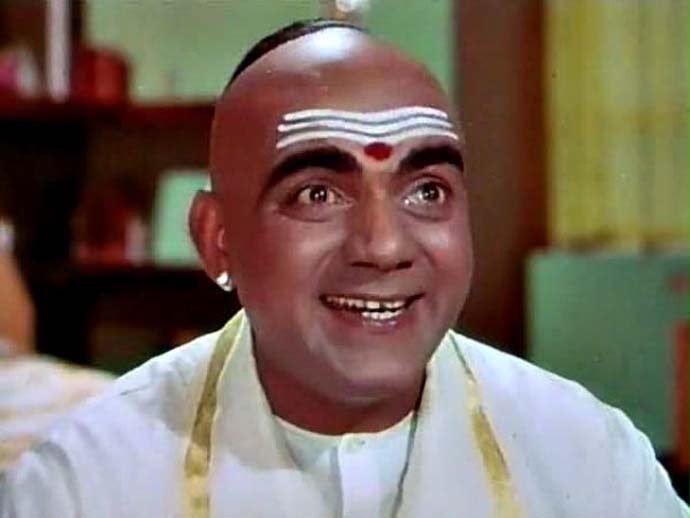
His directorial portfolio reads like a hall of fame of classic Indian entertainment: Sadhu Aur Shaitaan (1968), the immortal comedy classic Padosan (1968)—in which his performance as the South Indian dance teacher Master Pillai remains a masterclass in comic performance—Bombay to Goa (1972), and Ginny Aur Johnny (1976).
Crucially, Mehmood was an artist possessed of a profound social conscience. Beneath the boisterous humour lay an empathetic storyteller. His 1974 masterpiece, Kunwara Baap, was a groundbreaking narrative far ahead of its time. Centered on an impoverished rickshaw puller who adopts an abandoned child afflicted with polio, the film tackled single fatherhood, adoption, and physical disability with extraordinary grace and poignant vulnerability. It revealed that the king of laughter possessed an equally profound capacity for tears.
The Kingmaker Who Shaped Indian Cinema
Perhaps Mehmood’s most enduring legacy lies in his extraordinary eye for talent. He was cinema’s ultimate kingmaker. It was Mehmood who gave the legendary R.D. Burman his first independent break as a music composer in Chhote Nawab, launching a musical revolution that defined an era. Years later, he extended the same opportunity to Rajesh Roshan in Kunwara Baap.
Even more monumental was his contribution to the career of Amitabh Bachchan. Recognizing the latent, raw potential in a young, struggling Bachchan, Mehmood cast him as the lead in Bombay to Goa (1972). That break opened the doors of commercial cinema for the future superstar, prompting Bachchan to publicly revere Mehmood as his “Godfather” throughout his life.
This legacy of artistic excellence trickled down to his children as well, most notably his son Maqsood Ali—known to the world as the celebrated singer-composer Lucky Ali—and Macky Ali, who touched hearts as the child star of Kunwara Baap.
A Timeless Celebration of Genius
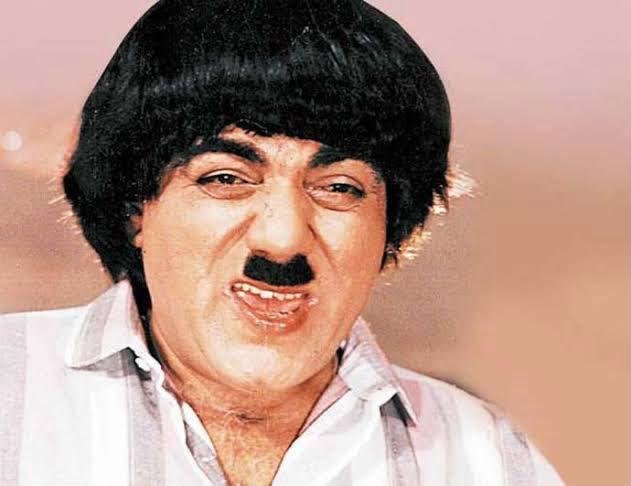
On this day, as we celebrate his birth anniversary, we honor a complete cinematic institution. Mehmood taught Indian cinema that comedy is not merely a brief respite from the drama, but a profound art form capable of expressing universal human truths, driving social commentary, and bringing pure, unadulterated delight to millions.
Though time marches on and cinema continually evolves, the magic of Mehmood Ali remains untouched by the years. His rich filmography stands as a living monument to human exuberance and creative mastery. Today, as his iconic comedy routines continue to bring laughter to new generations of film lovers, Mehmood’s joyous spirit echoes vibrant and triumphant—a fitting birthday toast to the eternal King of Comedy.

~Hasnain Naqvi is a former member of the history faculty at St. Xavier’s College, Mumbai….
The opinions expressed here are solely those of the author.