


On October 17, Indian cinema pauses to honour the 71st birth anniversary of Smita Patil—a performer of staggering intensity whose brief thirty-one years on earth permanently reshaped the cultural vocabulary of a nation. In an era when mainstream Hindi cinema demanded porcelain perfection and stylized submissiveness from its leading ladies, Smita arrived like a force of nature. Armed with an unvarnished dusky beauty, piercing expressive eyes, and an instinctual depth of emotion, she became the undisputed face of Indian New Wave cinema while simultaneously redefining the boundaries of commercial stardom. Hers was not merely a career; it was a revolution etched in celluloid.
From Newsroom Anchor to Cinematic Revolutionary
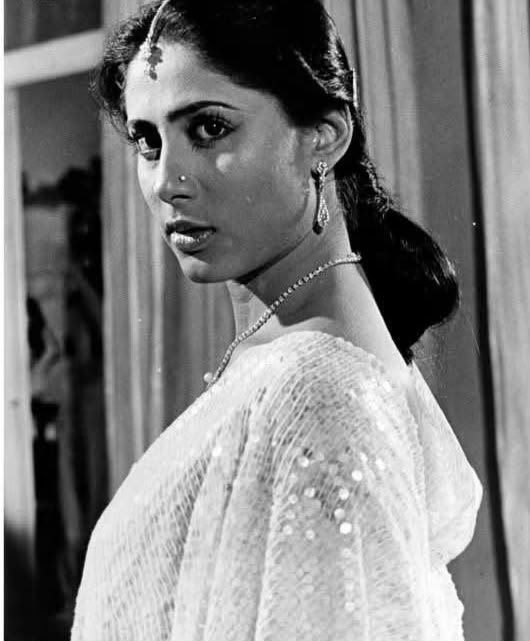
Born in Pune to political leader Shivajirao Girdhar Patil and dedicated social worker Vidyatai Patil, Smita was steeped in social consciousness from her formative years. Educated at Renuka Swaroop Memorial High School and later graduating in Psychology from Mumbai’s St. Xavier’s College, she brought an intuitive understanding of the human psyche to every endeavor. Her screen journey began unexpectedly in the early 1970s as a television newsreader on Mumbai Doordarshan. Draped in simple handloom sarees with a signature bindi, her calm authority and captivating gaze transfixed viewers—including pioneer director Shyam Benegal, who recognized an extraordinary talent waiting to be unleashed.
Benegal cast her in Charandas Chor (1975), marking her official cinematic debut. What followed was one of the most remarkable artistic flourishings in global cinema. Smita rapidly emerged as the central pillar of Parallel Cinema—a politically charged, socially conscious movement led by visionary directors such as Benegal, Govind Nihalani, Mrinal Sen, Satyajit Ray, and G. Aravindan.
In Manthan (1976), she portrayed Bindu, a fiercely independent rural woman navigating milk cooperative politics. Shortly after, her towering performance in Bhumika (1977)—inspired by Marathi actress Hansa Wadkar’s life—earned her the first of two National Film Awards for Best Actress. In a gesture that reflected her deeply ingrained ethos, she donated her entire prize money from Bhumika to a women’s welfare organization, signaling that her art and her socio-political principles were forever inextricably linked.
Immersion, Craft, and the Uncompromising Realist
Smita did not simply act; she absorbed her characters until the boundary between performance and lived reality dissolved entirely. For her role as a homeless woman in Rabindra Dharmaraj’s Chakra (1981), she spent weeks wandering and interacting with residents of Mumbai’s slum colonies, absorbing their cadence, struggles, and quiet dignity. The resulting performance was so devastatingly authentic that it earned her a second National Award.
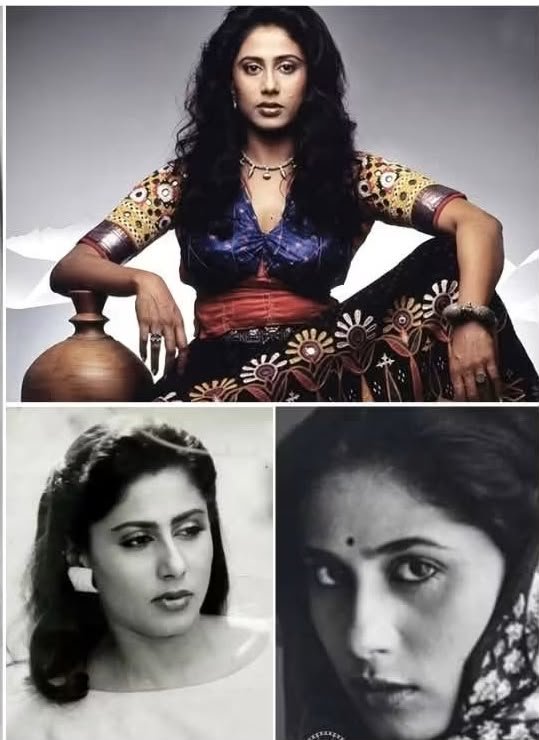
Whether playing the oppressed labourer in Satyajit Ray’s Sadgati (1981), the conflicted social worker in Jabbar Patel’s Marathi masterpiece Umbartha (1982), the victim of feudal tragedy in Bazaar (1982), or the quiet anchor in Aakrosh and Ardh Satya, Smita infused every frame with an intelligent, layered femininity. She refused to allow women on screen to remain passive decorative objects. Instead, she embodied characters who wrestled with desire, moral ambiguity, societal subjugation, and personal agency, elevating Indian women from cinematic tropes to complex human beings.
Bridging the Chasm Between Parallel and Commercial Cinema
While her artistic soul belonged to the avant-garde, Smita possessed a versatility that could not be confined to indie arthouses. Commercial filmmakers soon realized that her magnetic presence could elevate mainstream masala films into genuine human dramas. Directors like Raj Khosla, Ramesh Sippy, and B.R. Chopra sought her out, acknowledging her rare ability to bring dignity to commercial narratives.
She famously shared the screen with Amitabh Bachchan in blockbusters such as Shakti (1982) and Namak Halaal (1982), proving that her magnetism translated effortlessly to large-scale entertainment. Yet, true to her uncompromising sensitivity, the transition between these two worlds was not without personal friction; after filming the iconic rain sequence “Aaj Rapat Jaayen” in Namak Halaal, she broke down in tears, grappling with the conflict between commercial titillation and her artistic values, only to be comforted by co-star Bachchan who reassured her of the sequence’s narrative context.
Her pairing with superstar Rajesh Khanna in the mid-1980s yielded a string of critically and commercially successful, socially relevant dramas including Dil-E-Nadan, Aakhir Kyon?, Anokha Rishta, and Amrit. Hits like Aakhir Kyon?—where her rendering of an abandoned wife rebuilding her life resonated nationwide—demonstrated that audiences were hungry for substantial women-centric stories within mainstream formats. She moved seamlessly between commercial box-office triumphs and international recognition, serving as a jury member at the Montreal World Film Festival in 1984 and receiving the Padma Shri, India’s fourth-highest civilian honour, in 1985.
Personal Life, Fire of Sonbai, and an Unfinished Symphony
Off-screen, Smita lived with the same unreserved intensity that characterized her cinematic roles. She was married to actor Raj Babbar, and their union was not without controversy, given Babbar’s previous marriage. The couple had a son, Prateik Babbar, who later followed in his mother’s footsteps into the film industry, carrying forward her creative bloodline.
Professionally, her artistic journey reached a crescendo in Ketan Mehta’s masterpiece Mirch Masala. As Sonbai, a spirited spice-factory worker who defies the predatory advances of a ruthless subedar, her stance—standing amid mounds of fiery red chili powder, eyes flashing with defiant rage—remains one of the most iconic images in world cinema. Decades later, her performance in Mirch Masala was fittingly cited among the greatest acting performances in Indian cinematic history.
Tragically, Mirch Masala was released posthumously. On December 13, 1986, at the tender age of 31, Smita Patil passed away due to severe childbirth complications—puerperal sepsis—just two weeks after giving birth to Prateik. Her sudden demise sent shockwaves across the country, leaving behind an unfinished legacy and a void that Indian cinema has never truly filled. Over ten of her films were released after her death, a testament to her astonishing work ethic and prolific output during her single decade in the spotlight.
An Enduring Legacy of Courage and Soul
Four decades after her passing, Smita Patil’s influence remains undiminished. She was not merely an actress; she was a committed feminist and an active member of the Women’s Centre in Mumbai who viewed the camera as an instrument for social transformation. She chose roles that challenged patriarchy, questioned societal hypocrisies, and gave voice to the marginalized.
Today, as film festivals, retrospectives, and young actors continue to study her oeuvre, Smita Patil stands as an eternal beacon of artistic honesty. She taught us that beauty lies in truth, that strength lies in vulnerability, and that true stardom is defined not by glamour, but by soul.
On her 71st birth anniversary, we do not merely remember an actress who died too young—we celebrate an unextinguishable flame that continues to illuminate the soul of Indian cinema.

~Hasnain Naqvi is a former member of the history faculty at St. Xavier’s College, Mumbai….
The opinions expressed here are solely those of the author.