

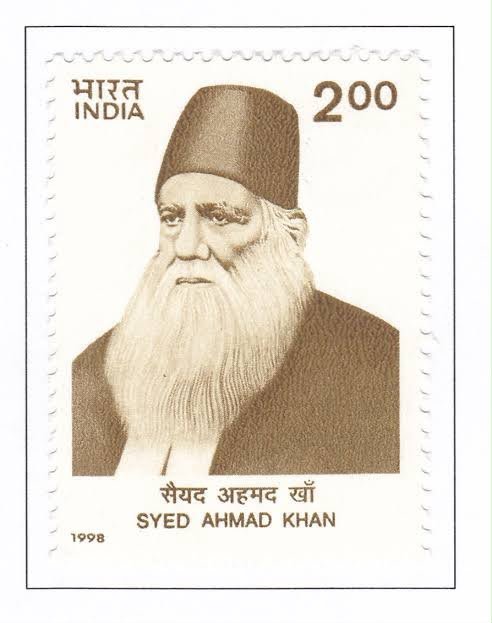
In an era overshadowed by imperial domination and deep communal fractures, Sir Syed Ahmad Khan stood out as an uncompromising champion of rationalism and intellectual renewal. Born on October 17, 1817, into a prominent Delhi family with ties to Emperor Akbar’s court, he matured as the traditional Mughal order yielded to the East India Company. His father, Syed Muhammad Muttaqi, served as a court noble, while his mother, Aziz-un-Nisa, instilled in him a foundational devotion to learning and moral integrity.
The traumatic events of the 1857 Revolt—which saw his family home destroyed and his community subject to severe British reprisals—profoundly transformed his perspective. Refusing to yield to despair, Sir Syed penned Asbab-e-Baghawat-e-Hind (The Causes of the Indian Revolt) in 1858. His seminal text argued that the uprising stemmed from oppressive colonial policies rather than intrinsic Muslim disloyalty, charting a path toward political reconciliation. Having entered British service in 1838 as a sub-engineer before advancing through the judiciary as a judge in Bijnaur and later serving as under-secretary in the foreign department, his administrative experience exposed him to Western legal frameworks and scientific advancements. Convinced that his community had to adapt to survive, his mediation during post-1857 tensions ultimately earned him a knighthood in 1888 and the honor of Companion of the Order of the Star of India.
Education as the Catalyst for Revival
Determined to counter post-1857 disenfranchisement and administrative exclusion, Sir Syed identified scientific temper and English literacy as non-negotiable tools for empowerment. In 1864, he established the Translation Society in Ghazipur—which evolved into the Scientific Society of Aligarh—translating foundational works on Euclidean geometry, astronomy, and Francis Bacon’s philosophies into Urdu to democratize modern knowledge.
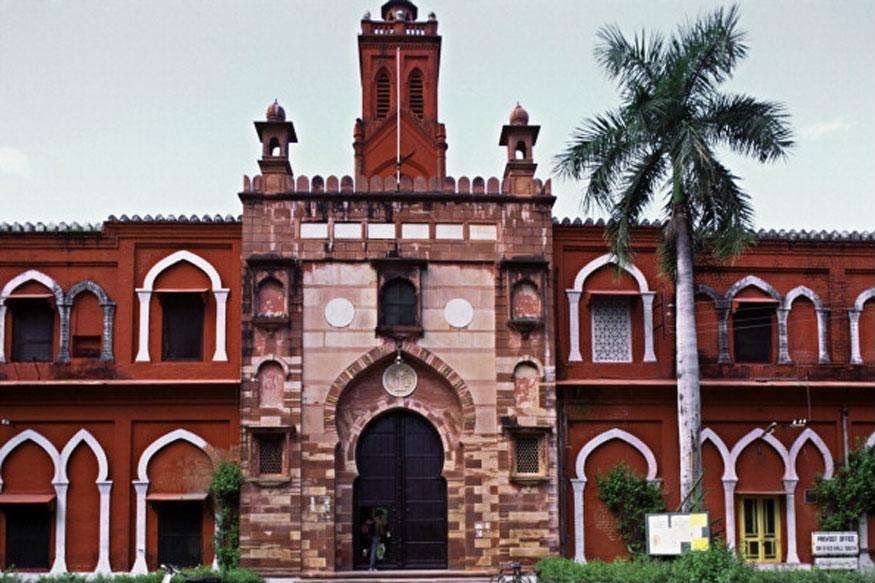
This educational mission culminated on May 24, 1875, with the establishment of the Muhammadan Anglo-Oriental (MAO) College in Aligarh. Built on land donated by local zamindars and funded by Muslim elites alongside British figures like Lord Northbrook, the institution was modeled after Oxford and Cambridge. By synthesizing Western scientific curricula with Oriental studies, it created a unique educational matrix that transformed into Aligarh Muslim University (AMU) under a Parliamentary Act in 1920, eventually producing influential leaders across South Asia, including the poet-philosopher Muhammad Iqbal and contemporaries of India’s first Prime Minister, Jawaharlal Nehru.
To institutionalize reform nationwide, Sir Syed founded the All India Muhammadan Educational Conference in 1886. Annual sessions hosted in cities such as Lucknow and Bombay disseminated ideas on curricular modernization and female education. AMU archives document that by the early 20th century, over 1,000 graduates had passed through its halls, with many entering civil service via the Indian Civil Service (ICS) examinations and reversing decades of systemic underrepresentation.
Social Reform and the Defence of Pluralism
Sir Syed’s intellectual crusade extended deeply into social reform. Through his journal Tahzib-ul-Akhlaq (The Mohammedan Social Reformer), launched in 1870, he critiqued entrenched social evils such as child marriage, excessive dowry practices, and internal stratification like the ashraf-ajlaf caste divide. By reinterpreting Quranic verses through a modernist lens, he demonstrated to an orthodox priesthood that reason and social equality were inherently compatible with faith.
As an early champion of women’s rights, Sir Syed laid the groundwork for female literacy, inspiring the establishment of the Girls’ School in Aligarh in 1906. Corresponding with both British feminists and indigenous reformers, he strategically advocated for the reform—rather than immediate abolition—of purdah to secure social acceptance for women’s schooling. In his 1870 work Essays on the Life of Mohammed, he presented the Prophet as a reformer of women’s rights, challenging Western caricatures of Islam. His positions on widow remarriage and wedding austerity subsequently influenced modern legal developments in Muslim personal law, while historians like Barbara Metcalf in Islamic Revival in British India have paralleled his movement with contemporary Hindu reform initiatives such as the Brahmo Samaj.
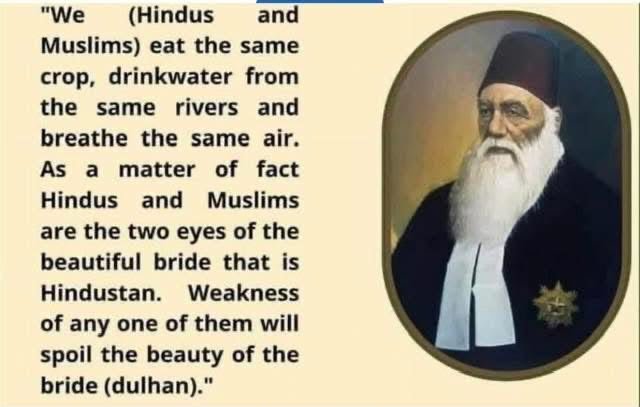
In his theological writings, including Tafsir-ul-Quran and Khutbat-ah-Ahmadiya, Sir Syed advanced a naturalistic theology that reconciled religious doctrine with natural laws, viewing miracles through a metaphorical lens and forming the Committee for Writing Commentaries on the Holy Quran. Rooted in the concept of wahdat-ul-wujud (unity of being), he famously asserted during his 1884 addresses that Hindus and Muslims shared a singular Indian identity.
Though detractors from traditionalist seminaries like Deoband labeled him a naturi (naturalist), his pragmatic strategy—such as his 1888 address urging political caution and loyalty to the British to prevent marginalization—proved effective in securing tangible educational gains. The 1901 census reflected a rising literacy rate among Muslims in the United Provinces, while his model inspired sister institutions like Osmania University in Hyderabad, which successfully paired Urdu-medium instruction with English higher education.
An Enduring Blueprint for the Modern World
When Sir Syed passed away on March 27, 1898, he left behind a dynamic intellectual tradition.
Today, as Sir Syed Day is commemorated with academic gatherings at AMU and across the globe, his foundational diagnosis remains striking. Current educational statistics highlight persistent hurdles, with Pew Research showing Indian Muslim enrollment in tertiary education lingering at 6%, well below national averages. In response, modern outreach centers continuing his work draw directly on his triple paradigm: theological reinterpretation, social uplift, and educational empowerment.
Globally, his thought continues to inform modernist movements across the Middle East and South Asia, offering a reasoned counterweight to fundamentalism in conflict-affected regions as documented in recent UN educational reports.
As India navigates structural educational shifts under the National Education Policy (NEP) 2020, Sir Syed’s pioneer model of hybrid, inclusive curricula provides an enduring template for reform.
Sir Syed’s legacy serves as a reminder that critical inquiry and social progress are inseparable. His enduring conviction continues to offer clarity: “Knowledge is the light which makes darkness vanish.”
~Hasnain Naqvi is a former member of the history faculty at St. Xavier’s College, Mumbai.

~Hasnain Naqvi is a former member of the history faculty at St. Xavier’s College, Mumbai….
The opinions expressed here are solely those of the author.