

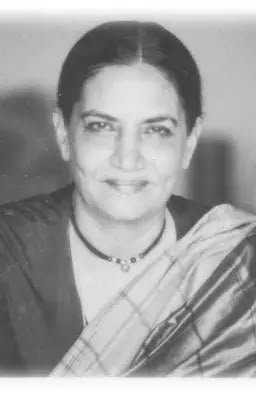
A centenary tribute to the actress, activist and quiet force who turned personal conviction into public art
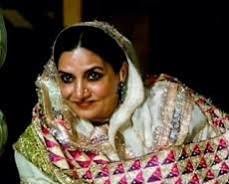
On this day a hundred years ago, a girl was born in Hyderabad State into a family of Uttar Pradesh origins that had settled in the Deccan. She would grow up in Aurangabad, receive a progressive education rare for her time and class, and then make a choice so radical that it redefined not only her own life but the cultural and political landscape of post-Independence India. That girl was Shaukat Kaifi. Theatre actress, film performer, social activist, and lifelong companion of the poet Kaifi Azmi, she remains one of the most luminous yet understated figures of the progressive cultural movement.
A Decision That Redefined Belonging
In February 1947, at a Progressive Writers’ Conference in Hyderabad, the young Shaukat heard a tall, intense poet recite verses that attacked monarchy, injustice and the silence imposed on women. The poem was Kaifi Azmi’s “Aurat.” What followed was a courtship conducted through letters of extraordinary intensity, one of them written in the poet’s own blood. Against the expectations of her comfortable family, she chose him. She left the security of Hyderabad for the austere life of a communist commune in Bombay, where eight rooms and a shared toilet housed several families bound by ideology rather than comfort.
That decision was neither romantic escapism nor youthful rebellion. It was a deliberate alignment with a larger idea of equality. In the Red Flag Hall near Grant Road, and later in the modest cottage at Janki Kutir in Juhu, Shaukat Kaifi learnt that a communist wife could not remain idle. She began working as a radio artiste, then joined the Indian People’s Theatre Association and Prithvi Theatre. While Kaifi moved among labour colonies and wrote for meagre party stipends, she carried the practical weight of survival—cooking, cleaning, raising children, and still finding the energy to rehearse and travel with theatre troupes across the country.
The Stage as Moral Ground
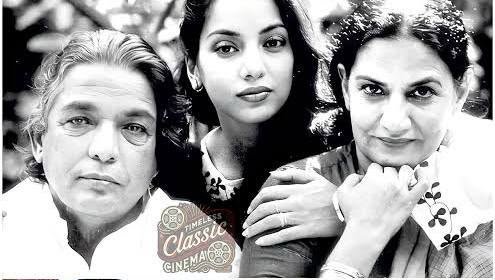
Theatre was never mere performance for her; it was moral ground. Her early appearance in Ismat Chughtai’s Dhani Bankein, a stark play about the communal riots that scarred the new nation, announced an actress who refused decorative roles. With Prithvi Theatre she performed in Deewar and Shakuntala. With IPTA she took on works that examined unemployment, loneliness and social hypocrisy. Later she brought the same intensity to Urdu adaptations of Tennessee Williams and Arthur Miller. Whether playing a retired actress in Tanhai or a figure of quiet authority in other ensemble pieces, she brought a presence that was both regal and rooted. Audiences remembered not flamboyance but integrity of purpose.
When the family’s financial situation improved through Kaifi’s growing success as a film lyricist, Shaukat stepped carefully into cinema. She never sought stardom. The handful of roles she accepted—Garam Hawa, Umrao Jaan, Bazaar, Salaam Bombay!—were chosen for their substance. In M.S. Sathyu’s Partition masterpiece she was the supportive yet steadfast wife of Balraj Sahni’s character, embodying the dignity of those who refused to abandon their homeland. In Muzaffar Ali’s Umrao Jaan she created an unforgettable Khanum Jaan: a brothel madam of complex authority, neither caricature nor villain, but a woman who understood power and its costs. That performance remains one of Hindi cinema’s most nuanced portrayals of female authority.
Partnership Without Hierarchy
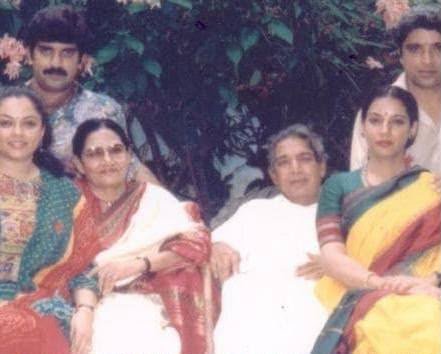
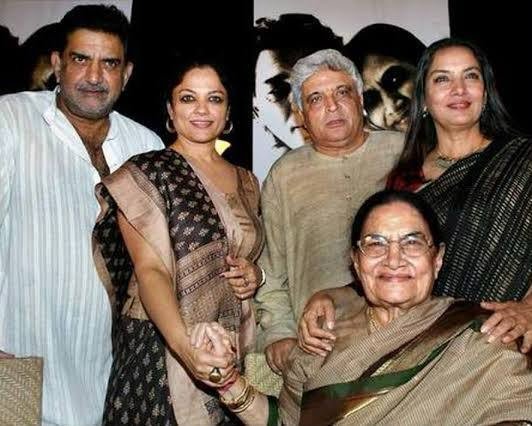
The marriage of Shaukat and Kaifi Azmi was itself a quiet revolution. In an era when progressive politics often retained patriarchal habits, theirs was a partnership of genuine equality. Kaifi encouraged her career, took pride in her successes, and never demanded that she subordinate her identity to his. She, in turn, managed the household, protected the children during periods of political difficulty, and later chronicled their shared life with clarity and affection in her memoir Kaifi and I. The book, later adapted by Javed Akhtar into the celebrated play Kaifi Aur Main, remains a rare document of love, ideology and everyday resilience. On stage, Shabana Azmi has repeatedly brought her mother’s voice to life, ensuring that the story continues to travel across generations and geographies.
The couple’s personal losses—the early death of their first child, the physical hardships of commune life, Kaifi’s later illness—never hardened them into bitterness. Instead, they deepened a shared commitment to social transformation. After Kaifi’s stroke, when he returned to his ancestral village of Mijwan to build schools, roads and opportunities for girls, Shaukat stood with him. Their home remained open to writers, actors, activists and ordinary comrades. Hospitality was practised not as social obligation but as political principle.
A Legacy Written in Quiet Strength
Shaukat Kaifi never sought the spotlight that her daughter would later occupy with such distinction. Yet her influence runs deep. She demonstrated that a woman could leave privilege without bitterness, embrace hardship without self-pity, and practise art without compromise. In the progressive cultural movements of the mid-twentieth century, she was both participant and enabler—the presence that kept IPTA functioning, the hostess who made political discussion feel like family conversation, the mother who raised children who themselves became torch-bearers of secular, humanist values.
On her birth centenary, the temptation is to speak only of nostalgia. That would be a disservice. Shaukat Kaifi’s life asks harder questions of the present. What does it mean to live one’s politics rather than merely proclaim them? How does one raise a family inside an ideology without turning ideology into dogma? How does an artist remain relevant when fashion and commerce pull in other directions? Her answers were never theoretical. They were lived: in the shared toilet of a commune, on the dusty stages of provincial towns, in the quiet authority of a few carefully chosen film roles, and in the sustained dignity of a fifty-five-year marriage that never required one partner to diminish the other.
A hundred years after her birth, the world she helped shape has changed in ways she could not have imagined. Yet the core of her example remains urgent. In an age of loud declarations and fragile convictions, Shaukat Kaifi stands as proof that the most enduring revolutions are often quiet, that the strongest women are frequently those who refuse spectacle, and that true companionship is measured not by grand gestures but by the daily decision to walk together through difficulty and light.
She left us in November 2019, in the same Juhu home that had once been a modest cottage and later became a landmark of progressive hospitality. Those who knew her speak of her warmth, her sharp observations, her refusal of self-importance. Those who encounter her only through her work on stage and screen recognise something rarer: an artist who never separated craft from conscience.
On this centenary, the finest tribute is not merely remembrance. It is the continued practice of the values she embodied—equality without rhetoric, art without compromise, and a life lived in full awareness that personal freedom and social justice are inseparable. Shaukat Kaifi did not merely belong to an era. She helped define what that era could mean for those who came after.

~Hasnain Naqvi is a former member of the history faculty at St. Xavier’s College, Mumbai….
The opinions expressed here are solely those of the author.