

Today
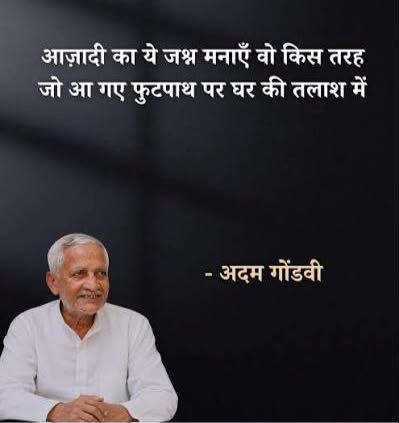
On his birth anniversary, honoring the rustic bard of Gonda who stripped the ghazal of its ivory-tower opulence to voice the angst, outrage, and endurance of India’s dispossessed.
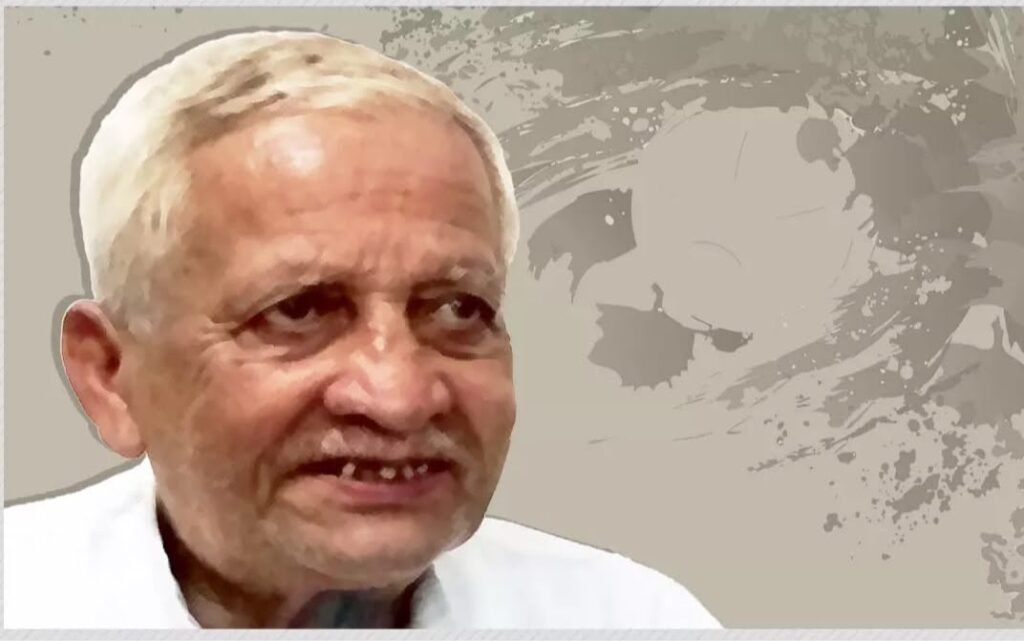
Born on October 22, 1947, in the quiet village of Aara in Uttar Pradesh’s Gonda district, Ramnath Singh—immortalized under his nom de plume Adam Gondvi—entered the world alongside independent India. Yet, while the nation built its modern institutions and celebrated constitutional milestones, Gondvi emerged from the agrarian heartland without literary pedigree, institutional patronage, or elite backing to ask the uncomfortable questions that statecraft routinely ignored. Clad in a simple kurta, sadri, and turban, he brought the dust, hunger, and unhealed wounds of rural India directly onto the literary stage.
From Courtly Elegance to the Widow’s Brow
Gondvi’s greatest stylistic breakthrough lay in his radical democratization of the ghazal. Long revered as an art form dedicated to courtly romance, ethereal aesthetics, and delicate metaphors, the ghazal in Gondvi’s hands became a razor-sharp instrument of public conscience. He rejected convoluted diction in favor of a visceral, accessible Hindi-Urdu idiom that bridged the divide between formal literature and the street.
Bhūkh ke ehsaas ko sher-o-sukhan tak le chalo,
Yā adab ko muflisõ kī anjuman tak le chalo.
Jo ghazal māshūq ke jalvoñ se vāqif ho gayī,
Usko ab bevā ke māthe kī shikan tak le chalo.(“Carry the raw ache of hunger into the realm of verse,
Or bring literature down to the assembly of the destitute.
The ghazal that has spent enough time extolling the beloved’s grace—
It is time to take it now to the lines carved upon a widow’s forehead.”)
For Gondvi, literature (adab) was neither a passive ornament nor an intellectual luxury; it was a moral obligation to bear witness.
Puncturing Bureaucracy and Political Spectacle
Gondvi belonged to the defiant lineage of radical bards—alongside Kabir, Dushyant Kumar, and Gorakh Pandey—who treated poetry as an unvarnished audit of state power. His verse tore through administrative euphemisms, exposing the vast gulf between official claims and lived reality. When state machinery produced glowing progress reports while rural impoverishment persisted, Gondvi summarized the contradiction in two enduring lines:
Tumhārī fāilõ meñ gāõñ kā mausam gulābī hai,
Magar ye āñkṛe jhūṭhe hain, ye dā‘vā kitābī hai.(“In your administrative files, the village blooms in rosy weather,
But these figures are fabricated; this claim is merely on paper.”)
He held an equally scathing mirror up to political self-aggrandizement, mocking the culture of sycophancy and performative governance:
Aankh par patṭī rahe aur ‘aql par tālā rahe,
Apne shāh-e-vaqt kā yūñ martabā a‘lā rahe.
Ek jan-sevak ko duniyā mein Adam kyā chāhiye,
Chār-chhe chamche rahe, mike rahe, mālā rahe.(“Let the eyes remain blindfolded and the mind locked shut,
Thus shall the stature of the ruler of our times remain exalted.
What else does a ‘public servant’ require in this world, Adam?
A handful of flatterers, a microphone, and a garland.”)
A Defence of Shared Humanity Against Polarization
Gondvi’s politics were rooted not in rigid doctrine, but in deep empathy for the marginalized. He recognized early how electoral strategy often weaponizes identity to distract from systemic neglect. In an era where communal discord frequently serves as a shield for policy failure, his plea for social solidarity remains strikingly prescient:
Hindū yā musalmān ke ahsāsāt ko mat chhediye,
Apnī kursī ke liye jazbāt ko mat chhediye.
Chhediye ik jang mil-jul kar garībī ke khilāf,
Dost mere mazhabī naghmāt ko mat chhediye.(“Do not stoke the religious passions of Hindu or Muslim,
Do not inflame emotions merely to protect your seat of power.
If you must launch a campaign, let us fight united against poverty;
My friend, do not play the notes of sectarian discord.”)
An Enduring Legacy of Dissent
Though Adam Gondvi passed away in 2011, his words continue to echo wherever citizens assemble to challenge institutional indifference, economic inequality, and manufactured divisions. In an age dominated by curated narratives and fleeting digital noise, his poetry serves as an uncompromising benchmark for moral clarity.
Gondvi did not seek accolades or historical monuments; he sought an awake and empathetic public. By insisting that poetry belong to the hungry, the forgotten, and the disenfranchised, he ensured that as long as injustice persists, his voice will remain an indispensable conscience-keeper of Indian democracy.

~Hasnain Naqvi is a former member of the history faculty at St. Xavier’s College, Mumbai….
The opinions expressed here are solely those of the author.