

Yerevan, the capital of Armenia, is hosting COP17 from 19 to 30 October 2026. Its mandate is to press governments to act on their slow progress towards the agreed biodiversity targets. The Nairobi summit held ahead of Yerevan has concluded that countries are off track on every single one of the 23 targets they agreed upon at the Montreal summit in 2022. It is worth noting that the last biodiversity summit, COP16 in Cali, Colombia, ended in disarray, with little agreement on key issues because of insufficient time. The question therefore arises: are the 2030 biodiversity targets unachievable?
COP17 is an important opportunity for a serious course correction. Countries must commit to concrete actions to get the world back on track. The United States is not a party to the UN Convention on Biological Diversity, but it previously provided funding through USAID; under the current US administration, that funding has been sharply curtailed. Britain and other European countries have also curtailed their funding for biological conservation around the world. Developing countries face limits on mobilizing additional resources. Countries such as Norway and Sweden have paid their dues, but others are slower. On Japan, Brian O’Donnell, director of the Campaign for Nature, has said: “Japan stands out as a very large economy that is not putting much in terms of international nature finance forward.”
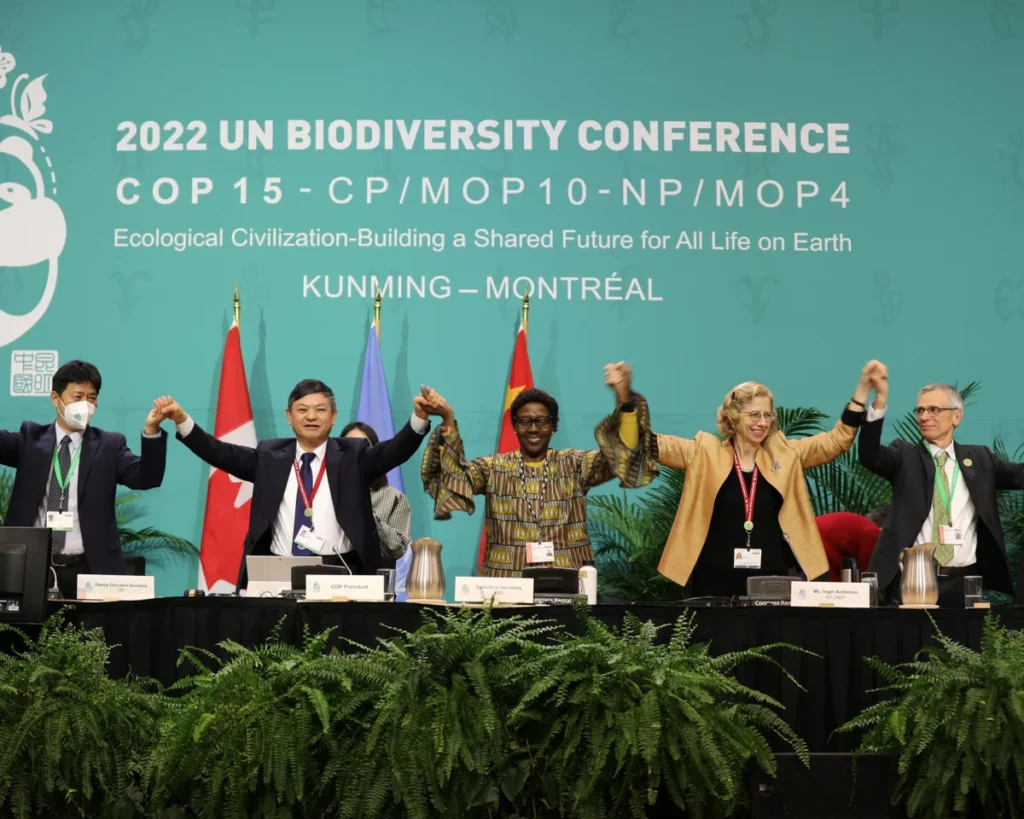
COP17 will assess progress on the commitments made by 196 parties over the four years since the Kunming-Montreal Global Biodiversity Framework of 2022. This historic global agreement on biodiversity—the equivalent of the Paris Agreement for climate—revolves around 23 targets, each a goal to be translated into national action by 2030. The crucial goals include protecting at least 30% of land and sea areas, halving the overall risk posed by pesticides, and eliminating at least $500 billion per year in subsidies harmful to biodiversity. The timeline seems tough.
An article published in Nature Reviews Biodiversity on 13 October 2026 underlined governance, financing and insufficient monitoring as limiting factors. It reported that less than 75% of the parties have submitted their national reports to the Convention on Biological Diversity (CBD), and that there is insufficient progress on the Global Biodiversity Framework’s 23 targets. The GBF is an international agenda and a hallmark initiative; individual countries are mandated to plan and ensure its achievements.
A key question is why a large share of the national reports submitted this year to support the CBD’s Global Report on Collective Progress failed to report necessary information about many of the GBF’s targets. The answer, critics argue, is that monitoring and data availability are currently insufficient for many target indicators. To address this gap, monitoring networks across regional and global scales should be developed, backed by a stable financing pathway. Such funding could be provided through the Global Environment Facility’s ninth replenishment, which was exclusively earmarked for monitoring infrastructure development.
Moreover, the Cali Fund—a hallmark COP16 initiative intended to ensure that biodiverse countries and stewards of biodiversity benefit from genetic resources derived from biodiversity—has fallen short of expectations. Companies benefiting from genetic resources are duty bound to contribute to the fund, but a lack of awareness has led to a staggeringly slow uptake. It is unfortunate that, against a target of $1 billion per year, only $6,000 had been contributed by the US to date. Whether more companies will come forward after details of fund contributions are sorted out at COP17 remains an open question. Public-sector and philanthropic investment are crucial to closing the conservation funding gap, given the many barriers to scaling up private biodiversity finance. At the start of COP17, the Cali Fund had received only $10,656, of which $7,085 had been deposited.
The objective of protecting 30% of Earth for nature is the headline target this decade, inspired by Harvard biologist E. O. Wilson’s vision of protecting half the planet for the long-term survival of humanity. According to one estimate, governments are close to reaching this target for land, having so far agreed to place 27.5% of terrestrial areas under protection as nature reserves, national parks and other areas. But the target is not simply about creating new protected areas on paper. What is needed is effective conservation of areas that are crucial to healthy functioning ecosystems, such as wetlands, rainforests, grasslands and coral reefs.
Yet another target—reforming and repurposing $500 billion of environmentally damaging subsidies—has received no action whatsoever from governments. From tax benefits for fossil-fuel companies to state support for destroying rainforest to expand agricultural frontiers, governments remain a major driver of biodiversity loss. Governments therefore need to do more, and fast, if they sincerely wish to meet the targets of the decade.
COP17 is taking place at a time of profound geopolitical instability. The ongoing US-Israel war on Iran, the Russia-Ukraine war, tariff battles and other conflicts do not provide a conducive atmosphere for international cooperation. To add to this, the world order is shifting rapidly from globalization to regionalization or rationalization. In such an adverse global scenario, the GBF and many other conservation actions—including coordinated monitoring of migratory species, joint restoration projects and cross-border protected-area networks—rely more on multilateral leadership and multilateral financing, both of which are at great risk.
These governance and financial challenges may be daunting, but they are not insurmountable. The world has to think anew. One of our species’ most attractive attributes is, to use Rana Dasgupta’s phrase, “our political creativity.” The essential guiding principle behind all political creativity is “hope, not despair.” COP17, hopefully, rests on hope.

The writer holds a Master’s in Public Administration–Environmental Science and Policy from Columbia University, New York.