

Mahatma Gandhi’s 1920 warning that Indian judges
would stand by the Government is playing out in the context
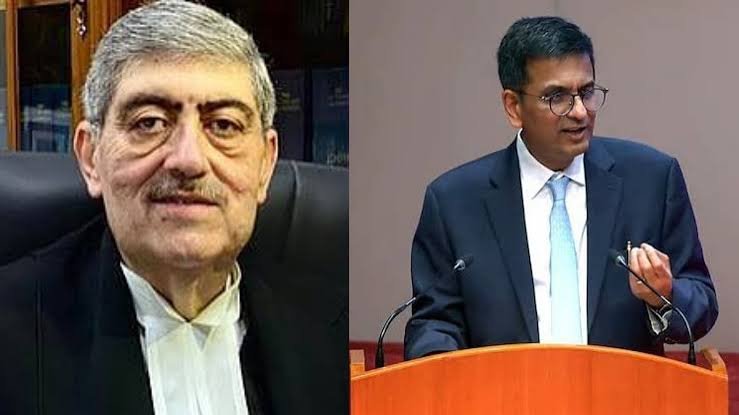
of Justice Sanjay Kaul’s charge that ex CJI Chandrachud was
deferential to the Government
The report of Ritu Sarin in The Indian Express on October 10, 2026, with the headline “As Chief Justice of India, Justice D Y Chandrachud was ‘too deferential to the Government’ when it came to appointments” reminds one of Mahatma Gandhi’s article, “The Hallucination of Law Courts,” published in Young India on October 6, 1920.
Ritu Sarin’s report is based on the forthcoming book Without Fear of Favour by Justice (Retd.) Sanjay Kaul of the Supreme Court, which is scheduled to be published by Juggernaut later this month. The report brings out Justice Kaul’s account that, at one time, Chandrachud, as Chief Justice, sought the Government’s “nod” before the Collegium had met and, on another occasion, even voiced the Government’s “bizarre” query regarding the caste of a minority-faith judge candidate.
Such an account of alleged deference by a former Chief Justice of India towards the Government echoes Mahatma Gandhi’s observations in his aforementioned article, “The Hallucination of Law Courts.”
Gandhi on the Hallucination of Law Courts
With deep anguish, Gandhi wrote: “The worst is that they (law courts) support the authority of a government.” He observed that courts “are supposed to dispense justice and are therefore called the palladile of a nation’s liberty.” But when they support the authority of an unrighteous Government, he warned, “they are no longer palladile of liberty, they are crushing houses to crush a nation’s spirit.”
Proceeding further, Gandhi emphatically and presciently wrote: “Let no one suppose that these things would be changed when Indian judges and Indian prosecutors take the place of Englishmen.”
Gandhi’s utterances of 1920 — that “The worst is that they (law courts) support the authority of a government” and “Let no one suppose that these things would be changed when Indian judges and Indian prosecutors take the place of Englishmen” — acquire renewed relevance in the context of Justice Kaul’s account concerning the alleged deference of a former CJI towards the Government.
Nehru on Independence of Judiciary
On 24 May 1949, Prime Minister Jawaharlal Nehru participated in the Constituent Assembly debate on Article 103 of the Draft Constitution, now Article 124 of the Constitution, dealing with the establishment and constitution of the Supreme Court comprising the Chief Justice and other judges.
While doing so, Nehru said: “It is important that these judges should be not only first-rate, but should be acknowledged to be first-rate in the country, and of the highest integrity, if necessary, people who can stand up against the executive government, and whoever may come in their way.”
Executive Court
Nehru’s words that judges should have the courage to “stand up against the executive government, and whoever may come in their way” deserve to be recalled and reiterated, particularly when, of late, the independence and integrity of people appointed as judges of the Supreme Court and High Courts are being questioned with credible material.
In his article “The Troubling Legacy of Chief Justice Ranjan Gogoi,” Gautam Bhatia charged that the Supreme Court was made to ally with the Government and sharply remarked that Gogoi’s tenure would be remembered for the rise of the “Executive Court,” one which had made the Supreme Court “indistinguishable from the executive.”
Justice Kaul’s remarks that CJI Chandrachud was deferential to the Government, if accurately reported and understood in context, add to the broader public debate about the relationship between the judiciary and the executive.
Independent Judiciary Signifies Independence of India
Such developments underline concerns about the independence of the judiciary from the executive, an independence mandated by the Constitution.
Indira Jaising, former Additional Solicitor General of India and Senior Advocate, in an interview with DeKoder in August 2026, stated that “the capture of the Supreme Court by the ruling parties worried her the most.” Reflecting on the crucial importance of an independent judiciary in safeguarding the country, she said: “If You Don’t Have an Independent Judiciary, You’re Not an Independent Country.” She also said that when young lawyers approached her for advice on how to discharge their duties in such an atmosphere, she told them to work in a manner as if they owned the court.
Indira Jaising’s Metaphor of the Sunflower Court
Indira Jaising’s metaphor of a “Suryamukhi” or “Sunflower” Court has been used to describe what she viewed as a deferential attitude towards those in power. The metaphor refers to a sunflower turning towards the sun as its apparent position changes with the rotation of the earth. In this formulation, the court is portrayed as continually aligning itself with the position of those at the helm of affairs.
What is troubling is the possibility that a loss of judicial independence, whether through institutional deference or through perceptions of an “Executive Court,” could have serious consequences for freedom, liberty and the constitutional independence of India.
The Question of the Right to Vote
The concerns also extend to judicial observations in matters involving electoral rights. Justice Joymalya Bagchi of the Supreme Court was reported as remarking that 2.7 million voters in West Bengal would vote in the next elections because their appeals concerning enrolment in the voter list were being adjudicated by judicial tribunals. When, during recent by-elections to two Assembly constituencies, lawyers pleaded that those voters should not be deprived of voting again in the election cycle, he was reported to have remarked: “This is only by election.”
Such remarks raise questions about the sensitivity with which courts approach the constitutional right to vote and the consequences of administrative and electoral decisions for citizens. The right to participate in elections is central to democratic citizenship.
The Supreme Court on Test
The Indian Express editorial “The knock on the Supreme Court’s door,” published on October 6, 2026, referred to its September 23 expose concerning the functioning of the Election Commission headed by Chief Election Commissioner Gyanesh Kumar in implementing the Special Intensive Revision (SIR), and concerns regarding possible large-scale disenfranchisement of voters.
The editorial stated that the citizen’s fundamental right to participate in the electoral process “has to be protected at all costs.” It argued that while the Election Commission had shifted the burden of proof onto vulnerable voters and created hurdles at various stages of the SIR process, the Court had continued to give it the benefit of every doubt. It concluded: “Going ahead, therefore, not just the EC, the Court is also on test.”
The question is therefore not merely whether the Election Commission is performing its constitutional responsibilities, but whether the judiciary is sufficiently willing and able to scrutinise executive and administrative action when fundamental rights are at stake.
The Constitutional Test
The crisis of credibility facing the Supreme Court, if allowed to deepen, could have serious consequences for the Republic. The essential constitutional question is whether the Chief Justice of India and other judges can question the Government of the day and hold it accountable for acts of commission or omission that allegedly violate the Constitution and the rule of law.
Only when judges possess the institutional independence and constitutional courage to scrutinise executive power can judicial independence be meaningfully upheld. Failure to do so would repeatedly bring to mind Indira Jaising’s forceful observation: “If You Don’t Have an Independent Judiciary, You’re Not an Independent Country.”
The restoration and preservation of judicial independence is therefore not merely an institutional concern. It is a constitutional imperative. The judiciary’s ability to act independently, protect fundamental rights, and hold every branch of government to account is essential to preserving the Constitution and safeguarding the independence of India.
Sources / References
1. Ritu Sarin, The Indian Express, October 10, 2026: “As Chief Justice of India, Justice D Y Chandrachud was ‘too deferential to the Government’ when it came to appointments,” based on Justice (Retd.) Sanjay Kaul’s forthcoming memoir Without Fear of Favour, Juggernaut.
2. Mahatma Gandhi, “The Hallucination of Law Courts,” Young India, October 6, 1920.
3. Jawaharlal Nehru, Constituent Assembly discussion, 24 May 1949, on the establishment and constitution of the Supreme Court.
4. Gautam Bhatia, “The Troubling Legacy of Chief Justice Ranjan Gogoi,” The Wire.
5. Indira Jaising, interview with DeKoder, August 2026.
6. The Indian Express editorial, “The knock on the Supreme Court’s door,” October 6, 2026.
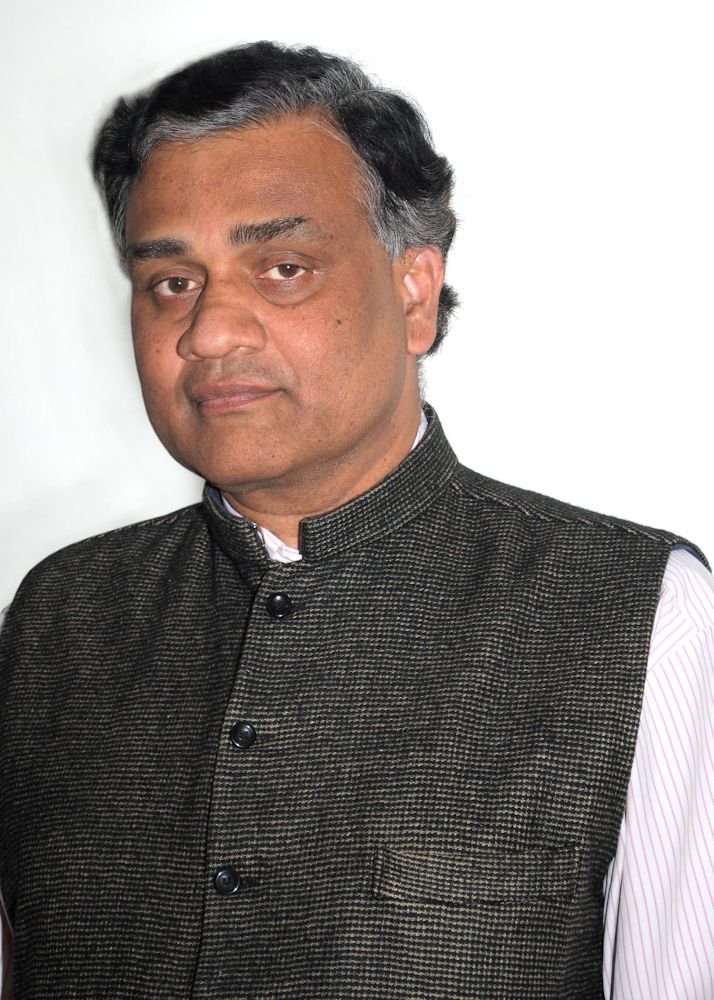
Served as Officer on Special Duty and Press Secretary to the President of India K R Narayanan.