

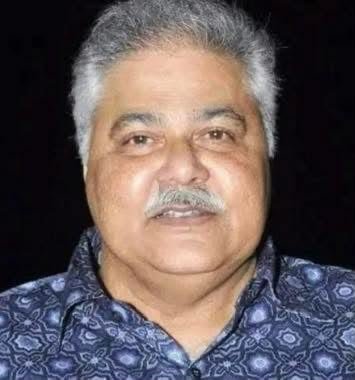
One year ago, on October 25, 2025, the Indian entertainment industry lost one of its most versatile and cherished icons. Satish Ravilal Shah passed away at the age of 74, leaving behind a five-decade-long career that redefined the landscape of Indian comedy. As a master of his craft, Shah moved seamlessly across parallel cinema, chaotic television sitcoms, and massive Bollywood blockbusters, turning every character—no matter how brief—into an indelible part of Indian pop culture.
From Dramatic Foundations to Dark Satire
Born on June 25, 1951, Shah’s journey began in Bombay. An alumnus of St. Xavier’s College, Mumbai, he went on to train at the prestigious Film and Television Institute of India (FTII). Rather than immediately chasing mainstream commercial stardom, Shah chose to hone his acting through the gritty terrain of late-1970s parallel cinema. His performances in seminal works like Arvind Desai Ki Ajeeb Dastaan (1978) and Albert Pinto Ko Gussa Kyon Ata Hai (1980) established his capacity for grounded, character-driven drama.
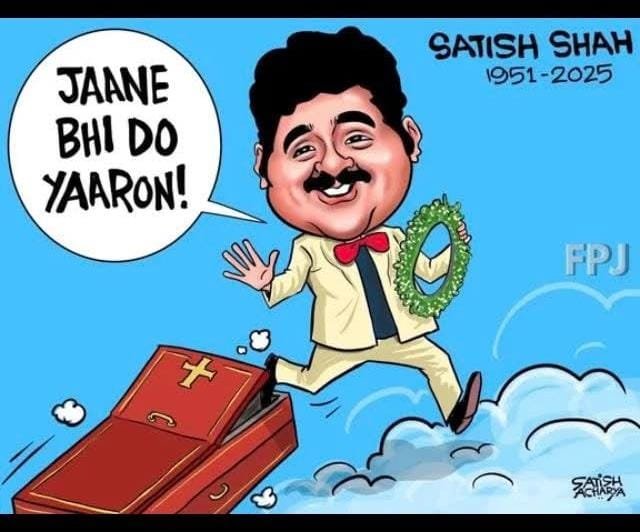
This commitment to realism culminated in a historic performance in Kundan Shah’s 1983 dark comedy, Jaane Bhi Do Yaaron. Playing the corrupt Municipal Commissioner D’Mello, Shah produced a masterclass in absurdist comedy. His portrayal—most notably in the climactic Mahabharata scene where he plays D’Mello’s corpse—became a legendary moment in Indian cinema, demonstrating an actor completely unbothered by vanity in service of the craft.
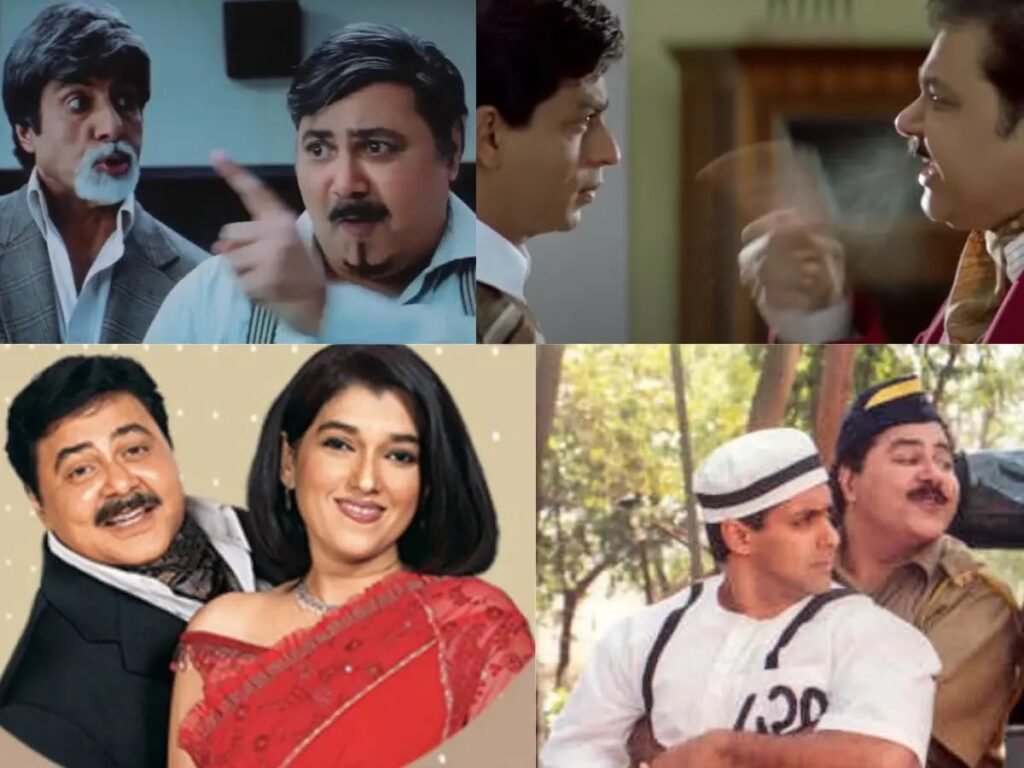
As the 1990s arrived, Shah transitioned into commercial mainstream cinema, becoming an essential fixture in major family entertainers including Dilwale Dulhania Le Jayenge, Hum Aapke Hain Koun..!, and Hero No. 1. His natural warmth ensured that the humour remained grounded, accessible, and heartfelt.
A Pioneer of the Small Screen
While his film resume was extensive, television made Satish Shah a household name. In the 1980s landmark sitcom Yeh Jo Hai Zindagi, he achieved an extraordinary feat by portraying 55 distinct characters across 55 episodes. This extraordinary display of range established him as a master of transformation.
Two decades later, Shah delivered his definitive small-screen performance as Indravadan Sarabhai in Sarabhai vs Sarabhai. As the sarcastic, mischievous patriarch sparring with his elite wife Maya and teasing his son Roshesh, Shah’s razor-sharp timing and expressive delivery turned the show into a cultural phenomenon. The role earned him multiple Best Actor in a Comic Role awards and led to a celebrated revival in 2017.
Master of the Memorable Cameo
With a filmography spanning over 250 feature films, Shah possessed a rare ability to dominate scenes with limited screen time. Whether playing the boisterous Karshan Bhai Patel in Kal Ho Naa Ho or the endlessly spitting Professor Rasai in Farah Khan’s debut feature Main Hoon Na, his presence guaranteed laugh-out-loud moments. His reliability and timing made him a sought-after actor across genres, from the dramatic stakes of Fanaa to the grand spectacle of Om Shanti Om.
An Enduring Legacy
Beyond the screen, Shah maintained a private, dignified personal life. Later in his career, he served on the FTII governing society, giving back to the institution where his training began.
A year after his passing, Satish Shah’s legacy remains as vibrant as ever. From the dark satirical brilliance of D’Mello to the sharp wit of Indravadan Sarabhai, his work continues to bring joy to millions across generations, securing his place as a true titan of Indian performance art.

~Hasnain Naqvi is a former member of the history faculty at St. Xavier’s College, Mumbai….
The opinions expressed here are solely those of the author.