

“Log aurat ko faqat jism samajh lete hain,
Rooh bhi hoti hai us mein ye kahaan sochte hain.”
(People see a woman merely as a body;
They seldom pause to think that she has a soul.)
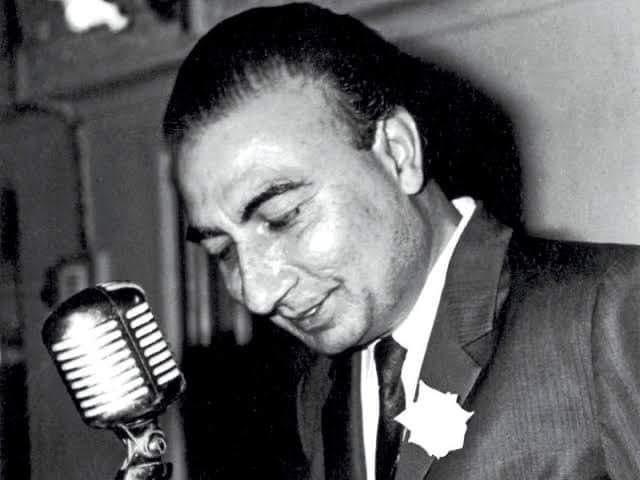
Every year on 8 March, the world commemorates International Women’s Day, a moment to reflect upon women’s struggles and achievements. Coincidentally, this date also marks the birth anniversary of one of Urdu poetry’s most progressive voices, Sahir Ludhianvi (1921–1980). Few poets articulated the pain, resilience and dignity of women with the intensity and moral clarity that Sahir brought to his poetry and film lyrics.
In a literary culture where women were often romanticised as unattainable beloveds or aesthetic symbols, Sahir confronted society with uncomfortable truths. His poetry exposed patriarchal hypocrisy, questioned the commodification of women, and demanded recognition of their humanity. On the convergence of his birth anniversary and International Women’s Day, Sahir’s voice resonates with renewed urgency, reminding us that poetry can be both beauty and rebellion.
“Aurat Ne Janam Diya Mardon Ko…” — A Fiery Indictment of Patriarchy
“Aurat ne janam diya mardon ko, mardon ne usse bazaar diya,
Jab jee chaha masla-kuchla, jab jee chaha dhutkaar diya.”
A woman gave birth to men, yet men consigned her to the marketplace;
When they wished they crushed her, when they wished they cast her aside.
Among Sahir’s most powerful poems on women is the celebrated nazm “Aurat Ne Janam Diya Mardon Ko.” Written for the film Sadhna, the poem is a blistering critique of the double standards embedded in patriarchal society.
Sahir lays bare the contradiction of a culture that glorifies motherhood yet denies women autonomy and respect. In a few devastating lines, he exposes the moral hypocrisy of men who worship feminine virtue in the abstract while exploiting real women in everyday life.
The poem remains one of the most uncompromising feminist statements in Urdu poetry. Long before the language of “gender justice” entered public discourse in South Asia, Sahir demanded that society confront its own cruelty.
His sensitivity toward women’s suffering was not merely rhetorical. It stemmed from deeply personal experiences. Sahir was raised by his mother Sardar Begum
after his parents’ turbulent separation, and he remained emotionally close to her throughout his life. Her struggle against a patriarchal family structure profoundly shaped his worldview, instilling in him a lifelong empathy for women who resisted injustice.
“Ye Kooche, Ye Neelaam Ghar…” — The Cry of the Marginalised
“Ye kooche ye neelaam ghar dil-kashi ke,
Ye lut-te hue kaarwaan zindagi ke —
Sanaa-khwaan-e-taqdees-e-mashriq kahaan hain?”
(These streets, these auction houses of desire,
These caravans of life being plundered—
Where are the champions of the East’s sacred values?)
Few poems in Urdu literature have portrayed the brutal realities of exploitation as vividly as Sahir’s searing nazm “Chakle” (Brothels). The poem later appeared memorably in the film Pyaasa, directed by Guru Dutt.
Rather than moralising about prostitution, Sahir shifts the focus to society itself. He asks a haunting question: if these women are degraded, who created the conditions that forced them into such lives?
In the poem’s refrain—“Sanaa-khwaan-e-taqdees-e-mashriq kahaan hain?” (“Where are the defenders of Eastern virtue?”)—Sahir exposes the hypocrisy of those who glorify tradition while ignoring the exploitation of women in their midst.
The poem’s imagery—dimly lit lanes, clinking coins, weary bodies—transforms the brothel into a metaphor for a society that trades in human dignity. Yet the poem also carries compassion. Sahir reminds readers that these women are daughters of Eve, Radha, Yashoda and Zuleikha—symbols drawn from multiple faiths and traditions—thereby restoring their humanity.
“Log Aurat Ko Faqat Jism Samajh Lete Hain…” — The Soul of a Woman
“Rooh mar jaaye to ye jism hai chalti hui laash,
Is haqeeqat ko na samajhte hain na pehchaante hain.”
(When the soul dies, the body becomes a walking corpse—
Yet people neither recognise nor understand this truth.)
In another remarkable poem, Sahir confronts the objectification of women with piercing clarity. These verses reflect his conviction that reducing women to physical desire destroys their inner lives.
The poem moves beyond protest to philosophical reflection. Sahir argues that society’s obsession with female bodies erases women’s intellectual and emotional existence. The result is spiritual death—an entire gender forced to live without recognition of its inner world.
Such lines were radical in mid-twentieth-century South Asia, where discussions of women’s autonomy were still constrained by social conservatism. Sahir’s poetry thus anticipated the later feminist critique of patriarchal structures that treat women as objects rather than individuals.
Poetry in Cinema: Rewriting the Image of Women
“Tum agar saath dene ka waada karo,
Main yun hi mast naghme lutata rahoon.”
(If you promise to walk beside me,
I shall continue scattering songs of joy.)
While Sahir’s independent poetry challenged patriarchal norms, his work as a film lyricist brought these ideas into popular culture. In the golden age of Hindi cinema, he transformed the film song into a vehicle for social reflection.
His collaborations with composers and filmmakers—from S. D. Burman to Chopra brothers: B.R and Yash Raj —produced lyrics that balanced romance with dignity. Even in love songs, Sahir insisted on emotional equality. Love, in his imagination, was not possession but partnership.
His work in films such as Kabhi Kabhie and Dhool Ka Phool reflected a humanist vision that transcended social divisions.
The famous line:
“Tu Hindu banega na Musalman banega,
Insaan ki aulaad hai, insaan banega.”
(You will become neither Hindu nor Muslim—
Born of a human, you will become human.)
Though written about communal identity, the lyric embodies Sahir’s broader philosophy: human dignity must override all imposed hierarchies—religious, social or gendered.
A Progressive Voice of the Progressive Writers’ Movement
“Kabhi khud pe kabhi haalaat pe rona aaya…”
(Sometimes I wept for myself, sometimes for the world.)
Sahir belonged to the vibrant literary tradition shaped by the Progressive Writers’ Association, a movement that sought to harness literature for social transformation. Influenced by progressive thinkers such as Faiz Ahmed Faiz and Kaifi Azmi, Sahir viewed poetry as an instrument of conscience.
Yet his voice remained distinct. While many progressive poets addressed class struggle and colonialism, Sahir repeatedly foregrounded gender injustice. His poems recognised that the liberation of society would remain incomplete without the emancipation of women.
In doing so, he expanded the moral imagination of Urdu poetry, bringing the everyday suffering of women into the centre of literary discourse.
A Legacy that Still Speaks
“Kab talak aankh na kholega zamaane ka zameer,
Zulm aur jabr ki ye reet chalegi kab tak?”
(How long will the conscience of the world remain asleep?
How long will the customs of oppression endure?)
More than four decades after his death, Sahir Ludhianvi’s poetry retains its startling relevance. The questions he raised—about dignity, equality and justice—continue to haunt societies across the world.
On International Women’s Day, his verses remind us that true progress cannot be measured merely by celebration or symbolism. It requires confronting entrenched injustices that deny women their rightful place as equal participants in society.
Sahir once wrote that people often hear a woman’s cry as though it were a song. His poetry sought to transform that cry into a call for awakening—a reminder that every woman carries within her a soul, a history and a dream.
Remembering Sahir on his birth anniversary is therefore not merely an act of literary homage. It is a reaffirmation of the values he championed: empathy, equality and the courage to question oppressive traditions.
In the end, Sahir Ludhianvi was not simply a poet of romance or revolution. He was a poet of conscience—one who insisted that a just society must begin by recognising the humanity of its women.

~Hasnain Naqvi is a former member of the history faculty at St. Xavier’s College, Mumbai….
The opinions expressed here are solely those of the author.

