

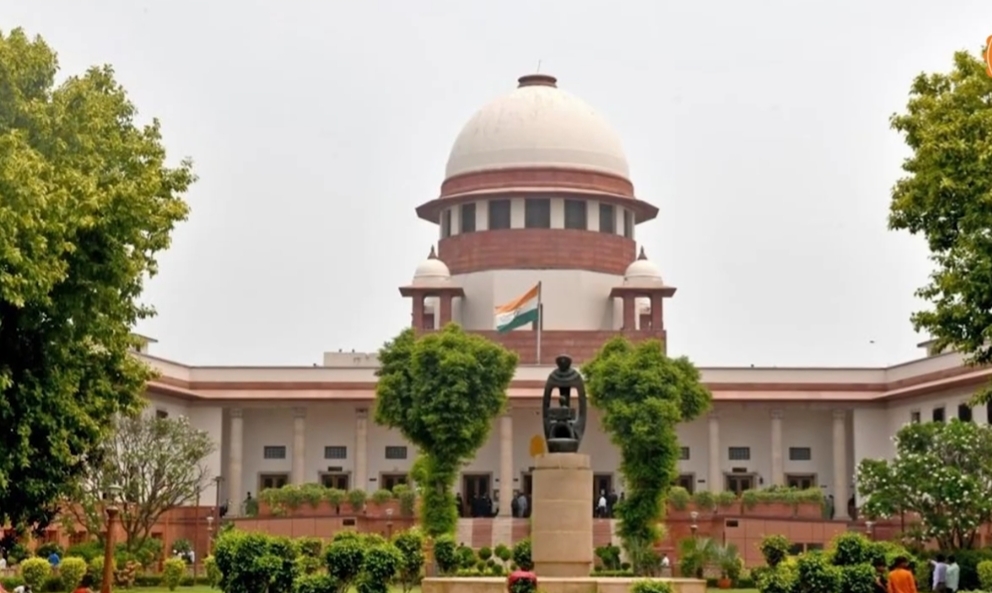
NEW DELHI,12 March 2026,: The Supreme Court on Wednesday allowed plea for passive euthanasia (withdrawal of life support) of Ghaziabad’s 31-year-old Harish Rana, who has remained in a permanent vegetative state since 2013 after falling from a building.
This could be the first instance of the Court passing such a direction in an individual case, following its 2018 judgment which laid down the law allowing passive euthanasia.
A bench of Justices JB Pardiwala and KV Viswanathan passed the judgment after noting that Rana has not been responding to treatment.
“He experiences sleep–wake cycles but exhibits no meaningful interaction and has been dependent on others for all activities of self-care. Harish has been on CAN administered through a PEG tube, and his condition has shown no improvement,” the Bench noted on his condition.
Hence, it ruled that the medical board can exercise its discretion on withdrawal of life support in accordance with the guidelines laid down by the top court in its 2018 judgment in Common Cause v. Union of India.
“In line with our considered view, it would be permissible for the medical board to exercise its clinical judgment regarding the withdrawal of treatment in accordance with the guidelines laid down in Common Cause v. Union of India,” the judgment said.
In 2018, a five-judge Constitution Bench had recognised and given sanction for passive euthanasia and living will/advance directives.
In that judgment, the top court had ruled that the right to life under Article 21 includes the right to live with dignity, and the same includes the smoothening of the process of dying in case of a terminally ill patient or a person in persistent vegetative state with no hope of recovery.
Picture credit social media

