

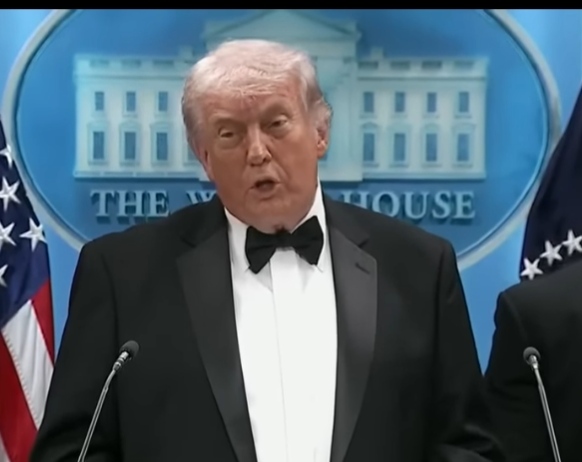
The latest pronouncement by Donald Trump—calling off a proposed diplomatic outreach to Iran via Islamabad on the grounds that it involved “too much time wasted on traveling”—is less a statement of efficiency than an admission of drift. What was initially projected as a bold backchannel to break the impasse has now been abruptly shelved, replaced by familiar rhetoric about American dominance and Iranian disarray. The contradiction is telling: a White House that oscillates between urgency and indifference is one that is struggling to define its endgame.
For weeks, Washington had signalled that indirect talks—facilitated through Pakistan—might offer a face-saving off-ramp from a conflict that has proven far more protracted than anticipated. Tehran’s refusal to engage directly with U.S. officials made such intermediated diplomacy not just desirable but necessary. Yet the sudden cancellation of this channel, framed almost casually, underscores a deeper incoherence in policy. If diplomacy is expendable because it is inconvenient, then what remains is a strategy driven more by impulse than by design.
This inconsistency is visible in the broader conduct of the conflict. The Trump administration has repeatedly extended ceasefire windows while simultaneously escalating its rhetoric. These pauses, presented as opportunities for negotiation, increasingly resemble tactical delays—buying time amid mounting operational and logistical pressures. Reports of strain on advanced munitions and the limits of sustained naval enforcement in the Strait of Hormuz suggest that Washington’s leverage is not as absolute as its public messaging দাবি.
And yet, the president’s public posture continues to insist otherwise. Assertions that the United States “has all the cards” and that Iran “has none” are meant to project strength, but they risk eroding credibility when paired with visible recalibration on the ground. Diplomacy cannot be summoned and dismissed in the same breath; nor can adversaries be coerced into talks through alternating signals of invitation and contempt.
Tehran, for its part, has responded with calculated defiance. Iranian officials have dismissed U.S. overtures while reiterating preconditions that Washington is unwilling—or unable—to meet. The result is a diplomatic stalemate in which each side waits for the other to blink, even as the costs of prolongation rise. In such a scenario, inconsistency becomes a liability: it allows the adversary to consolidate internally while portraying the United States as strategically uncertain.
The aborted Islamabad initiative also raises questions about Washington’s reliance on intermediaries. Pakistan’s role as a conduit was never guaranteed to succeed, but abandoning it so abruptly signals not just frustration, but a narrowing of options. With direct talks off the table and indirect channels now disrupted, the space for de-escalation contracts further.
What remains, then, is a familiar pattern: maximalist rhetoric coupled with limited actionable pathways. Military escalation carries risks that extend well beyond the immediate theatre, while disengagement would be framed domestically as retreat. Between these poles lies diplomacy—the very avenue now dismissed as too cumbersome.
In the end, the cancellation of a trip is not merely a logistical footnote; it is a reflection of a broader strategic dilemma. A conflict that was meant to be swift has become a test of endurance, and a presidency that prides itself on deal-making now finds itself without a clear deal to make. The search for an off-ramp continues—but it is increasingly constrained by the very volatility that has come to define Washington’s approach.

~Hasnain Naqvi is a former member of the history faculty at St. Xavier’s College, Mumbai….
The opinions expressed here are solely those of the author.

