
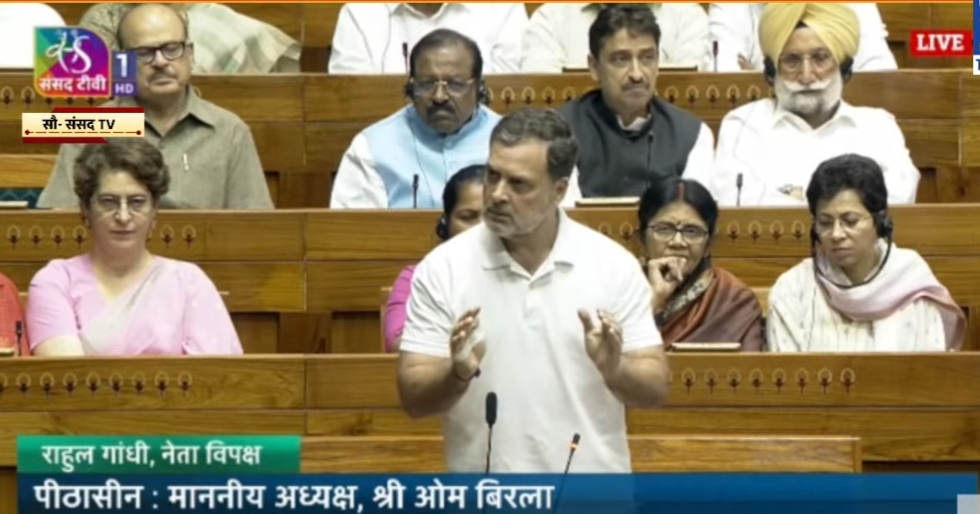
NEW DELHI,18April 2026 : The Constitution amendment bills for women’s reservation and delimitation were defeated in the Lok Sabha Friday night as the NDA could not get 2/3rd majority to pass them.
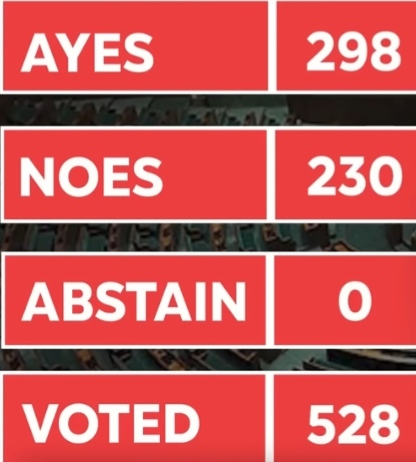
In the voting, 298 MPs supported the bills while 230 voted against them, with a total of 489 members participating. To pass the legislation, the government needed 362 votes (two-thirds majority), which it fell short of.
Notably, just 180 opposing votes were enough to block the bills, a number the opposition comfortably exceeded, leading to their defeat.
The setback is significant for the government, as the proposed laws were seen as key steps toward implementing women’s reservation in upcoming elections and restructuring constituencies without waiting for a new Census. The outcome also highlights continued political disagreement over delimitation and the timeline for introducing women’s quota, ensuring that the issue will remain a major point of debate.
Replying to the debate on the Women’s Reservation Bill and the Delimitation Bills, Union Home Minister Amit Shah said that he was ready to pause Lok Sabha proceedings and bring an official amendment guaranteeing a 50 per cent increase in seats.
He told the Opposition that he was ready to bring an official amendment ensuring a 50 per cent increase in seats for states, if the House paused proceedings for an hour.
Replying to the debate on the Women’s Reservation Bill and the Delimitation Bill, Shah said the government had nothing to hide and was prepared to put the proposal in writing. He added that a formal amendment was ready and could be circulated among members after being copied and distributed.
Shah urged Opposition members to clarify whether their resistance stemmed from the demand for a 50 per cent increase in seats. “If that is the issue, I will return within an hour with an official amendment,” he said, while insisting that the Bill must be passed.
Targeting the Opposition, Shah said no party had openly opposed women’s reservation, but alleged that members of the INDIA bloc were effectively resisting it through “ifs and buts”. He warned that delaying the Bill beyond 2029 would amount to blocking its implementation.
“No one has objected to the women’s reservation. But, if we see closely, all members of the INDI alliance have opposed it by using ifs and but,” Amit Shah said.
He also argued that opposition to delimitation was, in effect, opposition to increasing seats reserved for Scheduled Castes and Scheduled Tribes. “Those opposing delimitation are actually opposing an increase in SC/ST seats,” the Home Minister said.
Shah assured the House that if delimitation was supported, the value of each vote would be equal across constituencies.
Citing participation in the debate, Shah said nearly 133 members spoke on the Constitution amendment Bill, including 56 women — a figure he described as a record.
“Nearly 133 Members spoke in the House on this important constitution Amendment Bill, out of which 56 Members were women, which will prove to be a record in itself. I assure them that if they support us for delimitation, then the value of each vote will have equal value across constituencies,” he added.
On the implications of the proposed changes, Shah said implementing women’s reservation on the current 543 seats would reserve 13 seats for women in Tamil Nadu, leaving 26 unreserved.
“If we implement women’s reservation based on 543 seats, then 13 seats will get reserved for women, and 26 will remain open in Tamil Nadu. If we implement women’s reservation based on the 2011 census, then the number of parliamentary seats will reduce by 6. But we are not doing so. We are increasing seats by 50 per cent for every state,” the Home Minister said.
Invoking history, Shah said the number of Lok Sabha seats was increased from 525 to 545 in 1972 under former Prime Minister Indira Gandhi, before delimitation was frozen during the Emergency through the 42nd Amendment in 1976. He accused the Congress of having denied the country delimitation then and continuing to do so now.
Picture credit social media

We are a multimedia news network. Website : www.7xnews.com Based in New Delhi (India)
Youtube : umakantlakheraspeaks@gmail.com

