

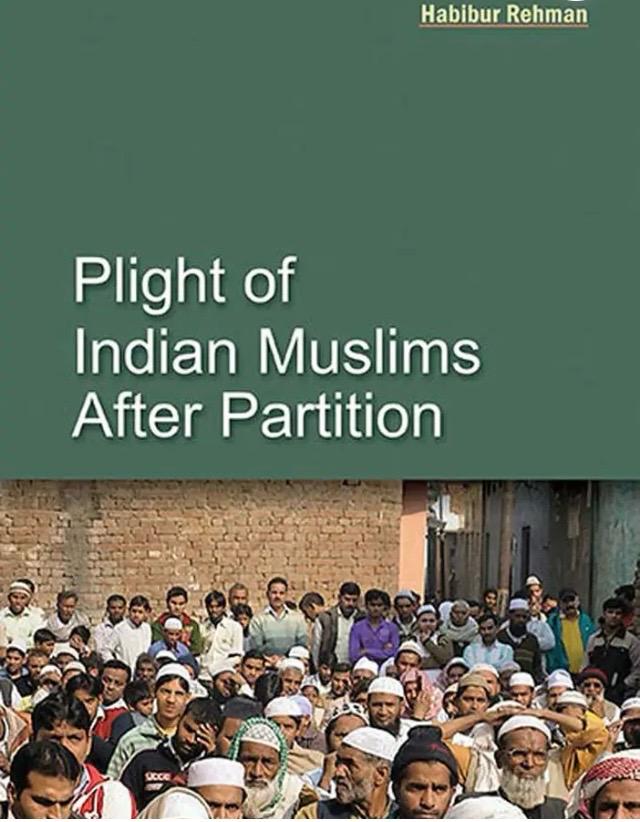
In the complex tapestry of post-1947 India, the narrative of the Muslim community is often framed through the narrow lenses of security or identity politics. However, in his poignant study, *Plight of Indian Muslims After Partition*, Professor Habibur Rehman shifts the focus toward a more visceral reality: the systemic developmental lag that has persisted for over seven decades. Published by Atlantic Publishers, the book serves as a sobering audit of the promises made by a secular democracy and the lived reality of its largest minority.
A Legacy of Stagnation
Rehman, an academician who has witnessed the trajectory of independent India firsthand, utilizes the landmark 2006 Sachar Committee Report as a statistical bedrock. The findings he presents are stark. While India has marched toward global economic prominence, a significant portion of its 200 million Muslims remains anchored in a cycle of poverty and educational backwardness.
The data suggests a troubling hierarchy of deprivation. In many states, the socio-economic indicators for Muslims—ranging from literacy rates to representation in the formal workforce—are not only lower than the national average but frequently trail behind Scheduled Castes and Scheduled Tribes. This “development deficit” is not merely a matter of historical inertia; Rehman argues it is the result of a lack of inclusive transparency and the absence of genuine political will.
Beyond the “Vote Bank” Rhetoric
One of the book’s most compelling arguments challenges the popular political trope of “appeasement.” Rehman contends that while various governments have launched policy initiatives aimed at minorities, these are often perceived by the community as “cosmetic” measures designed for electoral optics rather than structural change.
The author identifies a paradox: while the state fears that “special benefits” might fuel communal polarization, the resulting inaction further isolates the community. This isolation is not just economic. Rehman meticulously documents a sense of “cultural suffocation” and social distancing that has intensified in recent decades, exacerbated by the rise of right-wing extremist rhetoric which places the community under a permanent lens of suspicion.
The Economic Landscape: A Statistical Snapshot
To understand the gravity of the “plight” Rehman describes, one must look at the structural barriers in the Indian economy:
*Employment:** Muslims have the lowest work participation rate among all religious groups, with a heavy over-reliance on the informal sector and self-employment (often in artisanal or small-scale trades) due to barriers in the organized public and private sectors.
*Education:* The gap in higher education is particularly pronounced. Data indicates that the percentage of Muslims in elite educational institutions remains disproportionately low compared to their share of the population.
* Land and Assets:*
The community faces significant challenges in credit access, with many Muslim-concentrated areas often labeled as “red zones” by banking institutions, hindering entrepreneurial growth.
A Call for Constitutional Recovery
Despite the grim data, Rehman’s tone is not one of despair but of urgent consultation. The final chapters of the book, particularly the evocative section “Hindus and Muslims are the Two Sides of the Same Coin,” advocate for a return to the pluralistic mainstream. He posits that the “Muslim problem” is, in fact, an Indian problem; the country cannot achieve its full potential while 14% of its population remains socially and economically tethered.
Prof. Rehman, who has previously written extensively on debunking the myths of extremism in *The Muslim Mindset*, reinforces that the path forward lies in democratic and constitutional remedies. He calls for a move away from “identity-based” friction toward a “livelihood-based” integration.
Verdict
*Plight of Indian Muslims After Partition* is a necessary, if uncomfortable, read for policymakers and citizens alike. It strips away the polemics of the nightly news cycle and replaces them with a human-centric analysis of equity. In an era where “inclusive growth” is the stated goal of the state, Rehman’s work serves as a reminder that inclusion is measured not by rhetoric, but by the closing of the gap between the periphery and the centre.

~Hasnain Naqvi is a former member of the history faculty at St. Xavier’s College, Mumbai….
The opinions expressed here are solely those of the author.