

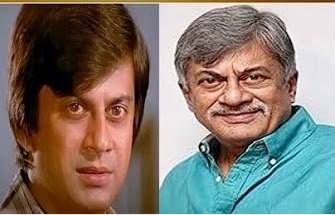
In an age when Indian cinema often equates greatness with volume, spectacle and carefully engineered stardom, the decision to confer the Dadasaheb Phalke Award on Anant Nag feels almost radical. It is not merely a recognition of longevity or commercial success. It is an official affirmation that an actor’s most lasting power can reside in what he deliberately withholds: the raised voice, the sweeping gesture, the demand to be noticed. For more than five decades, Nag has practised a form of screen presence that treats understatement as strength. The nation’s highest cinematic honour now arrives as delayed but fitting confirmation that this philosophy still matters.
The Grammar of Ordinary Life
Born Anant Nagarkatte, he entered films at a moment when mainstream Indian cinema preferred mythic scale and larger-than-life archetypes. From the outset he chose a different register. His early training in Mumbai’s serious theatre circles taught him that the camera rewards observation more than exhibition. The result was an acting style built on conversational ease, micro-shifts of posture and an almost documentary attentiveness to ordinary behaviour. Audiences did not feel they were watching a performance so much as overhearing a life in progress.
That quality drew the attention of Shyam Benegal and placed Nag at the centre of the parallel cinema movement of the 1970s. In films such as Ankur, Nishant, Manthan and Bhumika, he demonstrated that complex social and political tensions could be conveyed through the stillness of a gaze or the slight hesitation before a line. These performances helped establish a new vocabulary for Indian screen acting—one that trusted the viewer’s intelligence rather than instructing it with rhetoric.
Crossing the Divide Without Compromise
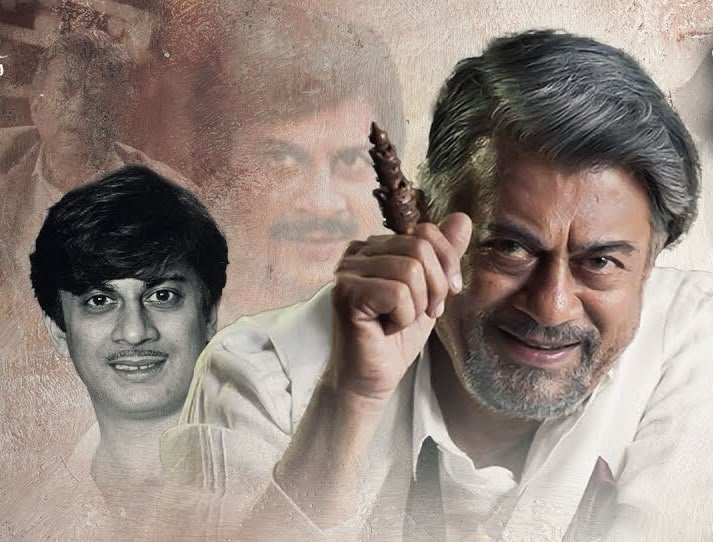
What distinguishes Nag’s career is not simply excellence within the art-house tradition but his refusal to treat that tradition as a sealed compartment. While many of his contemporaries settled on one side of the parallel-commercial divide, he moved between them with unusual fluency. In Kannada cinema he became an accessible yet never trivial leading man. Films such as Bayalu Daari, Na Ninna Bidalare and Chandanada Gombe allowed him to invest romantic and domestic roles with intellectual and emotional density rarely granted to mainstream protagonists.
He could also pivot into comedy without sacrificing precision. His best comic work relies on impeccable timing and a wry understanding of human frailty rather than broad physical farce. The humour has aged cleanly because it was never dependent on fashionable gags. Even in recent years the same restraint has continued to register. His portrayal of a father sliding into Alzheimer’s in Godhi Banna Sadharana Mykattu was devastating precisely because it avoided sentimentality. A brief appearance in the blockbuster KGF: Chapter 1 showed that an actor of his generation could still anchor a contemporary action spectacle simply by being present and truthful.
The Shadow and Continuity of a Shared Vision
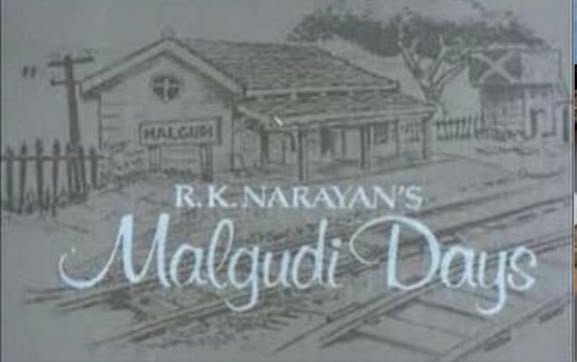
Any account of Nag’s journey must pause at the memory of his younger brother, Shankar Nag. Together the two reshaped the cultural landscape of Karnataka and, through television, of the country. Their collaboration on Malgudi Days—the celebrated Doordarshan adaptation of R.K. Narayan’s stories—remains one of the purest expressions of literary fidelity and understated performance on Indian screens. As the gentle narrative presence of that series, Anant Nag helped create a fictional town that felt more real than many documented places.
Shankar’s death in 1990 left an irreplaceable absence. Yet the elder brother continued to carry forward the artistic seriousness the two had once shared. Subsequent performances often seemed, in quiet ways, to honour that interrupted partnership: disciplined, unshowy, and alert to the textures of everyday Indian life.
Politics Without Performance
Beyond cinema, Nag brought the same temperament to public life. Shaped by the idealism of the Jayaprakash Narayan movement, he entered electoral politics and served in both houses of the Karnataka legislature, including a ministerial term. In an era when celebrity and politics frequently collapse into mutual branding, his record stands apart for its relative absence of theatricality. He treated office as an extension of civic responsibility rather than an amplification of stardom, and he never allowed political position to excuse artistic compromise. The consistency is striking: the same man who refused to overact on screen also declined to turn public service into spectacle.
An Honour That Feels Like Recognition, Not Discovery
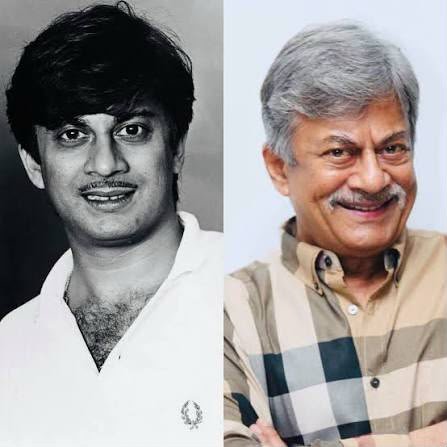
The Dadasaheb Phalke Award, following his earlier Padma Bhushan, arrives after a body of work that already exceeds three hundred films across languages. It does not introduce a new name to the national pantheon; it simply records what successive generations of audiences have long understood. Nag has remained, throughout, a craftsman rather than a brand. He has treated acting as a discipline to be refined rather than a platform to be monetised. In an industry that increasingly rewards constant self-promotion, that stance itself constitutes a form of quiet resistance.
By honouring him, the country acknowledges a deeper truth about its own cinematic inheritance. The most durable contributions are not always the loudest. They are the ones that trust silence, that respect the audience’s capacity for attention, and that insist the ordinary human face—observed carefully enough—can contain the full range of political, moral and emotional life. Anant Nag’s career has been a sustained demonstration of that belief. The award does not elevate him so much as it elevates the standard he has upheld for half a century.

~Hasnain Naqvi is a former member of the history faculty at St. Xavier’s College, Mumbai….
The opinions expressed here are solely those of the author.