
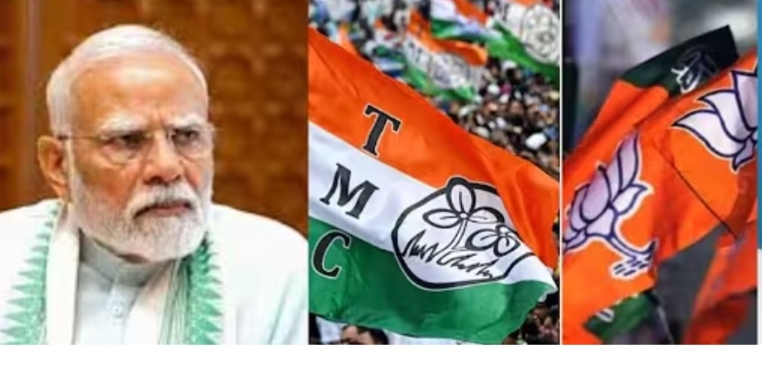
West Bengal’s Assembly election has once again become one of the most closely watched political contests in the country. After the first phase recorded an extraordinary turnout of over 93 percent, political circles are sharply divided over what this unprecedented participation really means. Is Bengal witnessing the early signs of a political shift, or are voters mobilising in large numbers to preserve the existing order under Chief Minister Mamata Banerjee?
The stakes are exceptionally high. For the BJP, this election is an opportunity to recover momentum after the setback it suffered in the 2024 Lok Sabha elections, when it lost several key parliamentary seats in the state and saw a visible decline in its overall tally. That result punctured the party’s expansion narrative in Bengal and revived confidence within the Trinamool Congress (TMC).
With the second and final phase of polling drawing attention, the BJP is now pushing hard to narrow the vote-share gap with the TMC. Yet the contest is unfolding amid deep controversy over voter rolls, campaign rhetoric, identity politics and competing claims over governance.
One of the biggest flashpoints has been the Election Commission’s Special Intensive Revision (SIR) of electoral rolls conducted ahead of the polls. Critics allege that the revision process may have disproportionately affected sections of Muslim voters by excluding names from the lists. It is also being claimed that some Hindu Mahua Scheduled Caste communities and other non-minority voters were impacted, possibly to counter charges of selective targeting.
Whether these allegations are politically motivated or grounded in fact, the issue has become central to the Bengal narrative. In a state where electoral participation is traditionally intense, any dispute over voter lists naturally fuels suspicion and anger.
Ground reports suggest that many eligible Bengali voters living or working outside the state have returned home specifically to cast their ballots. If accurate, that trend underlines how emotionally charged this election has become. Several observers believe resentment over voter list confusion could translate into votes against the BJP and those perceived to be facilitating the process.
At the same time, another school of thought argues that the heavy turnout reflects a desire for change. According to this narrative, past elections in Bengal were marred by fear and local intimidation, discouraging free participation. With unprecedented deployment of central security forces this time, many believe voters have gained confidence to vote independently.
Security presence itself has become a political issue. BJP supporters say strong policing and paramilitary deployment have ensured cleaner elections and reduced booth-level malpractice. Opponents, however, claim the same forces have created unease among voters, with allegations of partisan behaviour in some areas. Such claims remain politically contested, but they have contributed to a highly polarised atmosphere.
For Mamata Banerjee, despite visible anti-incumbency after years in office, the election remains winnable because of one key factor: personal connect. Her supporters argue that she remains closer to ordinary people than any rival leader in the state. Welfare schemes related to women, education, health and social assistance continue to hold significant appeal, especially among rural and lower-income voters.
Women voters may once again prove decisive. TMC’s sustained focus on women-centric welfare programmes has built a loyal support base. In many regions, Mamata still enjoys the image of “Didi” who delivers direct benefits and remains accessible.
Candidate selection has also strengthened the TMC campaign. The party has fielded a noticeable number of women and younger faces, signalling renewal rather than stagnation. This has helped offset some anti-incumbency concerns.
However, the TMC is not without vulnerabilities. In urban Bengal, especially among sections of educated women voters, anger reportedly persists over the handling of the rape and murder of a lady doctor. If this sentiment consolidates, it could damage TMC in select urban constituencies.
The BJP, meanwhile, continues to struggle with Bengal’s cultural sensibilities. Several campaign missteps by leaders have drawn criticism and mockery. Errors involving iconic Bengali figures such as Rabindranath Tagore and Subhas Chandra Bose have reinforced perceptions that parts of the BJP leadership remain disconnected from Bengal’s intellectual and cultural identity.
Statements touching food habits, religion and aggressive sloganeering have also met resistance in a state known for political awareness and cultural pride. Bengal voters often scrutinise tone as much as content, and rhetoric perceived as patronising or threatening can quickly backfire.
That said, BJP still retains a substantial support base, especially in segments seeking stronger opposition to TMC dominance, cleaner governance and political change. It would be premature to write off the party in a sharply bipolar contest.
As of now, the broad political mood appears to favour the TMC. Many assessments indicate Mamata Banerjee remains in a commanding position and could cross the 100-seat mark in the 142-seat contest under discussion, paving the way for a fourth consecutive term. Such a victory would be historic, placing her among Bengal’s longest-serving and most resilient leaders since the end of the Left Front era in 2011.
Yet Bengal elections have a habit of surprising observers. The turnout figures, intense mobilisation and conflicting narratives suggest that beneath the surface lies a deeply engaged electorate making up its own mind.
Whether this election becomes a turning point for the BJP or a reaffirmation of Mamata Banerjee’s hold on Bengal will only be known when the verdict is delivered. Until then, Bengal remains what it has always been — politically restless, fiercely aware, and impossible to predict with certainty.
(The Author Ashok Choudhury is social and Political thinker based in Delhi)

(Ashok Choudhury is a scholar and freelance writer exploring people, culture, society, and evolving perspectives on contemporary life)

