
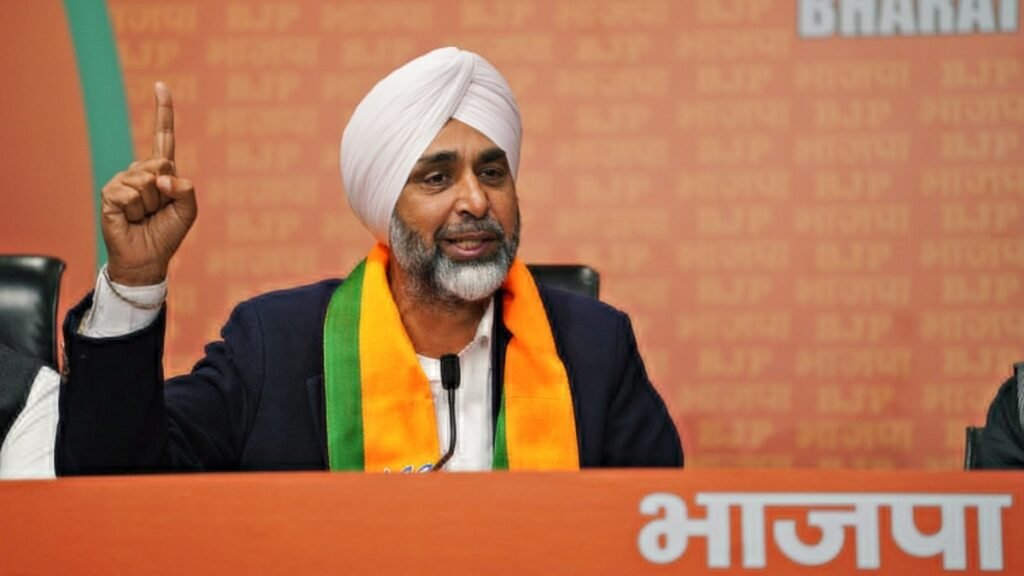
NEW DELHI: On January 5, 2022, then Congress leader Manpreet Singh Badal was on the Bathinda airport tarmac to receive Prime Minister Narendra Modi. Punjab chief minister Charanjit Singh Channi, isolating himself after two of his staff tested positive for Covid, had sent Manpreet, the finance minister, in his place. The state chief secretary and police chief were not present either.
Hours later, Manpreet was back at the airport to see off the prime minister—this time after Modi’s convoy had infamously gotten stranded on a flyover near Ferozepur for 20 minutes, causing a security scare and forcing his scheduled rally to be called off. Modi, while leaving Bathinda, had told Manpreet to thank their chief minister that he was returning alive. Manpreet was seen repeatedly apologising to him.
Two election drubbings followed. In 2022, Manpreet, as the Congress candidate, lost the Bathinda Urban assembly seat to Jagroop Singh Gill of the Aam Aadmi Party (AAP) by over 63,000 votes. Manpreet joined the BJP in January next year, and in the 2024 Gidderbaha assembly bypoll, the BJP fielded him from the seat he had held four times. But Manpreet finished third and forfeited his deposit.
Now, in a reversal of fortunes, Manpreet has been appointed a national vice-president of the BJP alongside the likes of veterans Vasundhara Raje, Ram Madhav and D. Purandeswari.
Punjab is scheduled to vote early next year to elect a new government. And that context counts. But there exists a gap between what the BJP’s national leadership decides and what its state unit can carry, and the past few weeks have made it all the more evident.
BJP national president Nitin Nabin’s team is already trying to douse cadre resentment triggered by the announcement of the list of office-bearers for the Punjab unit. Some of the corrections have made it to the list: Saudan Singh, an RSS pracharak once in charge of Punjab, Haryana, Himachal Pradesh and Chandigarh, is back as national joint general secretary (organisation) after a spell as vice-president. Satish Poonia, former Rajasthan unit president and Haryana in-charge, is national general secretary and now in-charge of Punjab.
Manpreet’s elevation belongs to an older design: building a Jat Sikh leadership of the BJP’s own after the Shiromani Akali Dal (SAD) left the NDA in 2020 over the central farm laws fiasco. The roster is by now substantial. Kewal Singh Dhillon was made state president. Ravneet Singh Bittu, grandson of former chief minister Beant Singh, came over from the Congress in 2024, lost the Ludhiana Lok Sabha seat that year, was made a Union minister anyway and then sent to the Rajya Sabha from Rajasthan.
Satnam Singh Sandhu, chancellor of Chandigarh University, was nominated to the Upper House. Taranjit Singh Sandhu, former Indian ambassador to the US and grandson of Shiromani Gurdwara Parbandhak Committee (SGPC) founding member Teja Singh Samundri, lost the Amritsar Lok Sabha seat in 2024 and was appointed lieutenant governor of Delhi this March.
Manjinder Singh Sirsa sits in the BJP government’s Delhi cabinet. Harjit Singh Grewal, despite being in poor health, became chairman of the National Commission for Minorities. Tarun Chugh, who recently got a Rajya Sabha berth, is the only exception of a Hindu from Punjab getting national responsibilities in the BJP.
Jat Sikhs form roughly 18 per cent of Punjab’s population and dominate its politics, especially in the villages. What the BJP’s chosen Jat Sikhs have in common, besides caste, is that they are drawn from the community’s elite—diplomats, educationists, dynasts and ministers’ relatives; and almost none of them commands a rural following.
Manpreet is the type in its purest form. He has thanked Modi, home minister Amit Shah and Nabin, termed his national BJP responsibilities as “not a reward but a test” and predicted a BJP government in Punjab.
Manpreet is prominent politician Gurdas Singh Badal’s son, nephew of the late SAD patriarch Parkash Singh Badal and first cousin of SAD president Sukhbir Singh Badal. He won the Gidderbaha assembly seat in 1995 and held it for three more terms. He broke away from the Akalis over the state of Punjab’s finances, founded the People’s Party of Punjab in 2011—wherein Bhagwant Mann was an early recruit—and watched it draw a blank in the 2012 polls.

We are a multimedia news network. Website : www.7xnews.com Based in New Delhi (India)
Youtube : umakantlakheraspeaks@gmail.com