
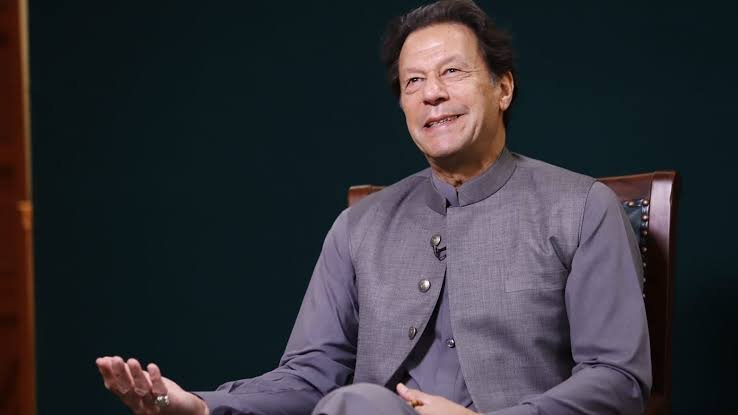
The Supreme Court’s relief to imprisoned former Prime Minister Imran Khan, permitting medical check-ups and family visits, heralds a new phase in Pakistan’s politics. More than a hospital episode, it may be part of a larger deal, though nothing concrete has emerged so far. It is premature to say whether history will repeat itself, as it often has, either through a popular movement or when the existing government structure gets weakened by internal dissension.
Taking the last factor first, the Shehbaz Sharif Government, with its economy in distress, is not in a happy political state either. The Bhutto-Zardaris are not happy with the coalition arrangement. The politicians are afraid of the Army’s plans to divide the country into 300 units, as they fear their influence will be undercut. There is an ongoing conflict with Afghanistan. The security situation remains fragile. And then, the Imran Khan factor: he remains popular in Punjab, but this remains untested.
The development seems another chapter in Pakistan’s endless judicial buffer between politicians and the military, this time over. One is tempted to see a carefully calibrated compromise: some relief to Khan, with a limited nod from the Army. No release from prison, certainly. There is no evidence of a secret understanding. But the circumstances invite speculation.
It is essential to remember, as this story unfolds, that the constants that impact Pakistan’s polity—the Army, which once backed Imran but is now backing Prime Minister Shehbaz Sharif, and the other ‘A’—the United States of America, also known to switch sides to suit its interests in the region—remain in place.
The Army has little reason to trust Khan. For years, when he was Prime Minister, Khan insisted that he and the military establishment were “on the same page”. That relationship broke down spectacularly.
On his removal from office in April 2022, he trained his political guns on the Army, alleging that it had ‘stolen’ his parliamentary majority. He also targeted America, claiming to possess documentary evidence. His criticism became both personal and institutional.
Khan had targeted Asim Munir, then ISI chief and now Field Marshal and the Defence Forces’ Chief. His disagreements with the military establishment went much beyond the traditional civil-military quarrels.
This is where Nawaz Sharif provides a contrast. Nawaz, too, fought the Army. Removed from office thrice and exiled, he returned. He learnt, as few Pakistani politicians have, that political survival requires accommodation with the military establishment. His younger brother Shehbaz has proved more adept at it.
Imran is different. He is less of a political tactician and more of a political believer. His straight-talking sometimes works to his own disadvantage. His appeal rests partly on the belief that he says what others dare not say. That makes him electorally attractive but institutionally difficult.
The Army can perhaps live with Nawaz, now sidelined. Whatever his ambitions, he ultimately wants to govern within the existing system.
Khan has repeatedly suggested that he wants to change the system itself. A basic question in the Army’s Headquarters is: If Khan is released and eventually returns to power, what prevents the old confrontation from resuming?
Khan may sincerely want reconciliation today. But the Army has to think about tomorrow.
And this brings us to ‘Amrika’. Khan made a remarkable political mistake, if viewed from the Pakistani establishment’s perspective. He managed to quarrel simultaneously with the Army and America. Allah, the third ‘A’, naturally remains beyond anybody’s control.
Khan’s “foreign conspiracy” narrative after his removal, his increasingly sharp criticism of Washington and his attacks on the military establishment came when Pakistan was already struggling to redefine its place in the world. His “Absolutely Not” to any help to the US struggling to fight the Taliban in neighbouring Afghanistan in June 2021 became a symbol of his foreign-policy posture. If bold and righteous, he was no longer speaking the language traditionally expected of a Pakistani Prime Minister dealing with Washington.
Today the circumstances are very different. Donald Trump’s America has rediscovered a useful Pakistan. Munir has become an important interlocutor for Washington. Shehbaz Sharif provides the civilian face. Pakistan can communicate with Iran the way the US cannot. Trump has publicly praised both Shehbaz and Munir. For Washington, this is a Pakistan that can deliver something.
Why would the Trump administration want to upset this arrangement? It values ‘stability’ in Pakistan.
And this is perhaps why the court order is so interesting. Khan is being given medical treatment. He may see his family more easily. He may communicate with his sons. He may have access to his own doctors. But he remains a prisoner. That could suit everybody.
Khan gets some dignity and breathing space. The government avoids the charge of denying medical treatment. The Supreme Court can emphasise that imprisonment does not extinguish fundamental rights. The Army avoids the immediate political consequences of releasing its most formidable civilian adversary.
And Washington gets to retain a useful Munir-Shehbaz combination.
There is, however, a paradox.
The Army may not want Khan to remain permanently in prison either. The longer he remains behind bars, the easier it becomes for his supporters to turn him into a symbol of resistance.
A controlled reconciliation may eventually be preferable to permanent confrontation. But reconciliation is not the same as trust. His aides have indicated that he would not confront Munir if released and that reconciliation with the military leadership is possible. Khan’s conciliatory signals are therefore significant.
The Army will listen. But it will also remember. What happens if and when Khan is Prime Minister again?
That is the question the US will also ask.
For Trump, the issue is not whether Imran Khan is a democrat or an anti-democrat, whether he is a victim or an offender. Trump’s foreign policy is transactional. He wants results. Munir and Shehbaz are better equipped. And they are beholden to him and want him to win the Nobel. At present, Khan represents uncertainty.
But there is another possibility. Washington may eventually conclude that Pakistan cannot permanently exclude a major, popular politician. It may quietly favour Khan’s eventual return to politics—but through a managed accommodation rather than a dramatic release.
The Supreme Court order may be the beginning of a carefully controlled thaw. The Army may be prepared to give Khan some room, but not enough to let him regain political freedom.
The Sharif government may formally oppose the Court order, but extend relief to Khan to diffuse political tension. Everything, however, depends on Imran Khan. Will he genuinely reconcile with the Army? Or will he use reconciliation as a tactical bridge back to power and then resume the old battle?
That is what Munir will want to know. The Sharifs, and perhaps also the US.
Imran Khan once said that he and the Army were “on the same page”.
Perhaps Pakistan is now waiting to see whether a new page can be opened—one on which no side writes the other out.
And this time, given its deep interest in the region, America may be less interested in changing the page than in making sure that the Pakistan Book does not fall apart.

Mahendra Ved is a veteran Journalist and an Expert on international affairs.