

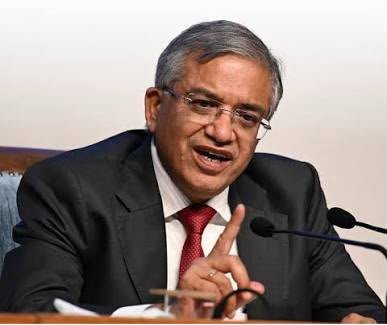
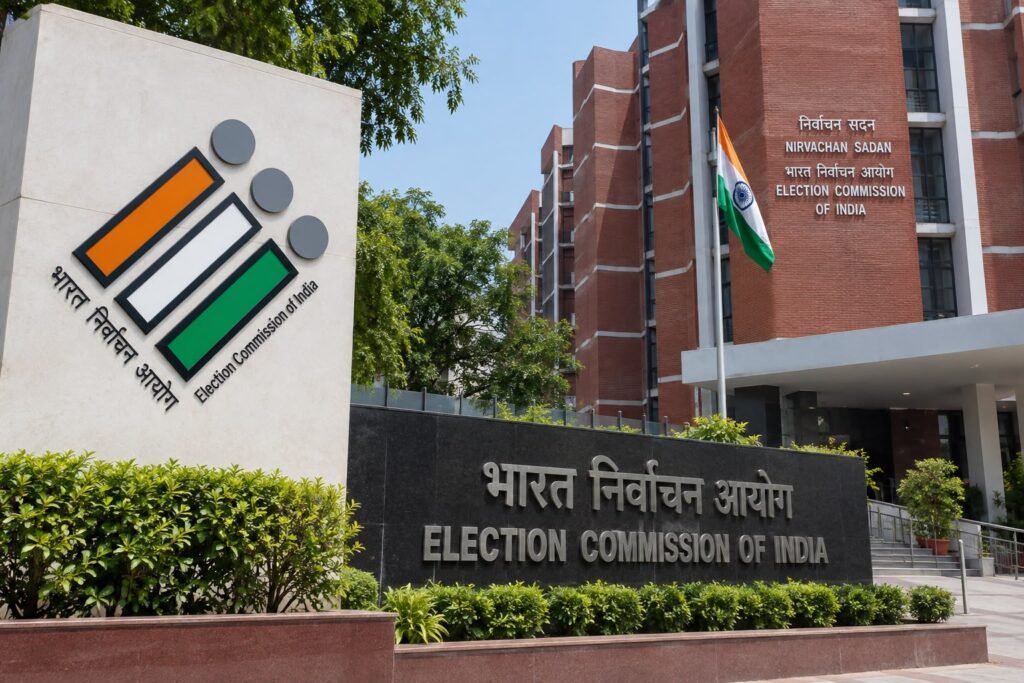
When the umpire becomes the centerpiece of institutional controversy, the very bedrock of a constitutional democracy begins to shake. The Election Commission of India (ECI), long revered as a pillar of free and fair elections, finds itself embroiled in one of the most severe credibility crises in its history. At the centre of this storm is Chief Election Commissioner (CEC) Gyanesh Kumar, whose unilateral style of functioning and controversial administrative decisions have triggered an unprecedented internal mutiny, sparked a fiery political backlash, and raised a fundamental question: can a head of an election body whose neutral standing is thoroughly compromised legitimately continue in office?
The Anatomy of an Internal Rift
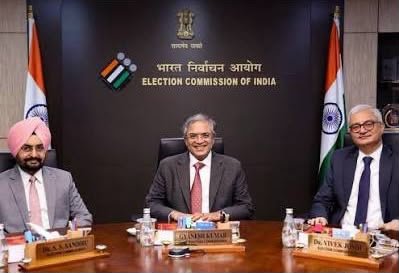
The illusion of collegial harmony within the three-member election panel shattered following revelations that Election Commissioners Sukhbir Singh Sandhu and Vivek Joshi formally recorded objections at least 14 times over a ten-month period. Under the Chief Election Commissioner and Other Election Commissioners (Appointment, Conditions of Service and Term of Office) Act, 2023, the ECI is structured as a collective body where decisions—particularly on vital procedures like the Special Intensive Revision (SIR) of electoral rolls—are intended to be taken unanimously or by majority consensus.
Instead, internal notes indicate that CEC Gyanesh Kumar repeatedly bypassed his colleagues, issuing directives without their prior knowledge or explicit concurrence. The dissenting commissioners flagged that key policy shifts were being executed in the name of the “Full Commission” while keeping them entirely in the dark. Sandhu went as far as characterising certain unilateral modifications to statutory voter forms as “unauthorised and illegal”. When constitutional peers are forced to repeatedly lodge written notes of dissent—and even approach the Cabinet Secretary over concerns regarding information technology oversight—it signals an existential rupture in the Commission’s internal checks and balances.
Code Over Canon: The ECINet Controversy
At the heart of the technical dispute lies ECINet, the centralised IT software platform that subsumed earlier systems like ERONet. Managed under the direct supervision of IT Director General Seema Khanna, the software effectively shifted the locus of control over voter list additions, deletions, and modifications from field-level Electoral Registration Officers (EROs) in states to a centralized hub in New Delhi.
This centralisation struck at the core of India’s statutory electoral framework, which legally empowers local EROs—not Delhi-based officials—to evaluate and modify voter rolls. The consequences of this algorithmic overreach were starkly demonstrated in Goa. Following a Supreme Court mandate allowing voters flagged with “logical discrepancies” during the SIR to present supporting documents, local EROs evaluated the evidence and found 97 eligible citizens who ought to have been reinstated. However, because ECINet lacked a functional rollback feature and the IT division failed to act on eight urgent requests from Goa electoral officials, those valid citizens were disenfranchised in the final roll.
Compounding this was the controversy around Form 6, the application used for new voter registration. An additional question was inserted on the ECINet portal asking applicants whether their names or those of their parents appeared in prior SIR rolls. Dissenting commissioners pointed out that altering statutory registration forms required formal amendments to election rules, warning that such procedural shortcuts endangered citizen franchise.
Institutional Denial vs. Political Shielding
In response to the mounting scandal, the ECI issued a defensive clarification, framing the internal objections as routine deliberative inputs that ultimately culminated in legally binding, unanimous orders. Yet, this rhetoric of “routine deliberation” crumbles when two commissioners feel compelled to document dissent 14 times in ten months—sometimes four times in a single day—and issue warnings against centralized data manipulation.
Equally telling has been the political reaction. Rather than allowing the ECI to independently defend its operational integrity, ruling party leaders from the Bharatiya Janata Party (BJP) swiftly took to public platforms to deflect criticism and shield the poll chief. This protective wall raises uncomfortable questions: why is the governing party answering questions on behalf of an ostensibly autonomous constitutional body? When the ruling establishment zealously defends the election referee against claims of institutional bias, it inadvertently strengthens the Opposition’s accusation that the ECI’s independence has been compromised.
The Impeachment Test for a Divided Opposition
The political fallout has been swift and explosive. Leader of the Opposition Rahul Gandhi unleashed a scathing attack on the ECI, alleging a systematic chain of “vote chori, kanoon chori, sanstha chori” (vote theft, law theft, institutional theft) and demanding Gyanesh Kumar’s immediate resignation. Protests by the Indian Youth Congress and legal complaints filed by leaders like TMC’s Mahua Moitra have further escalated the pressure, while civil society groups like Citizens for Justice and Peace (CJP) have demanded structural election reforms.
However, translating outrage into institutional removal remains a steep legal and political challenge. Under Article 324(5) of the Constitution, a Chief Election Commissioner can only be removed from office through impeachment on grounds of “proved misbehaviour or incapacity”—the exact same stringent standard applicable to a Supreme Court judge. This process requires a notice signed by at least 100 Lok Sabha MPs or 50 Rajya Sabha MPs, followed by an inquiry committee and a special two-thirds majority present and voting in both Houses of Parliament.
For a fragmented Opposition bloc, moving an impeachment motion represents both a constitutional weapon and a test of coalition unity. While regional outfits like the TMC and Congress have shown rare alignment in pushing for parliamentary notices against Kumar, securing the requisite numbers and maintaining a sustained campaign against a dominant Treasury bench will require unprecedented political cohesion.
The Imperative of Accountability
Whether Gyanesh Kumar faces a full-scale impeachment motion or manages to navigate the immediate storm, the damage to his office is profound. In public life, and particularly in the conduct of elections, legitimacy rests not merely on holding a title, but on the unassailable trust of the electorate and all political stakeholders. When a Chief Election Commissioner is perceived as operating above his colleagues, centralising voter databases at the expense of statutory field officers, and drawing political cover from the ruling party, his moral authority to conduct free and fair elections stands severely eroded.
If the Election Commission is to preserve its constitutional mandate and restore faith among Indian voters, institutional accountability cannot be treated as an optional luxury. For Chief Election Commissioner Gyanesh Kumar, the question is no longer just how long he can withstand political pressure, but whether his continued presence in Nirvachan Sadan compromises the integrity of Indian democracy itself.

~Hasnain Naqvi is a former member of the history faculty at St. Xavier’s College, Mumbai….
The opinions expressed here are solely those of the author.