

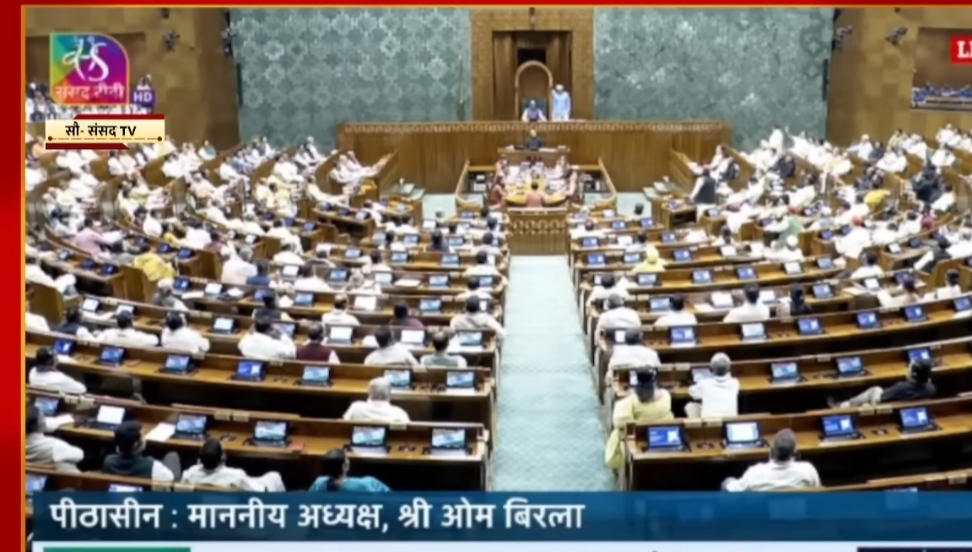
A special session of Parliament is currently on for considering the Constitutional Amendment Bill for readjustment of Lok Sabha and Legislative Assembly seats across the country and implementation of reservation of seats for women in Lok Sabha and Legislative Assemblies, linking it to the proposed fresh delimitation for which there is a separate Delimitation Bill. This delimitation is proposed to reassign the number of Lok Sabha seats as well as Assembly seats to each State (and Union Territories with Legislative Assembly) and determination of territory of each constituency. The total Lok Sabha seats is proposed to be increased to 850. Out of this, 815 seats are to be assigned among the States and 35 among the Union Territories, in proportion to the population of each State and UT as per the 2011 Census. This special session is convened at a time when electioneering for the ongoing Legislative Assembly elections is at its peak in West Bengal and Tamil Nadu, something that has not gone down well at all with several of the Opposition Parties.
Articles 82 and Clause (3) of article 170 of the Constitution require a readjustment of the number of Lok Sabha and Assembly seats in each State and the extent/boundary of every constituency, after each Census. The first ever Delimitation in Independent India was carried out during 1950-51 by the Election Commission in consultation with the Parliamentary Advisory committees set up for various States. Since that delimitation exercise could not wait for the completion of the 1951 Census in view of the need to hold elections at the earliest, the first delimitation was based on the estimated population figures as on 1st March 1950 as provided by the Census Commissioner. After the completion of the first general elections, a fresh delimitation did take place based on the 1951 Census as per the mandate of Articles 82 and 170. Subsequently, readjustment of constituencies, both in terms of number and boundary, was carried out after the Census in 1961 and 1971. The Delimitation based on 1971 Census was completed in 1976. Following this, by the Forty-second Amendment of the Constitution, further delimitation was frozen until the Census of 2001. The temporary freeze on delimitation was in the context of the population control measures then under active promotion by Indira Gandhi government so that the States which were bringing the population growth under control would not be losers in terms of representation in the Parliament (and State Legislative Assembly) because of their reducing population, and the other States with rising population were not rewarded with additional seats.
The temporary freeze on delimitation ended in 2001. But, A B Vajpayee government in power at that point of time decided that it was necessary to continue the freeze on the number of seats in Lok Sabha and Assemblies. However, the government decided to re-draw the territories of the constituencies so as to bring inter se parity in terms of population within the constituencies as the balance had got disturbed on account of large-scale domestic migration of people in search of occupation, livelihood and so on, since 1971. To this end, the Constitutional provisions were amended in order to provide that territories of the constituencies would be readjusted on the basis of 2001 census figures without altering the number of Lok Sabha or Assembly seats.
Statement of Objects and Reasons of the Bill for the Constitution (Eighty Fourth Amendment) Ac, 2001, inter alia, stated that keeping in view the progress of family planning programmes in different parts of the country, the government, as part of the National Population Policy strategy, decided to extend the freeze on undertaking fresh delimitation up to the year 2026, as motivational measures to enable the State Governments to pursue the agenda of population stabilisation. Therefore, apparently, the thinking at that point of time was that in another twenty-five years, the population growth would stabilise in all States. As per the provisions of Articles 82 and 170(3), as amended in 2001 by the Eighty-Fourth Amendment Act, the freeze on further delimitation is to be in place until the population figures of the first Census to be taken after 2026 are published. In fact, a new national Census (against the delayed 2021 Census) is already under way now.
The Statement of Objects and Reasons (SOR) of the current Delimitation Bill, 2026, inter alia, states that the growth of population across different constituencies along with migration from one place to another, especially rural to urban migration “have resulted in varying density of population in electoral constituencies” and the Bill seeks to address this issue. Ironically, for bringing about parity in population among constituencies, both intra- State and inter-States, the Bill seeks to adopt the population figures of 2011 Census which means that the base data to be used for course-correction or updating is already fifteen years old. There is nothing to suggest that migration has stopped or slowed down since 2011 or that population growth has stabilised everywhere. Given this backdrop, there is no guarantee that constituencies drawn out of 2011 Census data will stand the test of parity or uniformity in terms of the population, and by implication, electorate, at the point when the delimitation exercise is completed. One should not be surprised if many constituencies when finally carved out a couple of years further down the line present a picture of evident real-time disparity among them when contrasted against the principles stated in the SOR of the current Bill.
The bigger threat seen by opposition parties is the division of the Lok Sabha seats among the States and Union Territories, based on the 2011 population figures. Article 81(2) of the Constitution provides that each State shall be allotted Lok Sabha seats such that the ratio of seats to population of the State is, so far as practicable, same for all States. Although the Prime Minister and the Home Minister assured in the Parliament that there will be no injustice to any State, and the latter even stated that there will be approximately 50% increase in seats across the board, no such provision has been expressly built into the Bill. There is no dispute that the letter of this Article refers to population as the criterion for assigning seats to the States. But, if we zoom out for a larger picture, there would be inherent provisions in the Constitution to support the States to retain their scale of Parliamentary representation. May be, there would be scope to accommodate other markers also along with population considering that the number of seats is set to increase significantly this time as against the nominal increase on the earlier occasions and that the reassigning of seats is to be done on the basis of Census done fifteen years ago. After all, the States are the component units forming the Union. Strong components will only strengthen the Union.
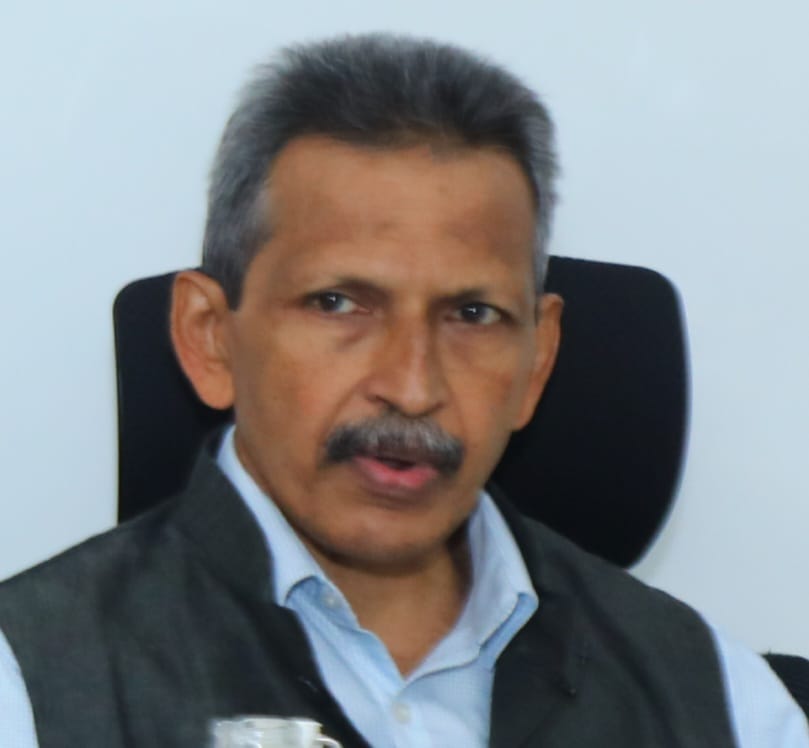
The Author K.F Wilfred was Senior Principal Secretary to the Election Commission of India.

