

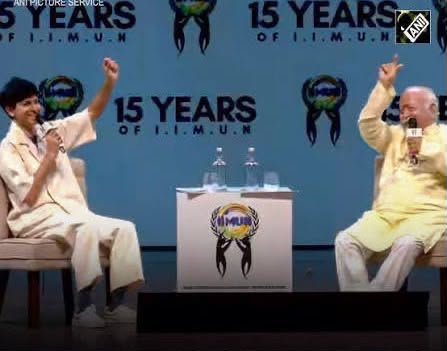
The spectacle was carefully staged. Nearly two thousand teenagers from a hundred cities were summoned to Mumbai’s glittering Nita Mukesh Ambani Cultural Centre. The RSS chief, Mohan Bhagwat, stood before them and delivered lines that would make any liberal applaud. Protesting youth are not anti-national. Their grievances over examination scandals and a commercialised education system are genuine. Today’s generation demands logic, not blind obedience. Protest itself is a legitimate form of democratic dialogue.
On the surface, it sounded like a breakthrough. Beneath the polished delivery, it reeked of institutional panic.
A Generation That Refuses to Be Owned
Gen Z is not an age bracket waiting to be moulded. It is a state of mind—fearless, irreverent, allergic to hierarchy, and largely indifferent to the old markers of religion, caste, class and gender that once organised Indian politics. This cohort speaks a shared language of accountability. It will not clap when told to clap. It will not salute when ordered to salute. It wants reasons, not sermons.
That is precisely why the old machinery is rattled. For decades the RSS has perfected a model of catching them young, of disciplined obedience flowing top-down, of monologue dressed up as dialogue. The Mumbai event was not an organic conversation. It was damage control. After the NEET paper-leak protests and the resignation of a Union education minister, the organisation sensed a dangerous drift. Forty crore potential voters of the future cannot be allowed to slip into permanent disillusionment with the establishment. So the chief was dispatched to offer a soft landing—paternalistic praise, careful validation, and the promise that the Sangh is listening.
The calculation is transparent. Validate the right to dissent just enough to keep the dissenters from walking away completely. Acknowledge structural failures in education just enough to sound progressive. Praise inquisitive minds just enough to suggest that the organisation has evolved. Then hope the floating generation will gradually be absorbed into the wider ideological fold.
When Dialogue Becomes a Controlled Performance
Bhagwat’s words on protest deserve to be taken at face value for a moment. Calling young agitators “our own people” and “our next generation” is a sharp departure from the reflexive branding of dissent as treason. Recognising that education should be a basic necessity rather than a commercial business touches a raw nerve felt by millions of families. Admitting that today’s youth refuse to obey elders blindly shows at least a tactical understanding of generational change.
Yet the setting itself undermines the claim of genuine dialogue. Two thousand selected students, a cultural centre funded by corporate wealth, an organisation with a century-long tradition of hierarchical discipline—this is not the street where real Gen Z anger has been expressed. This is a curated auditorium where the script can still be managed. The chief can say “protest is a way of building consensus” while the larger ecosystem continues to treat sustained street pressure as a threat to be contained.
The deeper contradiction remains unresolved. An organisation built on obedience and early ideological capture cannot suddenly reinvent itself as the champion of irreverence without changing its own DNA. Praise for questioning minds sits uneasily beside a structure that has historically preferred compliance. Soft language about consensus does not erase the long record of treating disagreement as disloyalty when the stakes are higher.
The Realpolitik of Assimilation
There is nothing mysterious about the timing. Student protests over paper leaks and systemic failures in education exposed the limits of top-down control. Young people organised, sustained pressure, and forced a ministerial exit. That kind of independent agency is dangerous to any establishment that relies on predictable loyalty. The Mumbai outreach was a textbook attempt to court an undirected generation before it hardens into permanent scepticism.
The strategic goal is not hard to read: capture the floating youth, offer them a sense of belonging, and gradually fold them into the ideological family. The method is softer than the old shakha model, but the intent is continuous. Catch them while they are still searching for answers. Convert their demand for logic into an opportunity for guided conversation. Convert their anger into manageable energy.
Gen Z, however, has already demonstrated that it cannot be so easily guided. Its protests were not the result of any central command. They arose from shared experience of institutional failure. That horizontal solidarity is precisely what hierarchical organisations find difficult to digest. You cannot assimilate a generation that refuses the very premise of assimilation.
A Breath of Fresh Air That Still Smells of Calculation
Even through a cynical lens, the tone of Bhagwat’s remarks carries a certain pragmatic value. Publicly instructing the machinery to stop branding young protesters as anti-national is preferable to the usual heavy-handed rhetoric. Acknowledging genuine grievances instead of dismissing them is better than gaslighting. Recognising that affection and logic, not authority alone, are required to engage this generation shows a measure of realism.
Yet words spoken in a controlled hall do not automatically become policy on the street. The test will come the next time students take to the roads over the next scandal, the next paper leak, the next commercialisation of a public good. Will the same establishment that now praises dialogue continue to listen when the conversation turns inconvenient? Or will the old reflexes return once the cameras leave Mumbai?
Gen Z is watching. It has already shown it can force resignations and shift the political weather. It will not be defined by the age of its members. It will be defined by its refusal to accept monologue as dialogue, obedience as patriotism, or strategic outreach as genuine respect.
The RSS has offered a softer pitch. The generation it seeks to court has already written a harder reply: we will not be caught young, we will not be spoken for, and we will not trade our questions for belonging. That is not anti-national. That is the only honest starting point for any real conversation about the future of this country.

~Hasnain Naqvi is a former member of the history faculty at St. Xavier’s College, Mumbai….
The opinions expressed here are solely those of the author.