
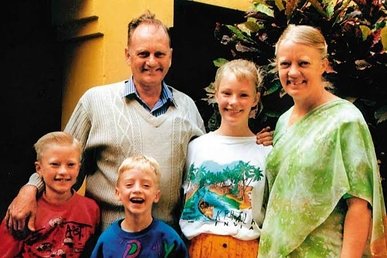
New Delhi, Sept. 17: The Odisha government on Thursday informed the Supreme Court that it had rejected the plea of Rabindra Kumar Pal alias Dara Singh for remission of sentence and premature release from prison in the 1999 murder case of Australian missionary Graham Stuart Staines and his two minor sons.
A bench comprising Justice Manoj Misra and Justice Vijay Bishnoi was told that the State had passed the rejection order on August 31, 2026.
“We have passed an order. We have rejected it,” the State’s counsel told the bench.
Taking note of the development, the court granted Rabindra Pal two weeks to amend his pending petition so that he could challenge the State government’s decision.
“You take whatever ground you want to take to challenge it. Amend your petition and then argue,” the bench told Rabindra Pal ‘s counsel.
Recording that a copy of the August 31 order had been supplied to the petitioner’s counsel, the bench granted two weeks for filing an appropriate amendment application and directed that the matter be listed after three weeks.
Rabindra Pal had approached the Supreme Court complaining of prolonged delay by the Odisha authorities in deciding his application for premature release.
At an earlier hearing on September 8, the court had cautioned the State that officials could be summoned if a decision on the remission plea was not taken by the next date of hearing. The bench had then noted that the matter had been before it for more than two years and could not be kept pending indefinitely.
Rabindra Pal has been in prison for over 26 years. He had sought consideration of his premature release under the Odisha government’s April 19, 2022 guidelines, referring to the period already undergone in custody and claiming reformation during incarceration.
Rabindra Pal was convicted for the killing of Staines, his sons, Philip, 10, and Timothy, 6, who were burnt to death while sleeping in a station wagon at Manoharpur village in Odisha’s Keonjhar district on the night of January 22, 1999.
A Special CBI court had sentenced Rabindra Pal to death, while co-convict Mahender Hembram was awarded life imprisonment. The Orissa High Court later commuted Rabindra Pal’s death sentence to life imprisonment and affirmed Hembram’s life term.
On January 21, 2011, the Supreme Court upheld the High Court judgment, holding that the case did not fall within the “rarest of rare” category warranting capital punishment.

Pramod kumar is a Senior Journalist, Covering Supreem Court of India