

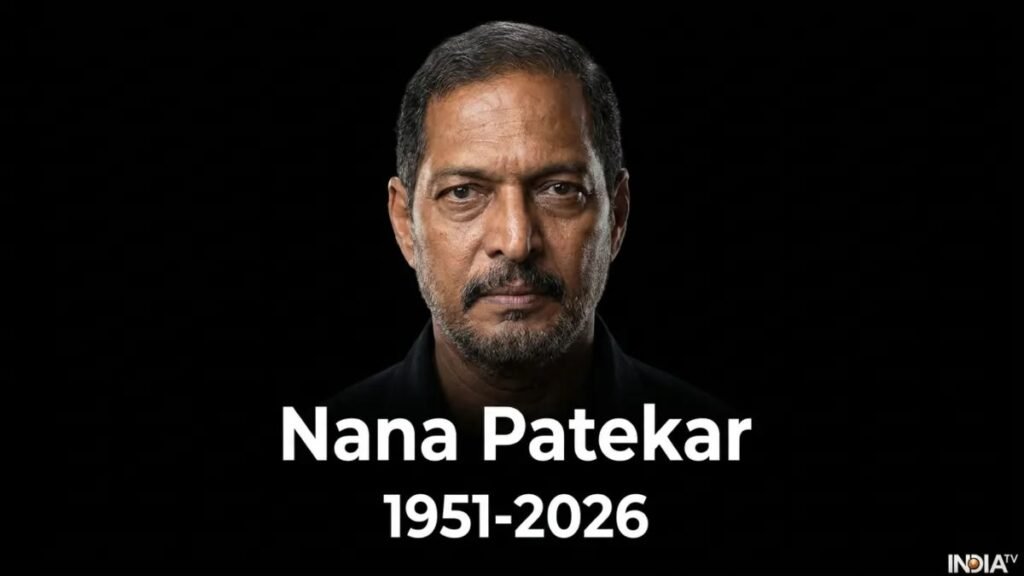
In the early hours of 8 October 2026, the screen fell silent.
Nana Patekar, born Vishwanath Patekar on 1 January 1951 in the coastal town of Murud-Janjira, left this world at the age of 75. He departed from his residence in Goa after a cardiac arrest that no amount of medical effort could reverse. What remains is not merely the memory of an actor, but the enduring presence of a force that reshaped the very language of performance in Indian cinema.
For nearly five decades, Patekar stood apart. He was never the conventional leading man, never the polished hero of poster campaigns. He was something rarer: an artist who carried the weight of lived experience into every frame, who made intensity feel natural and vulnerability feel earned. In an industry often defined by artifice, he remained stubbornly, gloriously authentic.
From the Konkan Coast to the National Stage
The path that led to greatness began in hardship. As a boy of thirteen, after his family’s fortunes collapsed, he walked long distances to paint film posters, earning a modest sum and a single meal a day. Those years of hunger and humiliation became his earliest training ground. He later studied at Mumbai’s Sir J.J. Institute of Applied Art, worked briefly as a commercial artist, and found his true calling on the Marathi stage. Theatre, with its demand for absolute presence, taught him the power of voice, silence, and unflinching eye contact. Directors such as Vijaya Mehta recognised the raw talent early. The stage prepared him for the camera, but it never fully released its hold on him.
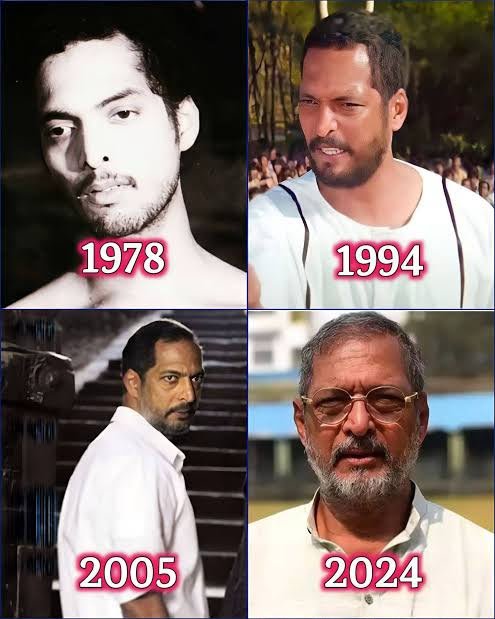
His film debut came in 1978 with Gaman. The following decade saw him move through smaller roles in both Marathi and Hindi cinema, including a memorable appearance in Mira Nair’s Salaam Bombay!. Then came 1989 and Parinda. As the volatile crime lord Anna, Patekar delivered a performance of controlled menace that felt unlike anything Hindi cinema had seen. It earned him the National Film Award for Best Supporting Actor and the Filmfare Award in the same category. The industry took notice. Here was an actor who could terrify without raising his voice, who could make a simple glance carry the threat of violence and the shadow of loneliness.
The Rage and the Range
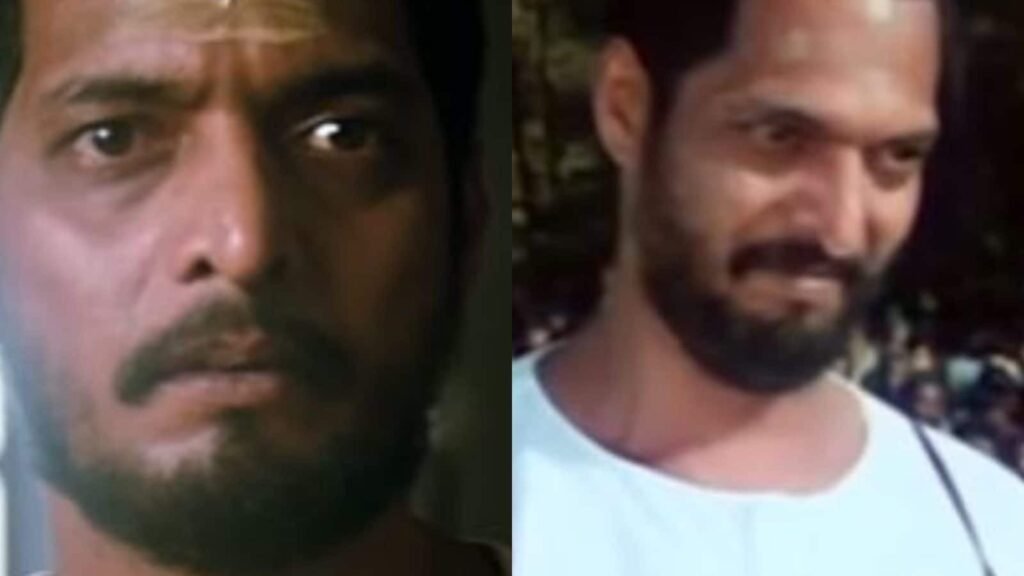
The 1990s cemented his place among the greats. In Krantiveer (1994), he played a disillusioned man transformed into a voice of collective anger. The role brought him the National Film Award for Best Actor, along with the Filmfare Award for Best Actor. Audiences did not merely watch him; they felt the heat of his conviction. A third National Award followed for Agni Sakshi (1996), this time again for supporting performance. Few actors have claimed the nation’s highest film honours across both leading and supporting categories with such authority.
His range defied easy categorisation. He could be the steely army officer in Prahaar: The Final Attack, a film he also directed after undergoing rigorous military training. He could be the quiet, wounded father in Khamoshi: The Musical. He could turn comic with the same conviction that fuelled his dramatic roles, creating the unforgettable Uday Shetty in Welcome and its sequel. In Marathi cinema, Natsamrat allowed him to return to the stage-like intensity of his early years, portraying a retired theatre actor with devastating emotional clarity. Later works such as Ab Tak Chhappan, Apaharan, Raajneeti, The Vaccine War, Vanvaas, and recent appearances in O’Romeo and the series Sankalp showed an artist who never stopped seeking new challenges.
Patekar’s dialogue delivery became legendary. Short, sharp, and charged with subtext, his lines cut through noise. Yet the greatness lay not only in volume or fury. It lay in the moments of stillness, the sudden shifts into tenderness or self-mockery that revealed the full human being behind the intensity. He made characters feel lived-in rather than performed. That authenticity earned him the Padma Shri in 2013, recognition of a career that had already left an indelible mark.
Beyond the Frame: Conscience and Contribution
Off-screen, Patekar carried the same directness that defined his art. He spoke his mind without calculation, whether praising or criticising public figures, and never sought the safety of political affiliation. His most lasting contribution outside cinema came through the Naam Foundation, which he co-founded in 2015 with Makarand Anaspure. The organisation worked tirelessly to support drought-affected farmers and their families in Maharashtra, providing immediate relief and longer-term assistance in water conservation, livelihoods, education, and healthcare. In a profession often accused of detachment, he chose engagement. The foundation remains a living testament to a man who understood that art alone is not enough; one must also give something back.
He was a soldier in spirit as much as in certain roles, a social worker when the moment demanded, and a private man who preferred the quiet of his farm and the company of those closest to him.
Survived by his son Malhar and his wife, he leaves behind a personal life marked by both profound loss and quiet resilience. Those who knew him speak of a simple-hearted human being whose public intensity never extinguished a capacity for warmth and loyalty.
The Legacy That Endures
Nana Patekar’s death closes a chapter, yet the characters he created continue to live. Anna still watches from the shadows of Parinda. Pratap Narayan Tilak still roars against injustice in Krantiveer. The retired thespian of Natsamrat still haunts the memory of audiences who witnessed a master at the height of his powers. Younger actors studying the craft will return to these performances for lessons in truthfulness, economy, and emotional courage.
In an era of carefully managed images, he remained inconveniently real. He refused to soften his edges or dilute his convictions. That refusal is precisely why he mattered. Indian cinema is richer for the fire he brought to it and poorer for the silence that follows his departure. The flame has gone out, but the light it cast will continue to illuminate stages and screens for generations to come.

~Hasnain Naqvi is a former member of the history faculty at St. Xavier’s College, Mumbai….
The opinions expressed here are solely those of the author.

