

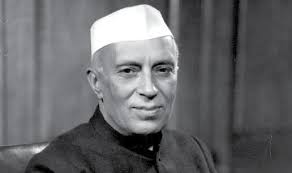
“jism ki maut koi maut nahin hoti hai; jism mit jaane se insaan nahin mar jate”
(The death of the body is no true death; the fading away of the flesh does not mean the human being dies.
~Sahir Ludhianvi
“meri duniya mein na purab hai na pashchim / saare insaan simat aaye khuli baahon mein”
(In my world there is neither East nor West; all of humanity has gathered within my open arms.)
~Kaifi Azmi
They called him the architect of a new India, the reluctant messiah, the man who carried the burden of Partition on his shoulders and the burden of hope in his chest.
On 27 May 1964 Jawaharlal Nehru’s death took place amid private grief and public bewilderment; it also set free a flood of elegies, diagnoses and affirmations. Among the most piercing and paradoxical responses were those of two great Urdu poets—Sahir Ludhianvi and Kaifi Azmi—both rooted in the left, both sharply critical of several Nehruvian policies in their lifetimes, and both ardent admirers who recognized in him a conscience of modern India.
Seen through their eyes, Nehru’s passing was not merely the end of a life but an event that summoned India to measure itself against the ideals he set—an invitation to carry forward his aspirations even while interrogating his failures.
This tribute stitches those two voices together with historical context and verified detail, to remember a leader whose contradictions were inseparable from his stature.
“The death of the body is no true death”: Sahir’s elegy and the restless promise
Sahir Ludhianvi’s lines refuse simple closure. In the refrain—“jism ki maut koi maut nahin hoti hai”—he insists that bodily death cannot undo an idea. Sahir, a poet of the people and a committed leftist, had often critiqued power, inequality and the compromises of the post‑colonial state. Yet his elegy to Nehru captures a paradox: a poet who distrusted religious orthodoxy and the consolations of ritual, and who could be scathing about political leadership, still recognizes in Nehru a rare moral seriousness.
Sahir’s poem highlights traits historians have repeatedly noted: Nehru’s internationalism and cosmopolitan imagination, his insistence on secularism and equality, and his anguish over Partition. Sahir writes of “jis ne insaanon ki taqsim ke sadme jhele / phir bhi insaan ki ukhuvvat ka parastaar raha” — (he who endured the trauma of division, yet remained a devotee of human brotherhood. )
That line resonates with Nehru’s own record. Primary sources and biographies—Rudrangshu Mukherjee’s nuanced biography, Stanley Wolpert’s scholarship and Nehru’s own letters and speeches compiled in The Discovery of India and Glimpses of World History—show a leader shaped by liberal humanism and an abiding faith in democratic, pluralist institutions even after Partition’s horrors.
Sahir also foregrounds Nehru’s commitment to social equality—“jis ne zardar-e-maishat ko gawara na kiya / jis ko in-e-musavaat pe israr raha”—and exhorts readers to distribute not merely ashes but the aspirations he embodied. That summons is grounded in the record: Nehru’s championing of land reforms (uneven as their implementation was), the Five‑Year Plans that sought to industrialize India, and the constitutional commitment to fundamental rights.
Scholars acknowledge the gap between Nehru’s intentions and outcomes—economic planning that privileged heavy industry and state institutions sometimes failed to reach the poorest—but Sahir’s admonition is larger: carry forward the ideals, not just the rituals of mourning.
“Listen closely”: Kaifi’s song and the transfer of hope
Kaifi Azmi’s lyric for the film Naunihal, immortalized by Mohammed Rafi, turns personal grief into intergenerational instruction. Lines such as “meri duniya mein na purab hai na pashchim / saare insaan simat aaye khuli baahon mein” portray a leader whose vision transcended Cold War binaries and communal fissures—a Nehru who imagined an India open to the world and to the dignity of every person.
Kaifi, also aligned with left politics and a founder of progressive literary circles, wrote from a vantage that mixed disappointment with deep respect. His refrain—“naunihaal aate hain arthi ko kinaare kar lo / main jahan tha inhen jaana hai wahan se aage”—is both farewell and transfer: the future belongs to the young, the poet insists, and Nehru’s death makes that transfer urgent. This sentiment is historically apt. Nehru placed a premium on education (the founding of institutions like the All‑India Institute of Medical Sciences, the Indian Institutes of Technology, and the emphasis on science and rationalism), and he consistently addressed youth as the motor of national renewal.
Kaifi’s discomfort with the ritual of grand funerals—“kyon sanvari hai ye chandan ki chita mere liye / main koi jism nahin hoon ke jalaoge mujhe”—echoes a progressive reluctance to sanctify leaders in ways that obscure political accountability. It is an implicit critique of personality cults even while mourning the loss.
Contemporary reportage of 1964—newspaper accounts of Nehru’s funeral, eyewitness notes and government records—describe mass grief and ceremonial pageantry. Leftist intellectuals like Kaifi worried that ceremony might substitute for reform; his song insists otherwise: Nehru’s ideals scatter into society, to be found wherever people stumble and rise—“tum jahan chhakoge thokar wahi paoge mujhe.”
Critic and admirer: reconciling respect with dissent
Both poets embody a recurrent South Asian public disposition: to hold leaders to high moral standards even in grief. Their left credentials made them ready critics of policies they saw as insufficiently radical—especially on land reform, industrial policy that sometimes left entrenched inequalities intact, and what many on the left viewed as a cautious foreign policy posture during the Cold War. But their elegies refuse binary reduction. They mourn a man who, despite flaws, built institutions, defended secularism at great cost, and articulated a universalist ethic.
This dual posture is supported by archival and scholarly records. Nehru’s shortcomings are well documented: the limitations of the planning model, the failure of agrarian transformation in many regions, the 1962 China defeat which shook his international stature, and the drifts in industrial strategy that critics say gave insufficient attention to rural poverty. Yet his defenders—historians and contemporaries—point to crucial achievements: a sustained parliamentary democracy in a vast, plural society; a recognizable strategic autonomy in foreign policy that kept India non‑aligned; a modern educational and scientific infrastructure; and the moral weight he lent to secular, constitutional politics.
Two poems, one public conscience
Sahir’s command—to honour not only decrees but the distribution of aspirations—and Kaifi’s plea—to let young people move beyond the site of mourning—together form an ethical test. They ask readers to examine whether institutions and policies are living up to the promise articulated by Nehru, and whether citizens are willing to bear the burdens of critique and renewal.
Considered historically, these are not mere elegiac ornaments. They echo demands made by social movements in the decades since: landless labourers’ struggles, campaigns for democratic rights, labour movements seeking fairness, student and youth ferment demanding larger political imagination. Both poets insist that true homage is active work: to wage the battles Nehru named—against communalism, against the tyranny of wealth over livelihood, for rational, scientific temper—and to recognize that ambitions must be recalibrated by democratic practice.
A call, not an epitaph
On Nehru’s 62nd death anniversary the two poets’ voices still instruct. They do not idealize; they refuse hagiography. Instead they convert grief into obligation. Sahir’s insistence that ideals outlive the body and Kaifi’s insistence that the future is not a continuation of a single life but a shared enterprise together set the terms for a civic memorial that is active, demanding and future‑oriented.
For contemporary India—grappling with inequality, the balance between market and state, the resilience of constitutional freedoms, and the place of secularism in public life—the poets offer a simple measure: where Nehru’s dream of an inclusive, rational and humane polity exists, his death remains unfinalized; where that dream withers into ritual, the dead have been allowed to cool without the living taking up their work.
On 27 May we can light no single lamp that will suffice. But we can accept the burden the poets place on us: to remember with scrutiny, to mourn with purpose and to translate admiration into persistent, democratic action. In Sahir’s words, carry his dream; in Kaifi’s, make room for the young who must take it further. That is the tribute these two leftist-Urdu poets, critics and admirers alike, would have wanted—and still demand—on Nehru’s anniversary.

~Hasnain Naqvi is a former member of the history faculty at St. Xavier’s College, Mumbai….
The opinions expressed here are solely those of the author.