

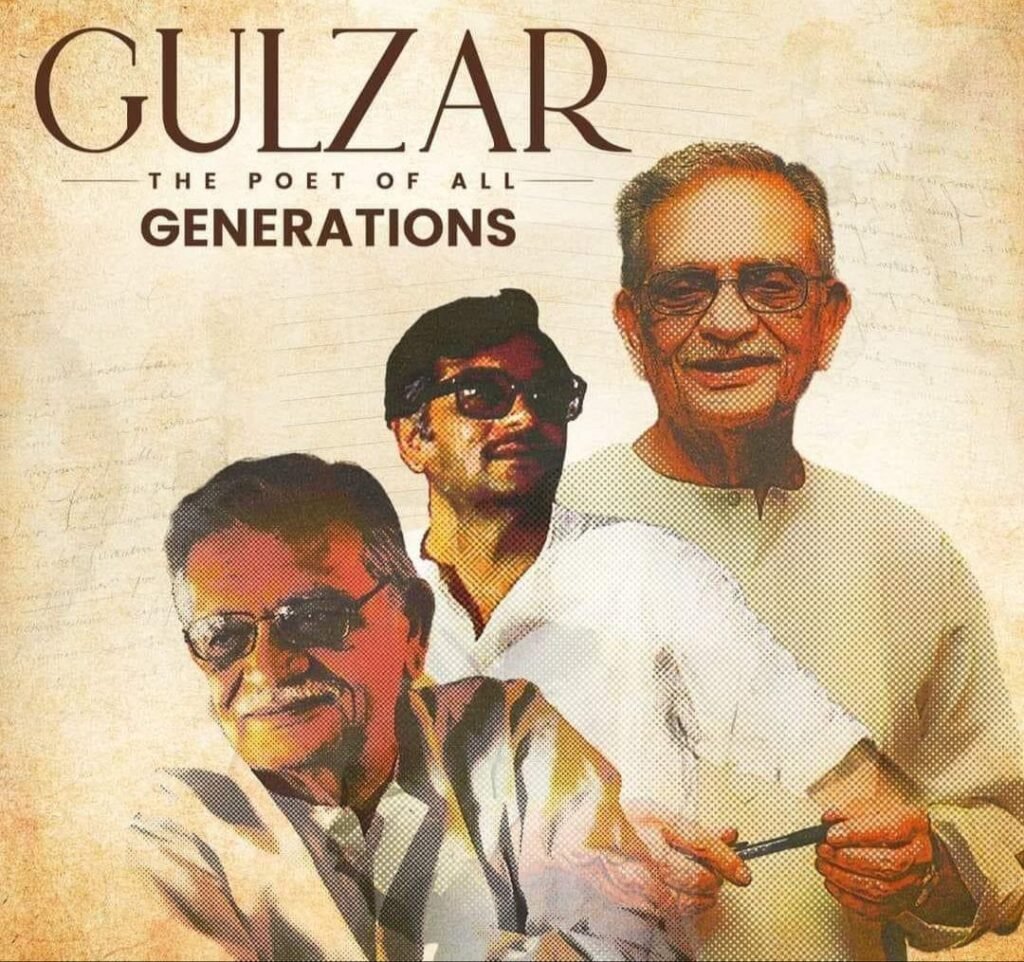
When August 18 arrives, Indian cinema and literature pause to honor a master craftsman whose pen has quietly defined the emotional vocabulary of multiple generations. Turning 92, the poet, lyricist, filmmaker, and author born Sampooran Singh Kalra stands as a monument to cultural continuity—a rare artist who bridged the grand Urdu literary tradition of the subcontinent with the dynamic, shifting idioms of contemporary popular cinema. To adopt the moniker ‘Gulzar’—a garden in full bloom—was not merely to take a nom de plume; it was a promise to cultivate beauty out of life’s sharpest fractures.
Gulzar’s origins were forged in the crucible of historical trauma.
Born in 1934 in Dina, in the Jhelum district of undivided Punjab, to Makhan Singh Kalra and Sujan Kaur, his early youth was shattered by the violence and displacement of Partition. Forced to migrate to Mumbai, the young refugee sought stability in a city that demanded grit. He took up employment in a motor garage, spending long, physically taxing hours mixing paints and repairing damaged car bodies. Yet, this manual labour carried an inadvertent gift: the quiet lulls between jobs granted him uninterrupted hours to read, observe, and write. Though his father initially frowned upon his literary ambitions, viewing them as financially impractical, Kalra’s devotion to the written word only deepened. The young man who began by mixing colors on sheet metal was already learning how to blend imagery, rhythm, and emotion into an unforgettable palette.
“Is Mod Se Jate Hain”: From the Shadow of Mentors to a Directorial Voice
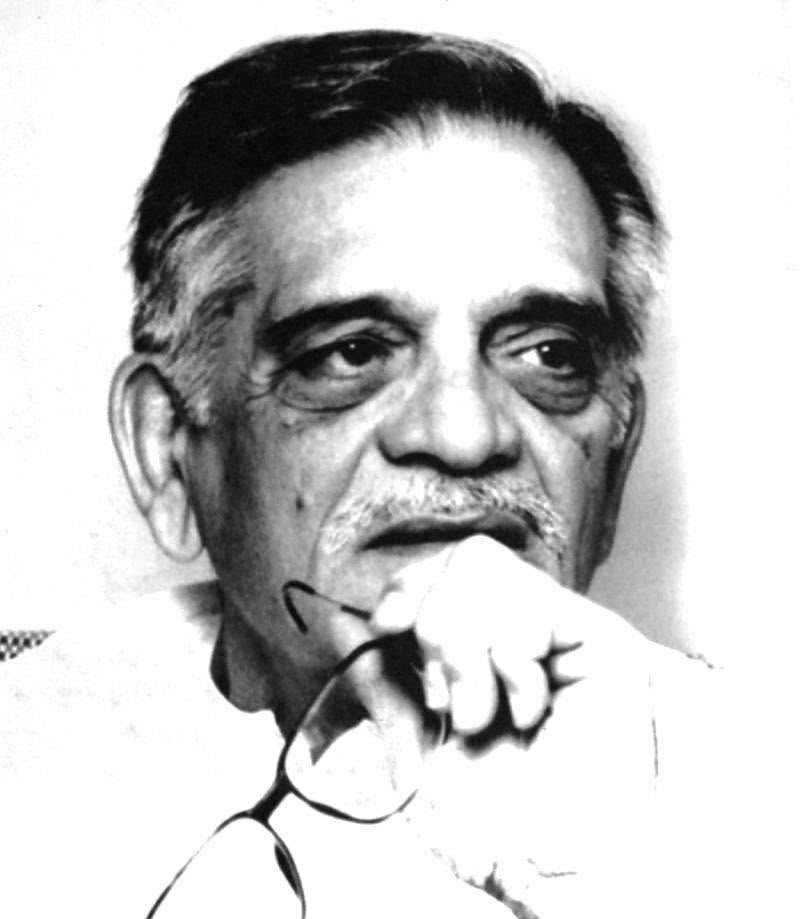
Gulzar’s entry into mainstream cinema was catalyzed by masters of cinematic realism, primarily Bimal Roy and Hrishikesh Mukherjee. It was under Bimal Da’s guidance that he made his songwriting debut in Bandini (1963) with the ethereal “Mora Gora Ang Layee Le,” though his first released lyrics had already appeared in Kabuliwala, anchored by the timeless “Ganga Aaye Kahan Se.” His early career as a lyricist blossomed rapidly through films such as Shriman Satyawadi, Sannata, Biwi aur Makan, Prem Patra, Purnima, Do Dooni Chaar, Aashirwad, Khamoshi, and Rahgir.
When Gulzar made his directorial debut with Mere Apne (1971), he inherited Bimal Roy’s deep social conscience while forging a distinct narrative voice. The film confronted the disillusionment of urban India—delving into youth unemployment, political cynicism, societal decay, and pervasive loneliness through the eyes of an elderly woman, Anandi, portrayed with heartbreaking dignity by Meena Kumari. Gulzar’s recurring visual motif of the lost “Village” and the nostalgic Aam Ka Baghecha (mango orchard) emerged as a poignant metaphor for an innocence swallowed by modern urbanization.
He expanded his director’s lens with remarkable speed. In Parichay (1972) and Koshish (1972), he demonstrated an extraordinary sensitivity toward human vulnerability—the former exploring delicate family dynamics and the latter providing a compassionate, ground-breaking portrayal of a deaf and mute couple navigating everyday life. His 1975 classic Aandhi made headlines for borrowing the visual poise of contemporary political figures Tarkeshwari Sinha and Prime Minister Indira Gandhi. Yet beneath its political backdrop, Aandhi was a deeply tender, fictional exploration of estranged lovers bound by dignity and time. Gulzar went on to demonstrate unmatched genre versatility, crafting lighthearted situational comedies like Angoor (1982) alongside rich, atmosphere-driven dramas such as Khushboo (1975), Mausam (1975), Kinara (1977), Kitab (1977), Meera (1979), and Namkeen (1982).
“Mera Kuch Saamaan Tumhare Paas Para Hai”: Deciphering the Fragility of Relationships
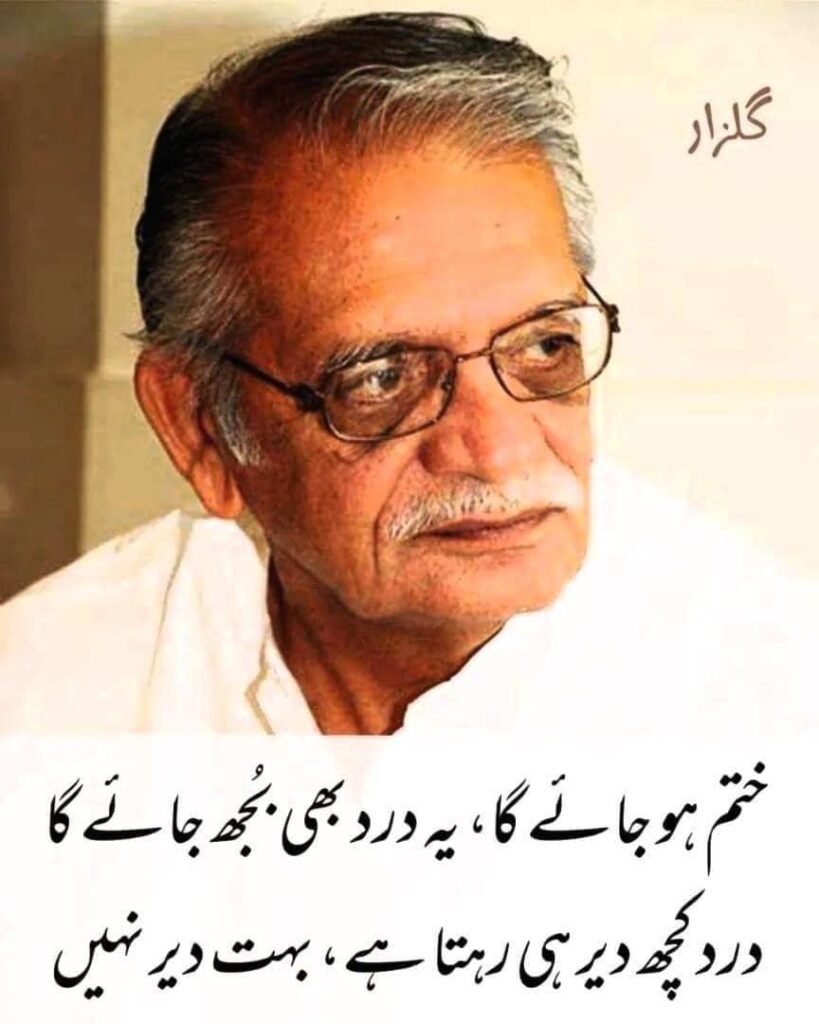
In 1987, Gulzar delivered Ijaazat, now recognized as a landmark in Hindi art-house cinema. Starring Naseeruddin Shah, Rekha, and Anuradha Patel, the film deconstructed the intricate, non-linear realities of love, memory, and marital fracture. Supported by R.D. Burman’s iconic score, Gulzar avoided simplistic melodramatic tropes, treating each character’s emotional truth with profound respect.
His willingness to tackle complex, taboo social themes continued with Libaas (1988), which explored extra-marital longings with extraordinary maturity, and Lekin… (1990), an atmospheric masterpiece centered on unfulfilled love and lingering spirits. As societal tensions mounted in the late 1990s, Gulzar turned his camera toward systemic sociopolitical crises. Maachis (1996) offered a devastating, empathetic look at how state overreach and injustice drove ordinary Punjabi youth toward insurgency. He closed his directorial career with Hu Tu Tu (1999), a sharp indictment of political corruption.
During the late 1980s, Gulzar also created one of the most enduring milestones in Indian television history: the biographical series Mirza Ghalib. Featuring a career-defining performance by Naseeruddin Shah, the production brought 19th-century Urdu poetry into millions of households with unmatched literary fidelity and musical sophistication.
“Dil To Baccha Hai Ji”: The Unfading Lyricist Across Generations
While his filmography as a director remains monumental, it is Gulzar’s work as a lyricist that renders him ubiquitous in daily Indian life. His ability to reinvent his poetic vocabulary for successive musical eras is unmatched. His legendary partnership with R.D. Burman yielded timeless albums across films like Anand, Guddi, Seema, Gharaonda, Ghar, Devata, Khatta Meetha, Griha Pravesh, Gol Maal, Ratnadeep, Khubsoorat, Thodisi Bewafaii, Naram Garam, Baseraa, and Sadma.
Rather than remaining anchored in nostalgia, Gulzar adapted effortlessly to modern musical shifts. In subsequent decades, his lyrics added literary depth to commercial and parallel cinema alike, including Ghulami, Rudaali, Mammo, Chachi 420, Daayraa, Dil Se.., Satya, Fiza, Asoka, Aks, Saathiya, Filhaal, Pinjar, Maqbool, Paheli, Bunty Aur Babli, Omkara, Jhoom Barabar Jhoom, Kaminey, Firaaq, Ishqiya, Raajneeti, 7 Khoon Maaf, Do Paise Ki Dhoop Chaar Aane Ki Baarish, Jab Tak Hai Jaan, Matru Ki Bijlee Ka Mandola, Haider, Dedh Ishqiya, Talvar, Mirzya, Rangoon, Raazi, Khufiya, and Sam Bahadur.
His collaborations with A.R. Rahman and Vishal Bhardwaj produced global and critical acclaim. The soaring energy of “Jai Ho” from Slumdog Millionaire earned him an Academy Award and a Grammy Award, proving that his evocative Hindi and Urdu verse could resonate on the global stage.
“Aankhon Mein Humne Aapke Sapne Sajaaye Hain”: The Legacy of Boskiana
Beyond the screen, Gulzar’s literary output remains colossal. His poetry collections, including Chand Pukhraaj Ka and Raat Pashminey Ki, along with short story anthologies like Raavi-Paar and Dhuan, reflect an enduring engagement with memory, Partition, and the quiet dignity of ordinary lives. He also enriched Urdu poetry by inventing the Triveni—a three-line stanza structure where the third line unexpectedly transforms the meaning of the first two.
His contributions have been recognized with the nation’s top honors: the Jnanpith Award, the Dadasaheb Phalke Award (2013), the Padma Bhushan (2004), the Sahitya Akademi Award (2002), alongside 6 National Film Awards and 22 Filmfare Awards.
Yet, far from the glare of lights, Gulzar leads a quiet life at Boskiana, his residence in Mumbai named after his daughter Meghna (‘Boski’). Though he and his wife, the celebrated actor Raakhee, separated when Meghna was just a child, they never formally divorced, maintaining a dignified relationship built on mutual respect. Today, at 92, dressed in his trademark white kurta-pyjama, Gulzar continues to write with the same quiet intensity that defined his youth—a reminder that while time passes, true poetry remains immortal.

~Hasnain Naqvi is a former member of the history faculty at St. Xavier’s College, Mumbai….
The opinions expressed here are solely those of the author.

