
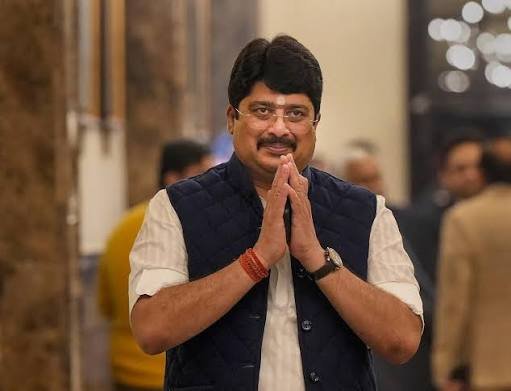
NEW DELHI: The stage was set for a Ram Katha. But the political message from Kunda was impossible to miss. As some of Uttar Pradesh’s most influential Thakur leaders and political strongmen descended on Raja Bhaiya’s backyard for a religious congregation featuring Bageshwar Dham’s Dhirendra Krishna Shastri, the event began to resemble something far bigger than a spiritual gathering.
It was a show of strength, a display of political influence and, perhaps, an assertion of who commands the Thakur political space in Uttar Pradesh.
The presence of influential leaders from different political parties and regions turned the Katha into a political spectacle ahead of the 2027 Assembly elections. For Raja Bhaiya, the seven-time MLA from Kunda, it was an opportunity to bring together the Thakur heavyweights under one roof.
It was also a message to the political class that the Thakur vote bank, which has traditionally been one of its strongest social constituencies in Uttar Pradesh, cannot be taken for granted.
Among those in attendance, apart from ministers of the Yogi Adityanath government, were six-time MP Brij Bhushan Sharan Singh, who commands considerable influence in Eastern Uttar Pradesh; former MP Dhananjay Singh, a prominent political figure in Jaunpur; former MLC Brijesh Singh, whose family has long wielded influence in Purvanchal; BJP MLA Abhay Singh, who was previously associated with the Samajwadi Party; and MLC Vineet Singh, among several others.
Interestingly, almost the same names had figured earlier this month in a list of alleged mafia dons from Uttar Pradesh that Samajwadi Party chief Akhilesh Yadav read out at the Hindustan Times Leadership Summit. The list, which featured several Thakur strongmen, was part of Akhilesh’s attack on the Yogi Adityanath government’s record on law and order.
Raja Bhaiya figured prominently on that list. The SP has repeatedly accused the BJP government of going soft on Thakur strongmen while pursuing leaders from other castes and communities. The irony is that Raja Bhaiya and the Samajwadi Party, which now appear to be on opposite sides of the political divide, once shared a long and close association. More on that later.
Thakurs, or Kshatriyas, account for an estimated 10 per cent of Uttar Pradesh’s electorate, but their influence extends well beyond their numerical strength. They are politically significant in around 70-80 Assembly constituencies and nearly 20 Lok Sabha seats.
According to post-poll analyses, nearly 90 per cent of Thakur voters backed the BJP in the 2024 Lok Sabha elections, even as the party suffered a major setback in Uttar Pradesh. The community’s support for the BJP was estimated at around 87 per cent in the 2022 Assembly elections. The party had fielded 71 Kshatriya candidates in those elections, 43 of whom emerged victorious.
The Yogi Adityanath government has faced allegations of Thakur dominance in the administration and accusations of favouring the chief minister’s own community at the expense of Brahmins and other social groups.
The Thakur-Brahmin tussle has periodically surfaced within the BJP, creating uncomfortable political situations for the party. The tensions came into sharp focus in August 2025 when around 40 Thakur legislators reportedly met and discussed the formation of a ‘Kutumb’ or family to consolidate the community’s interests.
The Brahmins responded with a similar show of strength in December 2025, when around 52 Brahmin MLAs and MLCs gathered in Lucknow for what was described as a birthday celebration. The gathering came shortly after the BJP appointed Pankaj Chaudhary, an OBC leader, as its Uttar Pradesh unit president.
The Kunda spectacle, therefore, was also a reminder to the BJP that its Thakur support base remains politically consequential and expects its share of power and influence. This becomes particularly relevant as the party attempts to expand its social coalition by wooing backward communities and strengthening its OBC outreach.
Raghuraj Pratap Singh, popularly known as Raja Bhaiya, is not an ordinary regional politician. For more than three decades, he has remained one of the most formidable political figures in Uttar Pradesh, holding on to the Kunda Assembly constituency in Pratapgarh since 1993.
Born into the erstwhile royal family of Bhadri, Raja Bhaiya’s political identity has been shaped less by his royal lineage and more by his extraordinary grip over Kunda. He first entered the Assembly in 1993 as an Independent candidate and has since won the constituency seven consecutive times. He has managed to retain his seat through changing political equations, governments and alliances, often defeating candidates backed by major political parties.
His political career has also been marked by controversies and an image of strongman politics. The Mayawati government invoked the Prevention of Terrorism Act (POTA) against him in 2003, and he was arrested and sent to jail. He became one of the most prominent political adversaries of Mayawati, who was among the few chief ministers to directly challenge his influence in Kunda.
His ability to survive political storms, however, has been remarkable.
In 1997, when the BSP withdrew support from the Kalyan Singh-led BJP government, the latter needed numbers to remain in power. Kalyan Singh, who had once famously referred to Raja Bhaiya as ‘Kunda Ka Gunda’, eventually sought his support. The political turnaround was swift. Raja Bhaiya was inducted into the Kalyan Singh Cabinet soon afterwards.
He has served as a minister under governments led by different chief ministers, including Kalyan Singh, Rajnath Singh, Ram Prakash Gupta, Mulayam Singh Yadav and Akhilesh Yadav.
For years, he remained an Independent MLA, supporting governments when it suited his political interests while retaining his own identity and influence. In November 2018, he launched the Jansatta Dal Loktantrik, formally moving beyond the politics of an Independent legislator and attempting to build a political platform of his own.
The party has so far remained largely centred around his personal influence and the Pratapgarh region. But Raja Bhaiya’s ambition has often appeared bigger than Kunda. His political moves and public appearances suggest an effort to establish himself as a voice of the Thakur community and a player in the wider political calculations of Uttar Pradesh.
Perhaps the most interesting chapter in Raja Bhaiya’s political journey is his long association and subsequent falling-out with the Samajwadi Party.
When Mayawati was in power, Raja Bhaiya was arrested and booked under POTA. But after Mulayam Singh Yadav returned as chief minister in 2003, the cases against him were withdrawn. Following his release from jail, top SP leaders went to receive him, a gesture that underlined the political importance the SP attached to the Kunda strongman.
The relationship remained strong for years. After the SP won the 2012 Assembly elections, Raja Bhaiya became a minister in Akhilesh Yadav’s cabinet.
But the relationship eventually soured.
Ahead of the 2022 Assembly elections, Akhilesh Yadav refused to enter into an alliance with Raja Bhaiya and campaigned in Kunda against him. Raja Bhaiya, however, managed to retain his seat.
The bitterness between the two became particularly evident when Akhilesh, asked about his relationship with the Kunda MLA, famously responded: “Kaun Raja Bhaiya?”
Ahead of the 2027 Assembly elections, the political hostility has acquired a fresh dimension. Akhilesh Yadav has again attacked Raja Bhaiya, clubbing him with alleged mafia elements while targeting the Yogi government’s law-and-order record.
The Ram Katha has further widened the political divide. Akhilesh Yadav’s party had opposed Dhirendra Krishna Shastri’s programmes in Uttar Pradesh following the seer’s controversial remarks on Lord Ram and Lord Krishna. Raja Bhaiya, however, went ahead with the Kunda event.

We are a multimedia news network. Website : www.7xnews.com Based in New Delhi (India)
Youtube : umakantlakheraspeaks@gmail.com