

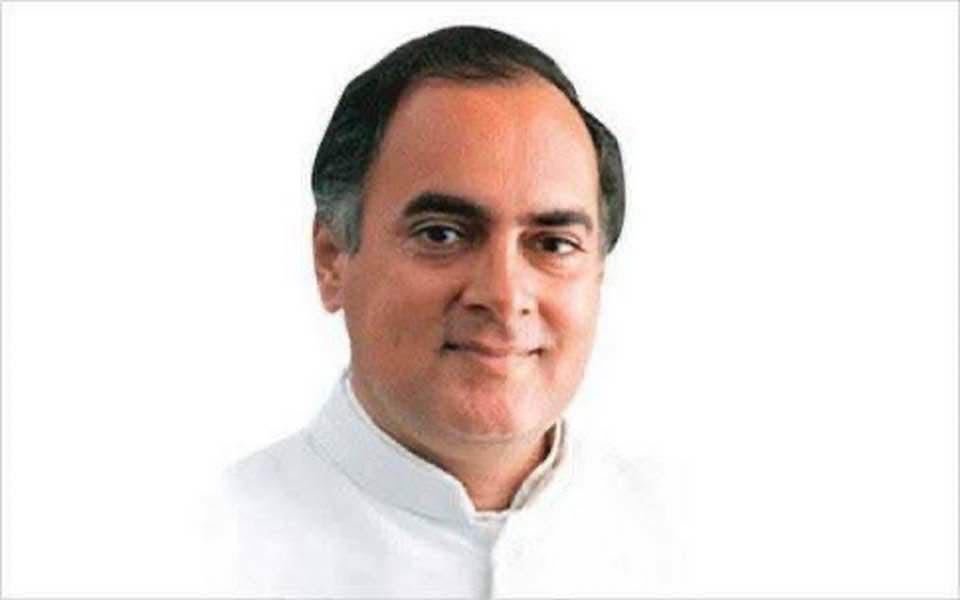
A birth anniversary tribute to the youngest leader to occupy India’s highest office
On August 20, India remembers Rajiv Gandhi on his birth anniversary. Born in Bombay (now Mumbai) in 1944, Rajiv Gandhi became Prime Minister on October 31, 1984, following the assassination of his mother, Indira Gandhi. He served in office until December 2, 1989. At 40, he was India’s youngest Prime Minister and led the Congress to a record 401 seats in the 1984 Lok Sabha election.
Rajiv Gandhi entered politics reluctantly. A trained commercial pilot with Indian Airlines, he had remained distant from the political world that had shaped his family. The death of his younger brother, Sanjay Gandhi, in 1980 drew him into public life; the assassination of Indira Gandhi four years later placed upon him the responsibility of governing a country shaken by violence and uncertainty.
His political career lasted barely a decade, but his premiership left a deep imprint on India’s technology, education, electoral politics, regional peace initiatives and foreign policy. It also exposed the difficulties of attempting rapid change within a deeply unequal, diverse and politically contentious society.
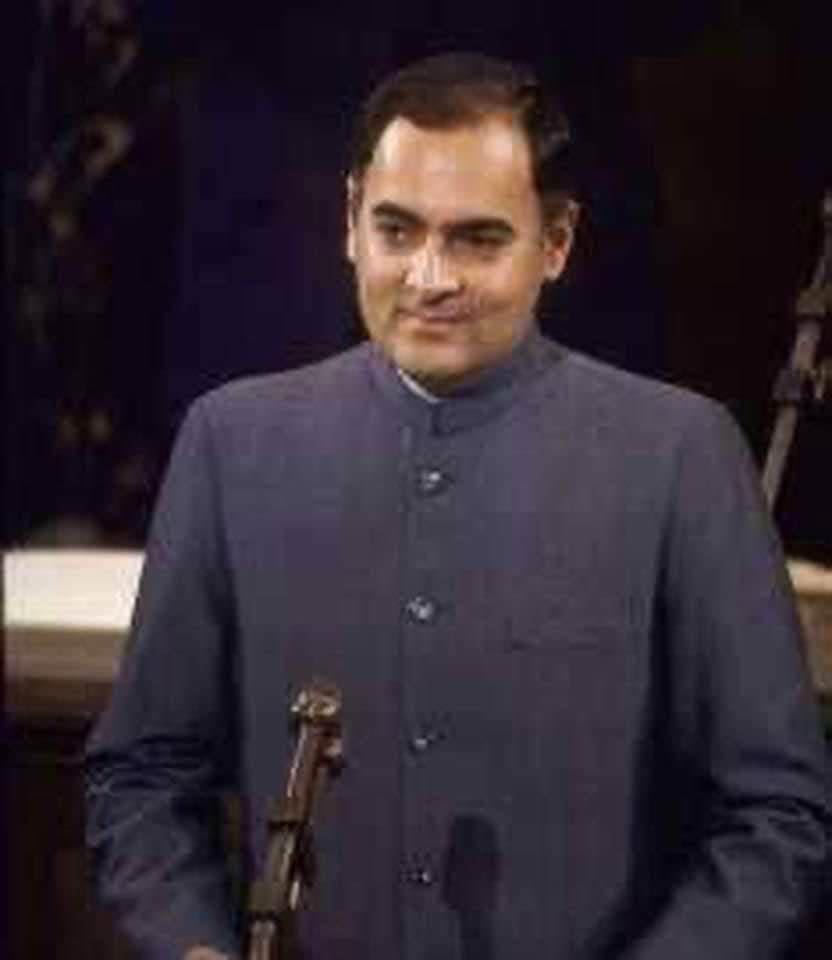
A generational shift in leadership
Rajiv Gandhi came to office promising to take India into the twenty-first century. He represented a generational transition from the politics of the freedom movement to a more technocratic and aspirational style of governance. His public image—young, modern and comfortable with science and technology—appealed particularly to a country whose population was increasingly conscious of the possibilities of communication, education and industrial development.
The mandate he received was unprecedented. Yet the scale of that victory also created expectations that were difficult to fulfil. Rajiv inherited a political system marked by bureaucratic controls, regional insurgencies, communal tensions and an economy constrained by state regulation. His government attempted to address these challenges through a mixture of administrative reform, technological modernisation and political negotiation.
Laying the foundations of the technology revolution
The expansion of telecommunications and computing became one of the defining features of Rajiv Gandhi’s premiership. His government encouraged the development of indigenous telecom technology and established the Centre for Development of Telematics, or C-DOT, in 1984. The effort was intended to create equipment suited to Indian conditions and to expand telephone connectivity beyond major urban centres.
This emphasis on technology did not immediately produce the digital India of the present. Its significance lay in establishing institutions, skills and policy priorities that later supported the growth of telecommunications, software and information technology. Rajiv Gandhi also promoted the use of computers in offices and public administration at a time when many critics feared that automation would eliminate employment.
The technology agenda was associated with advisers and administrators such as Sam Pitroda, but it also reflected Rajiv Gandhi’s broader belief that scientific capacity was essential to national development. His objective was not merely to import advanced machines, but to build Indian capabilities in communications, electronics and information systems.
Reforming politics and widening participation
Rajiv Gandhi’s government introduced the anti-defection law through the Constitution (Fifty-Second Amendment) Act, 1985. By inserting provisions in the Tenth Schedule, the law sought to disqualify legislators who abandoned their parties or voted against party directions in specified circumstances. It was designed to curb the political instability and opportunistic party-switching that had weakened elected governments.
The reform also generated debate about the balance between party discipline and the independence of legislators. While it reduced some forms of open defection, it strengthened the control of political parties over elected representatives and did not eliminate political realignment.
Another significant measure was the Constitution (Sixty-First Amendment) Act, 1988, which lowered the voting age from 21 to 18. The change brought millions of young Indians into the electorate and recognised the political importance of a rapidly expanding youth population.
Rajiv Gandhi also sought to strengthen democratic decentralisation. His government introduced constitutional amendment bills in 1989 to give greater institutional recognition and authority to panchayats and municipalities. The proposals did not become law during his premiership, but they anticipated the 73rd and 74th Constitutional Amendments enacted in 1992, which established a constitutional framework for rural and urban local self-government.
Education and rural opportunity
Education occupied an important place in Rajiv Gandhi’s modernising agenda. The National Policy on Education, framed in 1986, sought to expand access, reduce disparities and adapt the education system to the requirements of a changing economy. It emphasised universal elementary education, adult literacy, teacher training, vocational and technical education, and the use of educational technology. The policy was later modified in 1992.
The government also expanded the idea of residential schools for talented children from rural areas. Jawahar Navodaya Vidyalayas were conceived as pace-setting institutions that could provide quality education to students irrespective of their social and economic background. Their creation reflected Rajiv Gandhi’s belief that rural India required not only basic schooling but also access to advanced academic opportunities.
The education agenda was ambitious, although implementation remained uneven. Problems of infrastructure, teacher shortages, social inequality and inadequate public expenditure continued to limit the reach of many reforms.
Negotiating regional conflicts
Rajiv Gandhi’s premiership witnessed several attempts to resolve insurgencies and regional disputes through political agreements.
The Assam Accord of 1985 followed a prolonged mass movement over illegal immigration, electoral rolls and the political rights of Assamese residents. The agreement sought to establish a framework for identifying and addressing the presence of undocumented migrants while ending the agitation through a negotiated settlement.
The Punjab Accord, signed in 1985 between the Union government and Akali Dal leader Harchand Singh Longowal, attempted to address demands relating to Chandigarh, territorial disputes, river waters and the wider political crisis in Punjab. The assassination of Longowal shortly after the agreement and continuing militancy limited its immediate effectiveness.
The Mizo Accord of 1986 proved more durable. It brought the Mizo National Front into the constitutional political process and helped end a long-running insurgency. Mizoram subsequently became a full state in 1987. The agreement remains one of the notable examples of an armed separatist movement being brought into democratic politics through negotiation.
These accords demonstrated the possibilities—and limits—of political accommodation. They also showed that peace agreements require not only signatures but sustained implementation, public confidence and the cooperation of regional actors.
Foreign policy and the Sri Lankan intervention
Rajiv Gandhi attempted to give India a more active role in international affairs. He continued India’s advocacy of nuclear disarmament and presented an “Action Plan for ushering in a nuclear-weapon-free and non-violent world order” at the United Nations’ Third Special Session on Disarmament in 1988. The proposal reflected India’s long-standing opposition to a world divided permanently between nuclear-armed and non-nuclear states.
His most consequential foreign-policy decision was the Indo-Sri Lanka Accord, signed in July 1987 with Sri Lankan President J. R. Jayewardene. India agreed to deploy the Indian Peace Keeping Force to help implement the accord and to disarm militant groups, including the Liberation Tigers of Tamil Eelam.
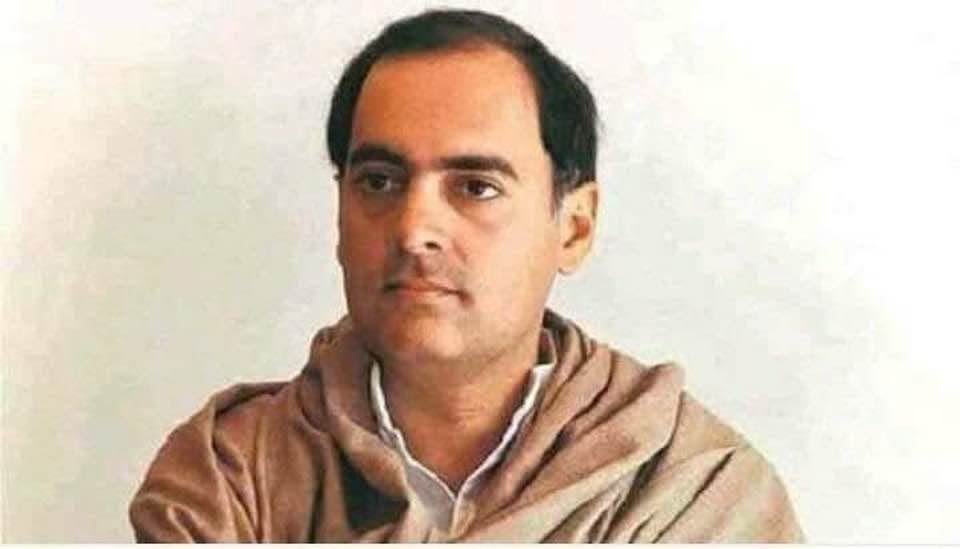
The intervention soon became a military and political entanglement. The LTTE turned against the Indian forces, while the IPKF faced difficult terrain, shifting alliances and growing opposition. The operation caused considerable loss of life and failed to produce the political settlement New Delhi had anticipated. It also contributed directly to the hostility that later culminated in Rajiv Gandhi’s assassination.
Controversies that reshaped his political legacy
Rajiv Gandhi’s record cannot be understood only through the language of modernisation. His government also made decisions that intensified political and communal tensions.
The Shah Bano controversy began after the Supreme Court upheld the right of a divorced Muslim woman to seek maintenance from her former husband. In 1986, the government enacted legislation that effectively curtailed the practical effect of the judgment. Supporters described the measure as protection for Muslim personal-law rights; critics saw it as a retreat from gender justice and constitutional equality. The episode damaged the government’s credibility among sections of women’s rights advocates and intensified the political contest over secularism.
The unlocking of the gates at the disputed Ram Janmabhoomi-Babri Masjid site in Ayodhya in 1986 further altered the country’s political atmosphere. The decision was widely interpreted as an attempt to balance the political consequences of the Shah Bano legislation and to respond to competing communal pressures. Whatever the immediate political calculations, the move helped bring the Ayodhya dispute closer to the centre of national politics.
The Bofors controversy was even more damaging to Rajiv Gandhi’s government. Allegations that middlemen had received kickbacks in connection with a howitzer purchase from the Swedish company Bofors generated sustained parliamentary and media scrutiny. Rajiv Gandhi denied personal wrongdoing, but the controversy eroded the moral authority associated with his 1984 mandate and became a major factor in the Congress’s declining public standing before the 1989 election.
His government also faced criticism over the limits of its economic reforms. It relaxed some controls, encouraged technology and modern industry, and attempted to reduce administrative obstacles. However, these measures did not amount to the comprehensive liberalisation introduced in 1991. The changes under Rajiv Gandhi are better understood as an early and partial loosening of the regulatory system rather than as a full transition to a market-oriented economy.
A life violently cut short
Rajiv Gandhi was assassinated on May 21, 1991, at an election meeting in Sriperumbudur, Tamil Nadu. A suicide bomber associated with the LTTE carried out the attack, killing Rajiv Gandhi and others present at the rally. The subsequent investigation and court proceedings established the LTTE conspiracy as the central explanation for the assassination.
He was 46. His death ended the life of a leader who had entered politics unexpectedly and occupied the Prime Minister’s Office during one of the most turbulent periods in post-Independence India.
Remembering the unfinished vision
Rajiv Gandhi’s legacy remains complex. He advanced telecommunications, computing and scientific modernisation; lowered the voting age; introduced the anti-defection law; promoted a new education policy; negotiated peace accords; and articulated an ambitious vision of global nuclear disarmament. Several of his initiatives were incomplete during his lifetime, while others became influential only after subsequent governments revised and expanded them.
At the same time, the Shah Bano legislation, the Ayodhya decision, the Bofors controversy and the Sri Lankan intervention revealed the political costs of hurried decisions and inadequate institutional judgment. His premiership combined technological confidence with political miscalculations, administrative ambition with uneven implementation, and a commitment to national unity with choices that sometimes deepened social divisions.
Rajiv Gandhi is therefore best remembered neither as an unblemished visionary nor simply as a failed moderniser. He was a transitional leader who tried to move India from an older bureaucratic order towards a more technological, youthful and decentralised democracy.
On his birth anniversary, the most meaningful tribute is to recall both the promise of that vision and the democratic accountability required to pursue it.

~Hasnain Naqvi is a former member of the history faculty at St. Xavier’s College, Mumbai….
The opinions expressed here are solely those of the author.

