
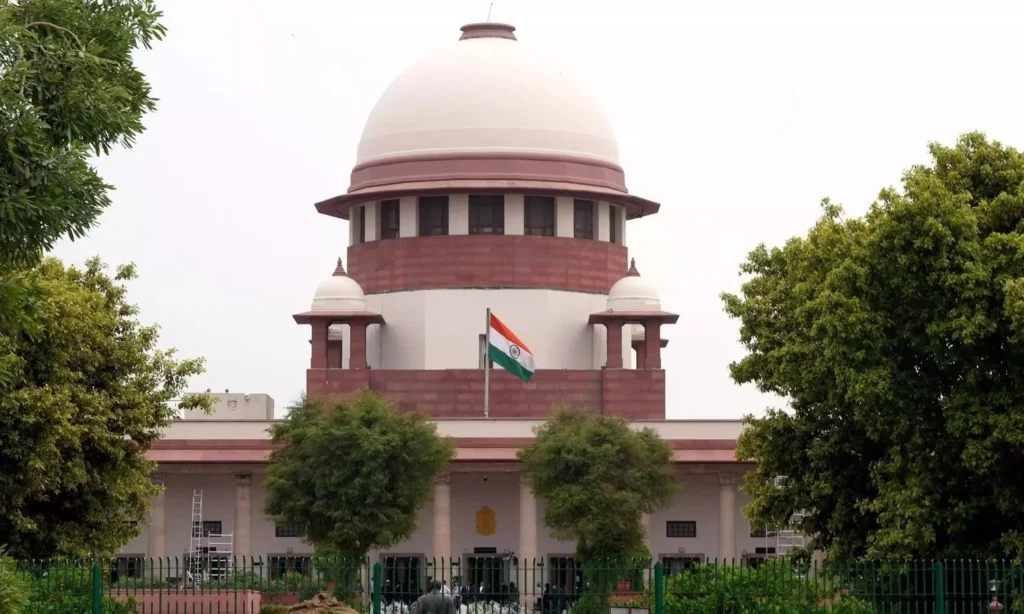
NEW DELHI: The Supreme Court recently decided a seventy-year-old land dispute by upholding a sale deed signed in 1957. Four generations of a family got embroiled in the litigation for over seven decades.
A bench of Justices Prashant Kumar Mishra and NV Anjaria finally decided a seven-decade-old dispute over 15.5 bighas in Narsipur Kalan village in Uttarakhand’s Haridwar, bought by predecessors of appellant Sarafat Ali through the sale deed of June 4, 1957.
By upholding the seventy-year-old sale deed, the top court has finally put an end to a long-running legal battle which is even older than the judges who decided it.
The dispute arose from a 1957 registered sale deed through which the appellants’ predecessors, then minors, purchased over 15 bighas of land in Haridwar district and claimed to have remained in possession ever since.
They secured mutation of the land in their favour in 1984 after one of the sellers withdrew his objection. During consolidation proceedings in 1991, they sought recognition of their rights as Bhumidhar. Although the Consolidation Officer initially allowed their claim and a subsequent compromise in 1993 also supported their possession, the matter was reopened after objections by other co-tenure holders.
Following a full hearing, the Consolidation Officer rejected the appellants’ claim in 1999, holding that the sale deed had not been properly proved and was void under Section 154 of the UP Zamindari Abolition and Land Reforms Act. The appellate and revisional authorities upheld the decision, and the High Court dismissed the appellants’ writ petition in 2017, affirming the findings.
What Supreme Court Said?
The concurrent findings of courts below rested on two pillars. First, that the sale deed contravened Section 154 of the Abolition Act, rendering it void. Second, that the execution of the deed was not proved because the attesting witness Baru described his residence as “Nasirpur Kalan” in his 1995 statement, whereas the certified copy of the deed described him as a resident of “Nihandpur Suthari.”
The top court held that the High Court and the Consolidation Authorities committed a manifest error in treating the sale deed dated June 4, 1957, as void and in disregarding it on the basis of immaterial discrepancies relating to the attesting witness.
The court noted that it is not even the pleaded case of the respondents that the sale deed was forged, executed under coercion, impersonation or fraudulent misrepresentation.

We are a multimedia news network. Website : www.7xnews.com Based in New Delhi (India)
Youtube : umakantlakheraspeaks@gmail.com