

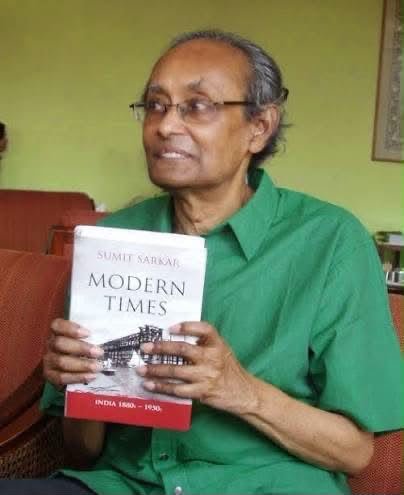
India has lost one of its most distinguished historians. Professor Sumit Sarkar, among the most influential scholars of modern India in the post-Independence era, passed away on Thursday, 13 August 2026, at the age of 87 after a prolonged illness. His death marks the end of an extraordinary intellectual journey that transformed the study of Indian nationalism, colonialism, social movements and the politics of historical memory.
For generations of students, teachers and researchers, Sarkar was much more than the author of standard academic texts. He was a historian who insisted that the past could not be reduced to comforting national myths, ideological certainties or the triumphal narratives of the powerful. His scholarship was rigorous, sceptical and deeply attentive to the complex social forces that shaped modern India.
His first major monograph, The Swadeshi Movement in Bengal, 1903–1908, published in 1973, announced the arrival of an exceptional historical mind. The book combined extraordinary archival research with a close reading of political mobilisation, class relationships, ideology and popular participation. It remains a landmark study of the Swadeshi movement and has continued to be reprinted and debated. Permanent Black describes it as a classic work of scholarship, noting that its original publication was followed decades later by a new edition containing reflections by Sarkar and critical essays by Neeladri Bhattacharya and Dipesh Chakrabarty.
From colonial nationalism to the social history of freedom
Sarkar’s achievement lay partly in refusing to treat nationalism as a seamless or uncomplicated phenomenon. He examined the tensions within nationalist politics and the distance that could sometimes separate political leadership from the ordinary people in whose name movements were conducted.
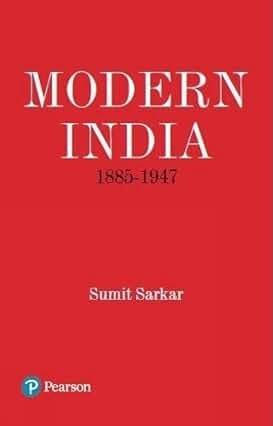
His Modern India, 1885–1947, first published in the 1980s, became one of the most widely read syntheses of the period. It was particularly influential because it combined an accessible narrative with a sophisticated critique of earlier interpretations of colonialism and nationalism. Goodreads’ bibliographic record still reflects the extraordinary reach of the book, listing numerous editions and identifying it as one of Sarkar’s central works.
But Sarkar was never merely a textbook historian. His scholarship repeatedly pushed the boundaries of what could constitute historical inquiry. In Writing Social History, he explored the possibilities and limitations of reconstructing the experiences of groups and movements that conventional political history had often marginalised.
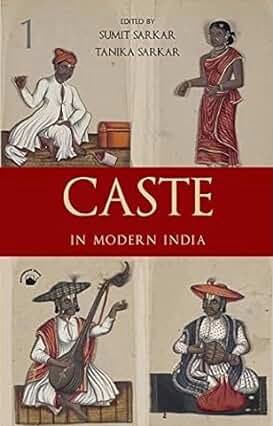
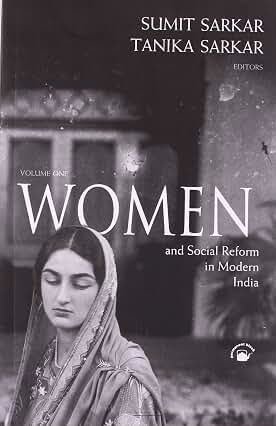
His later Modern Times: India 1880s–1950s: Environment, Economy, Culture widened the canvas still further, demonstrating his continuing interest in the relationship between political history and the everyday structures of society. His work also extended into caste, gender, social reform and popular movements. His collaboration with his wife, the distinguished historian Tanika Sarkar, produced important collections including Women and Social Reform in Modern India and Caste in Modern India.
A founding voice—and later critic—of Subaltern Studies
Sarkar belonged to the generation of historians associated with the intellectual ferment that produced Subaltern Studies in the early 1980s. The project, associated with Ranajit Guha and a group of younger historians, sought to challenge histories that placed political elites at the centre and paid insufficient attention to peasants, workers and other subordinated groups.
Sarkar’s importance to that intellectual movement was unusual because he subsequently became one of its most searching internal critics. In his celebrated essay “The Decline of the Subaltern in Subaltern Studies”, he questioned the direction in which parts of the project were moving, particularly what he regarded as a retreat from material and social history towards increasingly abstract theoretical formulations. His criticism came not from outside hostility but from the position of an intellectual participant who believed the original radical promise of the project was being diluted.
That willingness to disagree with an intellectual tradition to which he himself had contributed was characteristic of Sarkar. He did not regard scholarship as an exercise in defending one’s own camp. For him, historical argument required constant interrogation—including of one’s own assumptions.
A historian who confronted Hindutva
Sarkar’s scholarship also acquired an unmistakably political significance as Hindu nationalism became increasingly influential in Indian public life.
In 1993, he joined Tapan Basu, Pradip Datta, Tanika Sarkar and Sambuddha Sen in producing Khaki Shorts and Saffron Flags: A Critique of the Hindu Right. The book examined the RSS, VHP and the ideological and organisational foundations of Hindutva, including the political mobilisation surrounding the Ram Janmabhoomi-Babri Masjid dispute. Orient BlackSwan describes it as a meticulously researched critique of Hindutva’s institutional structures, political language and strategies of communal mobilisation.
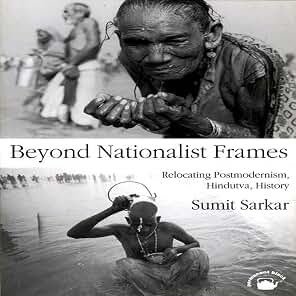
A decade later, Sarkar’s Beyond Nationalist Frames: Postmodernism, Hindu Fundamentalism, History directly confronted the politics of historical interpretation. Published by Indiana University Press in 2002, it examined the advance of the Hindu Right, the rewriting of history textbooks and the relationship between Hindutva and historical consciousness.
His intervention was important precisely because he understood that battles over history are never simply battles about the past. They are also battles over citizenship, identity and the political imagination of the present.
Scholarship as intellectual dissent
Sarkar’s commitment to intellectual independence was not confined to books and classrooms. He was also willing to place principle above honours.
In 2004, he received the Rabindra Puraskar, one of West Bengal’s significant literary and intellectual honours. Three years later, he returned the award in protest against the government’s handling of the Singur and Nandigram land controversies. The gesture was consistent with a scholar who believed that public intellectuals could not remain indifferent when the principles they valued were challenged.
His involvement with the Towards Freedom project of the Indian Council of Historical Research was another important chapter in his career. He edited the 1946 volume with Sabyasachi Bhattacharya, assembling a vast documentary record covering political parties, communalism, peasants, workers, caste movements, economic conditions and the Royal Indian Navy uprising. The volume was eventually published by Oxford University Press in 2007.
The work exemplified his fundamental belief that history must be built from evidence rather than ideological convenience.
The historian as essayist
Perhaps one of Sarkar’s most distinctive gifts was his ability to make the historical essay itself an instrument of major intellectual argument. His essays could combine archival detail, theoretical reflection and contemporary relevance without sacrificing clarity.
Essays of a Lifetime: Reformers, Nationalists, Subalterns, published by SUNY Press, brought together a substantial selection of his writings. The publisher’s description captures the breadth of his contribution, characterising The Swadeshi Movement as a paradigm-shifting monograph and Modern India as a monumental synthesis and critique of scholarship on colonialism and nationalism.
His own reflections on history, published in a 2017 interview, reveal the intellectual inheritance from which he emerged: a family shaped by liberal reformism and scholarship, but also transformed by the Leftist intellectual commitments of his father.
Born in 1939, Sarkar came from an extraordinary intellectual family. His father, Susobhan Sarkar, was a noted historian, while his wider family included distinguished scholars and academics. He studied history at Presidency College, Calcutta, and the University of Calcutta, taught at the University of Calcutta and the University of Burdwan, and later became Professor of History at the University of Delhi, where he remained a major intellectual presence for decades.
A legacy that will outlive the historian
Sumit Sarkar’s greatest contribution was not any single interpretation of India’s past. It was the habit of questioning.
He taught generations of readers to look beyond the official narrative, to examine the relationship between leaders and followers, to recover the experiences of ordinary people, to recognise contradictions within nationalist politics and to remain suspicious of attempts to turn history into an instrument of ideological mobilisation.
His intellectual legacy is therefore particularly consequential at a time when history has once again become a contested political terrain. Sarkar understood that historians have responsibilities not merely to the dead but also to the living. To falsify the past is ultimately to impoverish the present.
He leaves behind his wife, Professor Tanika Sarkar, generations of students and colleagues, and an immense body of scholarship that continues to challenge, educate and provoke.
The finest tribute to Sumit Sarkar would not be to turn him into an unquestioned icon. That would contradict the spirit of his work. His real memorial lies in the continuing questions his scholarship compels us to ask: Who writes history? Whose voices are heard? Who is excluded? What interests shape historical memory? And what happens to a democracy when its past is deliberately rewritten?
For a historian whose life’s work was devoted to asking difficult questions, there could be no more enduring legacy than leaving future generations unwilling to accept easy answers.

~Hasnain Naqvi is a former member of the history faculty at St. Xavier’s College, Mumbai….
The opinions expressed here are solely those of the author.