

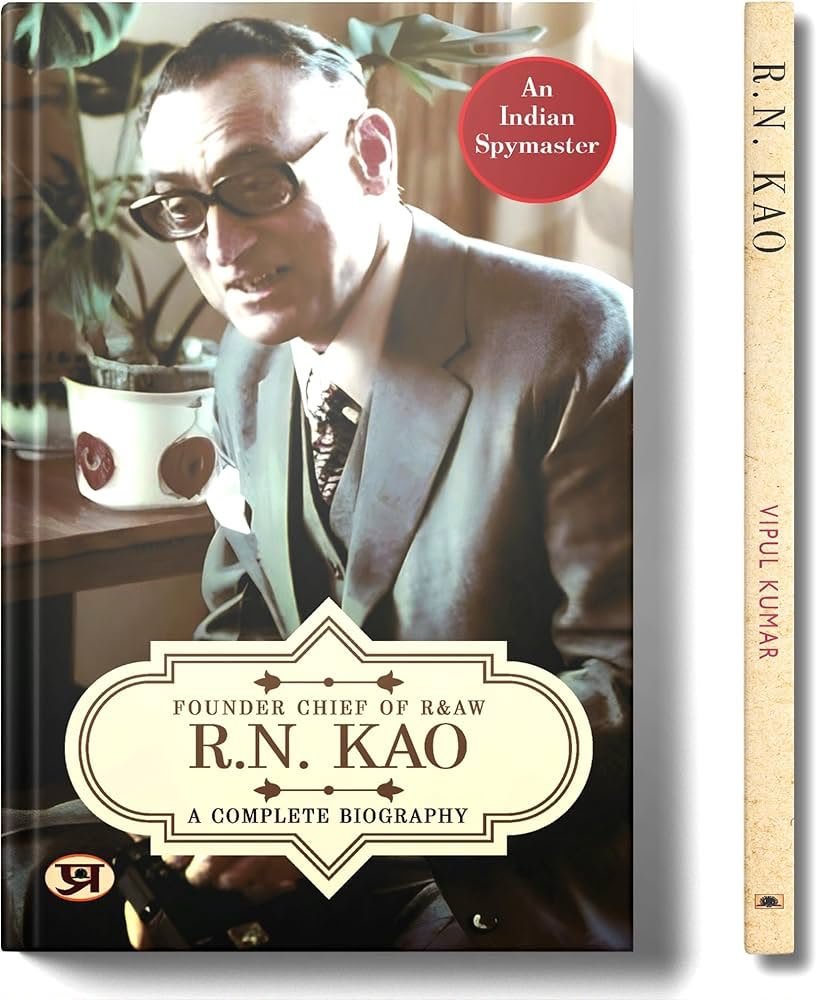
As the Research and Analysis Wing completes 58 years of silent service, the legacy of its founding chief remains the definitive blueprint for statecraft and stealth.
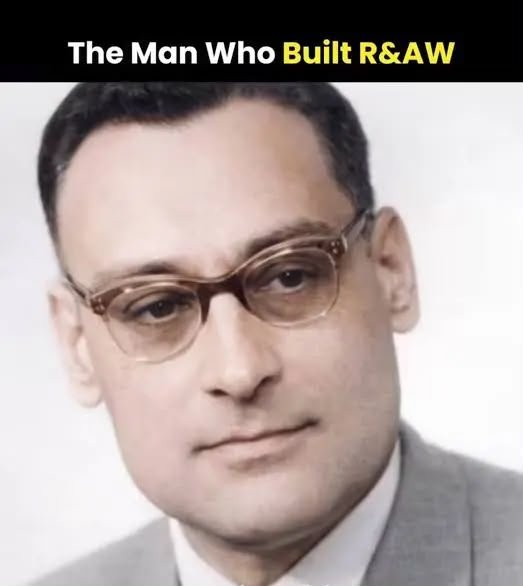
In the delicate art of nation-building, true power rarely announces itself. The most decisive victories in a republic’s history are often those that never make the front pages: the crises averted in secrecy, the strategic advantages quietly secured, and the adversary’s moves anticipated long before troops ever deploy to the border. As the Research and Analysis Wing (R&AW) completes fifty-eight years of safeguarding the nation’s security architecture, Indian intelligence stands upon an institutional foundation built by one extraordinary individual: Rameshwar Nath Kao, the agency’s founding chief, whose visionary leadership redefined the parameters of Indian statecraft.
Kao was neither a cinematic operative nor an overt political strategist. He was the quintessential “gentleman spymaster”—soft-spoken, intellectually formidable, immaculately dressed, and fiercely protective of the agency he built. In an era where public life increasingly demands performance, Kao demonstrated that the ultimate strength of an intelligence chief lies in quiet composure, institutional integrity, and an absolute resistance to personal vanity.
From the Imperial Police to the Outer Rings of Power
Born in Varanasi in 1918 and educated at Allahabad University—where he earned a master’s degree in English Literature—Rameshwar Nath Kao belonged to a generation of public servants who viewed statecraft as a sacred duty. Joining the Imperial Police in 1940, his analytical intellect and quiet efficiency quickly elevated him into the Intelligence Bureau (IB) after Independence. Under the leadership of legendary IB Director B.N. Mullik, Kao was entrusted with delicate security assignments, including the personal protection of Prime Minister Jawaharlal Nehru.
It was in 1955 that Kao’s international standing was sealed during the investigation of the Kashmir Princess incident—a sabotage attack on a chartered Air India aircraft carrying Chinese delegates to the Bandung Conference. Dispatched to lead the international probe across Hong Kong and Beijing, Kao displayed rare investigative rigour and diplomatic tact. His professionalism earned the explicit praise of Chinese Premier Zhou Enlai, demonstrating early in his career that Kao possessed the rare ability to command respect even from geopolitical adversaries.
1968:
Constructing an Intelligence Giant
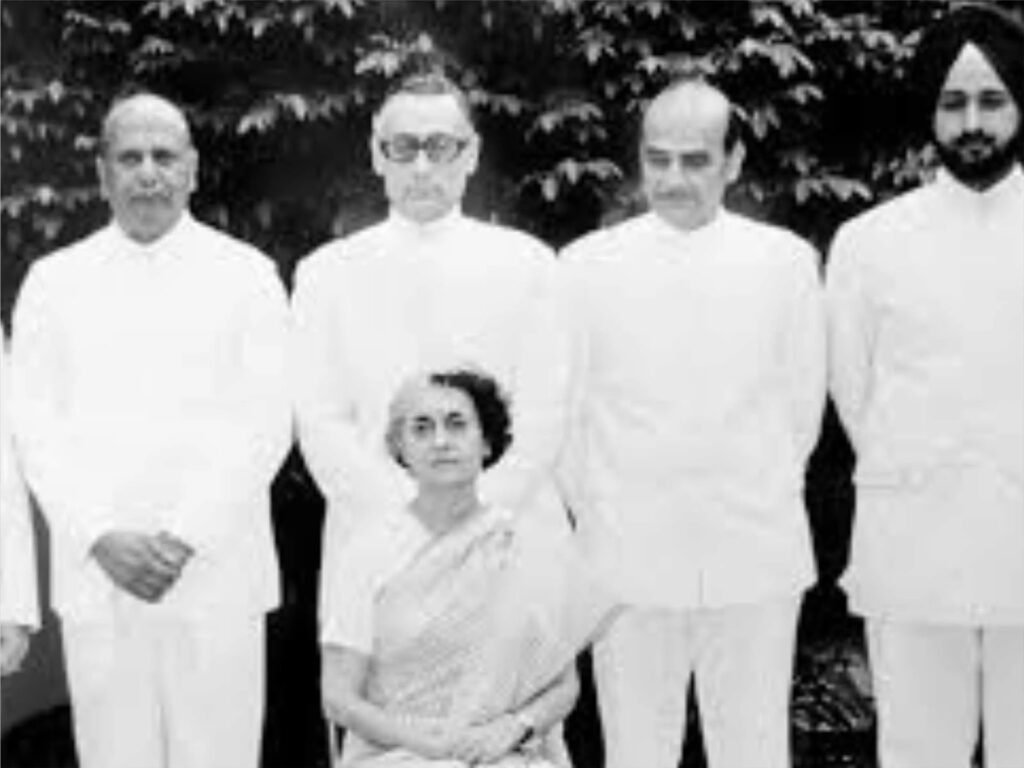
The strategic shocks of the 1960s—most notably the intelligence deficits revealed during the 1962 Sino-Indian War and the 1965 conflict with Pakistan—highlighted a fundamental structural flaw in India’s national security setup. The domestic-focused Intelligence Bureau was overstretched, and Prime Minister Indira Gandhi recognized that external espionage required a specialized, dedicated instrument. On September 21, 1968, she turned to Kao to carve out a new foreign intelligence agency from scratch: the Research and Analysis Wing.
Building R&AW from a modest nucleus, Kao laid down structural standards that were decades ahead of their time. As chronicled by veteran intelligence officer B. Raman in his seminal memoir The Kaoboys of R&AW, Kao did not merely replicate Western models like the CIA or MI6. Instead, he tailored an agency specifically responsive to South Asia’s complex neighbourhood. He integrated advanced aerial surveillance through the Aviation Research Centre (ARC), organized specialized covert assets through the Special Frontier Force (SFF), and pioneered the Research and Analysis Service (RAS) cadre to draw specialized talent from across government services.
The 1971 Masterpiece and Geopolitical Engineering
The supreme validation of Kao’s vision arrived during the 1971 Bangladesh Liberation War. In the months preceding the conflict, Kao transformed R&AW into a decisive force multiplier. Under his direct oversight, the agency gathered granular intelligence on West Pakistani troop movements, organized and trained Mukti Bahini freedom fighters, and executed covert operations that systematically severed enemy communication lines.
The wartime synergy between Prime Minister Indira Gandhi, Field Marshal Sam Manekshaw, and R.N. Kao remains an unmatched triumvirate in the annals of modern strategic execution. When victory was achieved and Bangladesh was born in December 1971, it marked not only a military triumph but a masterpiece of covert preparation.
Kao’s strategic acumen was equally evident four years later during the peaceful integration of Sikkim into the Indian Union in 1975. As Nitin A. Gokhale observes in his definitive biography, R.N. Kao: Gentleman Spymaster, Kao executed this geopolitical manoeuvre with remarkable delicacy, neutralizing hostile foreign interference and securing India’s vulnerable northern frontier without firing a single shot.
The Ethos of the “Kaoboys”
Beyond operational victories, Kao’s most enduring contribution was the institutional ethos he left behind. The elite cadre of officers he mentored—affectionately known as the “Kaoboys”—were raised on a strict diet of professional anonymity, secular professionalism, and intellectual detachment. Kao believed that the true mark of a successful intelligence agency was the complete absence of its name from the news. For decades, only two photographs of Kao existed in the public domain, reflecting an almost monk-like commitment to personal obscurity.
Kao was celebrated for his chivalry, his meticulous attention to the personal well-being of his subordinates, and his insistence on absolute political neutrality. He built deep liaison relationships with global agencies—from Washington to Tel Aviv—while ensuring that India’s strategic autonomy remained non-negotiable.
An Enduring Compass for the Future
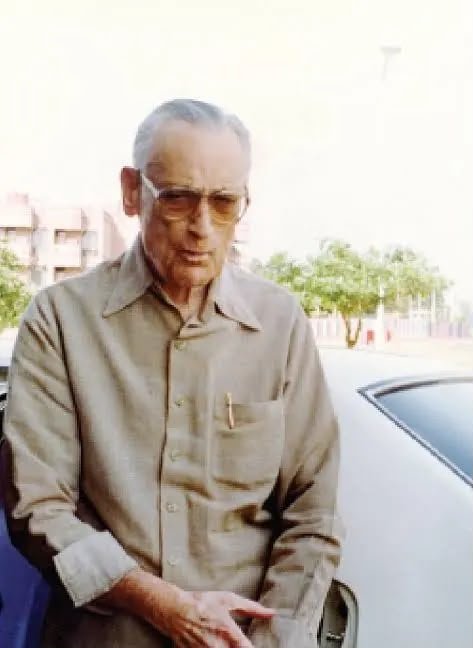
Decades after his passing in 2002, the shadow of R.N. Kao continues to guide the corridors of Indian national security. Today, as intelligence challenges expand into cyber warfare, artificial intelligence, disinformation, and asymmetric conflict, Kao’s core principles remain indispensable. Sophisticated algorithms and satellite networks may alter the tools of espionage, but they cannot replace the human judgment, moral clarity, and strategic foresight that Kao brought to the craft.
Honouring Rameshwar Nath Kao is not merely a tribute to a bygone era; it is a vital reminder of what makes an intelligence service great. In a world increasingly fixated on noise and self-promotion, the gentleman spymaster leaves behind an immortal truth: that the ultimate guardians of a nation are those who see everything, speak softly, and serve without expecting applause.

~Hasnain Naqvi is a former member of the history faculty at St. Xavier’s College, Mumbai….
The opinions expressed here are solely those of the author.