

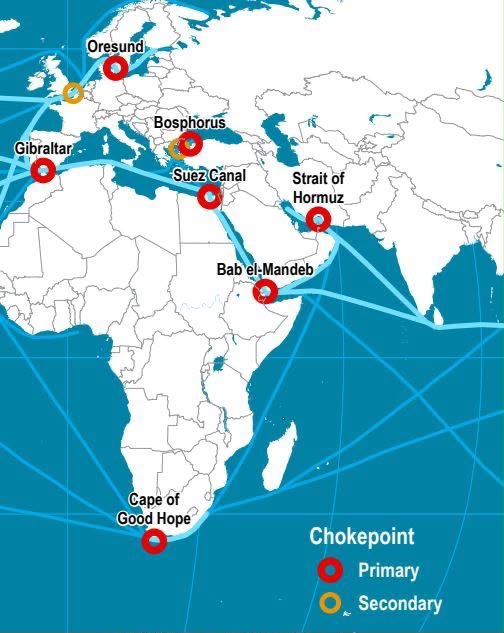
For decades, globalized market capitalism operated under a comforting myth: that physical geography no longer mattered. In an era dominated by digital capital, cloud computing, and high-frequency trading, international shipping was treated as an invisible utility—a frictionless, self-correcting background process as reliable as a smartphone operating system. That illusion has now fractured. The simultaneous paralysis of the Strait of Hormuz and the Bab el-Mandeb Strait represents more than a localized geopolitical crisis; it is a systemic cardiac arrest for global commerce.
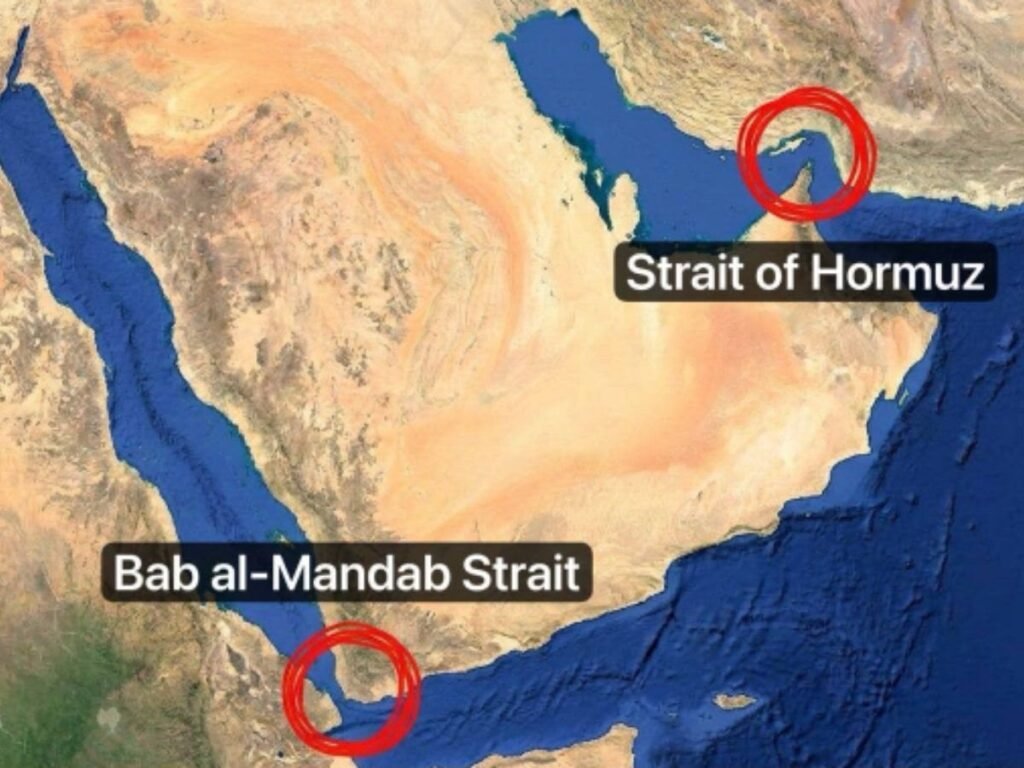
Geography, long ignored by economic theorists, has reasserted its dominance with terrifying speed. Together, these two narrow maritime corridors, each spanning less than thirty miles at their thinnest choke points, govern nearly 30 percent of world oil shipments and approximately 12 percent of all global maritime trade. By allowing these vital arteries to become volatile theaters of asymmetric conflict, the international community is learning a brutal lesson: a hyper-connected global economy built upon hyper-fragile physical bottlenecks is inherently unstable.
Energy’s Paralyzed Jugular
The crisis at the Strait of Hormuz strikes directly at the pulse of global industrial civilization. As the conduit for roughly one-fifth of the world’s petroleum and vast quantities of liquefied natural gas, Hormuz is not simply one shipping lane among many; it is the absolute jugular of energy security. Following recent military escalations between the United States and Iran, transit through the Strait of Hormuz has effectively ground to a halt, sending shockwaves through energy exchanges worldwide.
The economic fallout was instantaneous. Tanker freight rates have surged to record levels, with Very Large Crude Carriers factoring in unprecedented risk premiums that add roughly $11.50 per barrel to transport costs. This is not merely an inconvenience for oil traders; it is an immediate tax passed down to refineries, manufacturers, and ultimately consumers at the fuel pump.
What makes this energy shock particularly alarmist is the failure of structural workarounds. For years, policymakers reassured themselves that land-based pipelines—such as Saudi Arabia’s East-West pipeline to the Red Sea—offered an adequate safety valve. Yet, as recent targeted drone strikes against pipeline infrastructure have demonstrated, land routes are equally vulnerable to cheap, precision-guided asymmetric warfare. The uncomfortable truth has been exposed: there is no effective terrestrial backup for the sheer volume of energy that moves through the sea.
The Logistics Grind and the Tyranny of Distance
If Hormuz controls the raw power that fuels global industry, the Bab el-Mandeb Strait dictates the speed at which modern life functions. Serving as the critical southern doorway to the Red Sea and the Suez Canal, this narrow passage determines the economic velocity of trade between the industrial hubs of Asia and the consumer markets of Europe.
The situation in Bab el-Mandeb has deteriorated with alarming speed. Houthi forces, backed by Iran, have seized the strategic island of Perim and captured the coastal city of Mocha, tightening their grip on one of the world’s most vital shipping routes. Commercial maritime fleets now face an existential gamble, as safe passage can no longer be guaranteed, compelling major shipping lines to abandon the Red Sea altogether. The alternative—sailing entirely around Africa via the Cape of Good Hope—adds between 10 to 14 days to a standard voyage.
This detour imposes a crushing tax of distance. Rerouting around the African continent drains global shipping capacity while burning an additional $5 million in fuel and operational expenses per trip. This added transit time creates a severe deficit in ship availability worldwide, triggering severe port congestion from Shanghai to Rotterdam. Container ships sit idling, schedules are shattered, and supply chains once optimized for “just-in-time” delivery have disintegrated into “just-in-case” paralysis. Freight indices show global container rates surging more than 84 percent above previous baselines, driving up costs across the technology, automotive, and retail sectors.
The Engine of Structural Inflation
The compounding effect of these twin maritime blockades poses a profound threat to global macroeconomic stability. Analysis from international trade authorities suggests that this double bottleneck operates as a broad-based tax on global consumption, driving structural inflation across every layer of the economy.
Consider the structural shifts currently underway:
- Container Freight Costs: Rates have surged over 84 percent year-over-year, creating an elevated price floor for imported consumer goods that retailers cannot absorb without raising shelf prices.
- Marine Insurance Realities: War-risk premiums have spiked dramatically. Insurers are no longer viewing these price surges as temporary anomalies, but are instead re-underwriting their long-term risk baselines to permanently price in regional hostility.
- Agricultural Vulnerabilities: Transport costs for bulk fertilizer shipments have soared, threatening agricultural output globally and sowing the seeds for prolonged food insecurity in developing nations.
This is not a temporary price spike that central banks can easily tame by raising interest rates. Higher borrowing costs cannot shorten the sea route around the Cape of Good Hope, nor can they shield oil tankers from missile threats in narrow straits. This is cost-push inflation rooted in physical infrastructure, making it far more stubborn and far more dangerous.
The End of Geographic Innocence
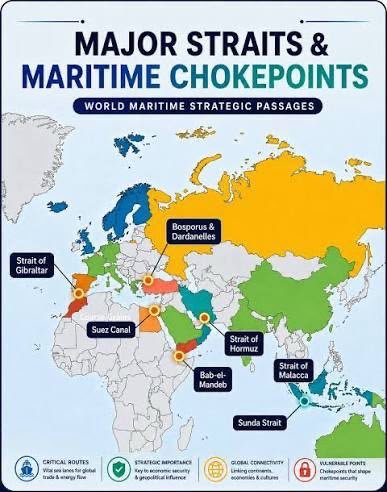
The fundamental error of the modern globalized era was the assumption that international waters would remain permanently safe, neutral, and open without active, collective stewardship. For three decades, the world enjoyed the fruits of hyper-globalization while ignoring the precarious geometry of its trade routes. We constructed a multi-trillion-dollar economic system that relies on two channels smaller than many metropolitan highway networks.
By treating maritime security as a series of isolated, localized military conflicts rather than the foundational pillar of global economic stability, world powers have handed non-state actors and regional powers immense leverage over global prosperity. A few drone strikes or sea mines can now trigger a multi-billion-dollar recalibration of world markets.
Moving forward, economic resilience will require more than just corporate supply chain audits or minor pivot strategies. Nations must recognize that free trade cannot exist without secure maritime corridors. Until international security frameworks adapt to protect these vital sea lines of communication from modern asymmetric threats, global prosperity will remain fragile—permanently vulnerable to the dangerous realities of a world where geography has reclaimed its revenge.

~Hasnain Naqvi is a former member of the history faculty at St. Xavier’s College, Mumbai….
The opinions expressed here are solely those of the author.