

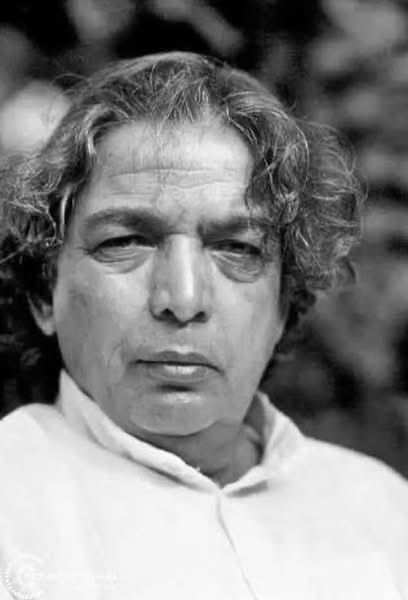
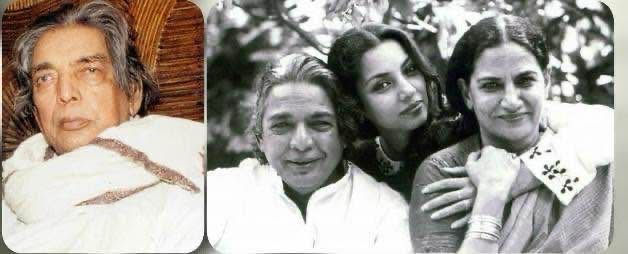
May 10 marks the 24th death anniversary of *Syed Athar Hussain Rizvi*, known to the world as *Kaifi Azmi*. He was not merely a poet or a lyricist; he was a storm of conscience, a bridge between the elitist Urdu tradition and the common man, and a romantic who never stopped dreaming of a more equitable world.
From the dusty lanes of Azamgarh to the silver screens of Mumbai, Kaifi’s journey was defined by a refusal to remain silent in the face of injustice.
From Madrasas to the Progressive Front
Born in Mijwan, Uttar Pradesh, into a family of landowners, Kaifi was expected to follow a religious path. However, the air of the 1930s was thick with rebellion. He abandoned his traditional education at the Sultan-ul-Madaris to join the *Progressive Writers’ Movement*.
His poetic spark ignited early. At age eleven, he penned his first *ghazal*, which he recited at a *mushaira* in the presence of stalwarts. That debut verse—*Itna toh zindagi mein kisi ki khalal pade*—hinted at the depth he would later master:
*Itna toh zindagi mein kisi ki khalal pade*
*Bas ek baar rone se fursat nikal pade*
(Let there be at least this much disruption in life / That one may find a moment’s respite after a single bout of weeping)
Kaifi soon moved to Bombay (now Mumbai), joining the Communist Party and living in a commune with other luminaries like Ali Sardar Jafri. It was here that his poetry found its “Red” pulse, blending the romanticism of the heart with the labour of the hands.
The Architect of Verse on Celluloid
Kaifi Azmi’s entry into Hindi cinema changed the very vocabulary of the film song. He debuted with *Buzdil* (1951), but his association with filmmakers like *Guru Dutt and *Chetan Anand* solidified his place in history.
In Guru Dutt’s *Kaagaz Ke Phool* (1959), he captured the haunting loneliness of fame through the lines:
*Waqt ne kiya kya haseen sitam*
*Tum rahe na tum, hum rahe na hum*
(Time has played such a beautiful cruelty / Neither you remained you, nor I remained I)
Perhaps his most staggering technical feat was writing the entire screenplay and dialogue of *Heer Raanjha* (1970) in rhyming verse. It remains a singular achievement in world cinema—a three-hour epic where every word spoken was poetry. Later, his contribution to the “New Wave” through the script and lyrics of *Garam Hawa* (1973) showcased his ability to dissect the pain of Partition with surgical precision.
A Voice for the Disenfranchised
Beyond the glamour of the studio, Kaifi was a relentless activist. His poem *”Aurat”* (Woman) remains one of the most powerful feminist manifestos in Indian literature. He didn’t just write about equality; he demanded it, urging women to walk shoulder-to-shoulder with men:
*Uth meri jaan mere saath hi chalna hai tujhe*
*Qadr ab tak teri tareekh ne jaani hi nahi*
*Tujh mein shole bhi hain bas ek jawani hi nahi*
(Rise, my love, for you must walk with me / History has not yet recognized your true worth / Within you lie embers, not just the bloom of youth)
His commitment to his roots led him back to his village, *Mijwan*, where he spent his final years working for rural upliftment, proving that a poet’s work is never confined to the page.
The Lasting Echo of a Soulful Songwriter
Kaifi’s filmography is a roadmap of human emotion. Whether it was the patriotic fervour of *Kar chale hum fida jan-o-tan sathiyon* in *Haqeeqat*, or the existential yearning in *Arth* (*Tum itna jo muskura rahe ho*), his words possessed a timeless honesty.
One of his most poignant moments came in 1967 with the film *Naunihal*. He wrote *Meri aawaz suno, pyar ka raaz suno* for a sequence featuring the funeral of *Jawahar Lal Nehru*. Decades later, his daughter, the legendary actress *Shabana Azmi*, recounted how those very words provided her solace when Kaifi himself passed away:
*Meri aawaz suno, pyar ka raaz suno*
*Maine duniya mein mohabbat ke siva kuch na kiya*
(Listen to my voice, hear the secret of love / I have done nothing in this world but love)
A Legacy Beyond the Horizon
A recipient of the *Padma Shri* and multiple Sahitya Akademi Awards, Kaifi Azmi died on May 10, 2002. Yet, he remains alive in every *mushaira*, every protest for justice, and every melody that speaks of unrequited love. He taught us that poetry is not a luxury but a necessity—a tool to sharpen our empathy and a fire to light our way through the dark.
As we remember him today, we are reminded of his own philosophy: that a gardener may change, but the garden must never go empty.
*Badal jaye agar maali, chaman hota nahin khali*
(Even if the gardener changes, the garden does not become empty).

~Hasnain Naqvi is a former member of the history faculty at St. Xavier’s College, Mumbai….
The opinions expressed here are solely those of the author.