

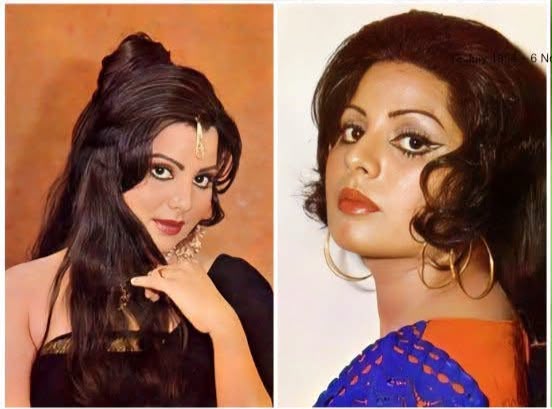
On July 12, the world of Indian cinema pauses to commemorate the first birth anniversary of Sulakshana Pandit since her passing on November 6, 2025. For generations of music lovers, her name evokes a profound nostalgia for an era when melodies possessed enduring depth and cinematic performances were marked by understated elegance. When she left the world at the age of 71, it felt less like an abrupt departure than the final fading of a hauntingly beautiful refrain.
History, however, records an extraordinary poetic coincidence. Sulakshana Pandit passed away on the exact 40th death anniversary of Sanjeev Kumar—the man she loved with unwavering devotion throughout her life. In a poignant twist that seems drawn from the script of a timeless romance, destiny united in memory what life had kept apart, forever intertwining their legacies.
A Legacy Rooted in Classical Tradition
Born in 1954 in Raigarh into the distinguished Pandit family, Sulakshana Pandit inherited a rich tradition of Indian classical music. Her father, Pratap Narain Pandit, was an accomplished vocalist, while her uncle was the legendary Pandit Jasraj. In a household where music was as natural as breathing, her extraordinary talent blossomed from an early age. A child prodigy, she mastered the piano in her formative years and was already performing on stage by the age of nine.
Her entry into Hindi cinema was nothing short of remarkable. Making her playback debut with the poignant “Saat Samundar Paar Se, Pappa Jaldi Aana” in Taqdeer (1967), she shared the microphone with Lata Mangeshkar. To sing alongside the undisputed queen of Indian playback music at such a young age was a testament to her exceptional promise. The family’s artistic legacy would continue through her younger brothers, the celebrated composer duo Jatin-Lalit, and her actress sister, Vijayta Pandit.
The Rare Brilliance of an Actress-Singer
What distinguished Sulakshana Pandit in the competitive world of 1970s Hindi cinema was her rare ability to excel simultaneously as both actress and playback singer. She belonged to a select generation of artists who could portray emotions convincingly on screen while giving voice to them behind the microphone.
As a singer, she possessed a voice of remarkable emotional depth and restraint. Her defining musical achievement came in 1975 with Ramesh Saigal’s Sankalp. Under Khayyam’s sensitive composition, her rendition of “Tu Hi Saagar Tu Hi Kinara” became an unforgettable expression of spiritual longing and surrender, earning her the Filmfare Award for Best Female Playback Singer as well as the Miyan Tansen Award. Whether rendering lively compositions such as “Kajre Ki Baati” or exploring the refined world of Urdu poetry through her 1980 ghazal album Jazbaat, her singing carried an authenticity that transcended ornamentation and touched the listener directly.
At the same time, her acting career flourished. Making her screen debut opposite Sanjeev Kumar in the suspense thriller Uljhan (1975), she immediately established herself as an actress of remarkable sensitivity.
In an era often dominated by glamour, Sulakshana’s performances were characterised by emotional vulnerability, grace and quiet dignity. Her acclaimed portrayal of Lolita in Anil Ganguly’s Sankoch (1976), adapted from Sarat Chandra Chattopadhyay’s Parineeta, firmly established her reputation as a serious performer. Whether appearing in the commercial entertainer Hera Pheri or the family drama Apnapan, she held her own alongside leading stars such as Vinod Khanna, Jeetendra and Rajesh Khanna.
A Love That Remained Unfulfilled
Behind the applause and cinematic success lay a deeply personal story that echoed the melancholy of a timeless ghazal. During the filming of Uljhan, Sulakshana Pandit fell deeply in love with Sanjeev Kumar. Her affection was sincere, unwavering and openly acknowledged. She was willing to offer not only love but also companionship and steadfast support during the actor’s emotionally turbulent years.
Sanjeev Kumar, however, remained emotionally devoted to his own unfulfilled love for Hema Malini. Consequently, Sulakshana’s feelings were never reciprocated.
When Sanjeev Kumar died of a massive heart attack on November 6, 1985, at the age of 47, the loss devastated Sulakshana. The emotional trauma led to a prolonged struggle with clinical depression. As the film industry moved forward, her career gradually receded from public view, and the subsequent death of her mother deepened her isolation. Like the legendary singer-actress Suraiya before her, Sulakshana chose dignified withdrawal over compromise, retreating from public life into decades of quiet solitude.
The Quiet Echoes of an Enduring Legacy
From 2006 onwards, Sulakshana found comfort and stability in the Mumbai home of her sister Vijayta and her late brother-in-law, composer Aadesh Shrivastava. Within that protective environment, away from public attention, she quietly rediscovered her inner world. She immersed herself in classic cinema, revisited timeless melodies and devoted herself to writing poetry.
“Tu hi saagar, tu hi kinaara,
Dhoondhe tujhe mera mann bechaara…”
The words she had sung with such youthful purity in 1975 ultimately became a poignant metaphor for her own life—a lifelong search for emotional anchorage amid the vast and often turbulent sea of human existence.
On her birth anniversary, Sulakshana Pandit deserves to be remembered not merely as a tragic romantic figure but as a gifted artist of rare integrity. She loved with extraordinary sincerity, sang with classical finesse and endured life’s deepest sorrows with quiet resilience. Her luminous voice remains one of Hindi cinema’s treasured inheritances, ensuring that as long as melody continues to stir the human heart, Sulakshana Pandit’s music will never truly fall silent.

~Hasnain Naqvi is a former member of the history faculty at St. Xavier’s College, Mumbai….
The opinions expressed here are solely those of the author.

