

Unmasking the truth behind the multi-trillion-dollar boasts and the great Indian poverty illusion.
If the global economic scoreboard were dictated solely by press releases, massive billboards, and political rallies, India would currently stand upon the highest podium, draped in gold, looking down sympathetically at a trailing pack of developing nations. The official state apparatus operates at a deafening decibel, relentlessly projecting India as the undisputed world champion of poverty reduction. Statistics are paraded to show hundreds of millions lifted out of destitution in record time, ostensibly leaving other massive populations far behind in the race.
Yet, this dazzling narrative of a multi-trillion-dollar superpower conquering poverty is less an economic reality and more a masterpiece of political propaganda. While the statistical decline in absolute starvation is technically accurate, under the present regime, it is largely synthetic and structurally unsustainable. Unlike the organic transformations witnessed in other highly populated nations like China and Indonesia—where massive industrialisation and job creation permanently elevated the inherent earning capacity of the masses—India’s current poverty alleviation relies precariously on a fragile lifeline of state-funded free rations and digital cash transfers. To separate fiscal optical illusions from genuine wealth creation, one must objectively analyse the entire economic timeline of the nation from the date of independence in 1947 to the present day.
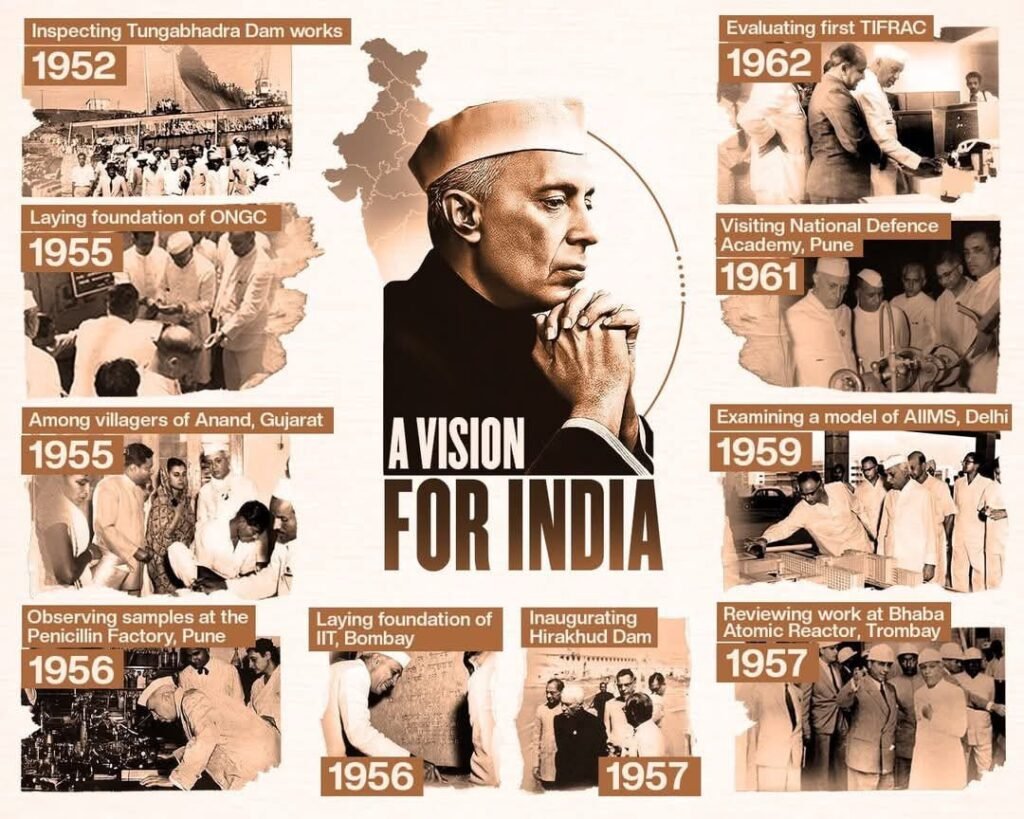
The Institutional Wisdom of Nehru
To judge the Nehruvian era through the lens of modern globalised capitalism is an exercise in historical myopia. In 1947, Jawaharlal Nehru inherited a plundered, newly partitioned nation with virtually zero private capital accumulation and widespread, organic destitution. In this fragile context, his approach was characterised by a far-sighted wisdom.
Guided by the Mahalanobis model, the state directed its scarce resources toward capital-intensive heavy industries—steel, coal, and power—alongside world-class scientific and educational institutions. In the 1950s, Indian private enterprise lacked the immense capital required to build dams or steel plants. State-led industrialisation was an absolute macroeconomic necessity to create a sovereign foundation upon which future markets could eventually function. Nehru absorbed the immediate political costs of slow growth to play a very long, institutional game.
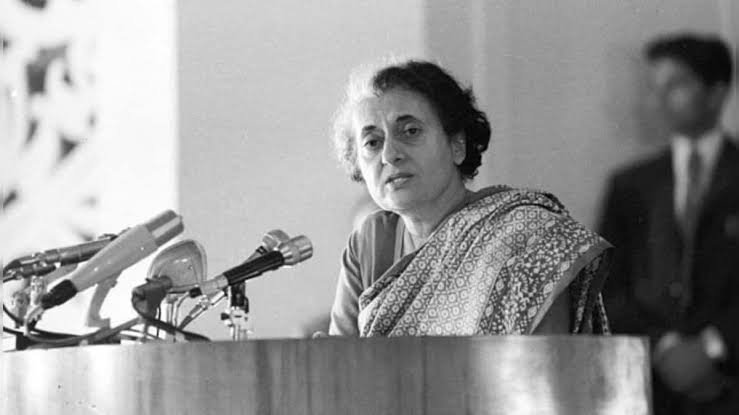
The Pragmatic Courage of Indira Gandhi
By the late 1960s, the Nehruvian consensus was fraying under the weight of food shortages and immense inequality. In this volatile environment, Indira Gandhi demonstrated a brand of leadership defined by raw political courage and heavy-handed practicality.
Her decisions to nationalise fourteen major commercial banks in 1969 and abolish the privy purses of the erstwhile royalty were seismic interventions. From an orthodox economic perspective, bank nationalisation is rightly criticised for eventually breeding systemic inefficiencies and entrenching a suffocating bureaucratic ‘Licence Raj’. Yet, prior to 1969, private banks were exclusively urban-centric, completely ignoring the agrarian sector. Indira Gandhi’s courageous intervention legally compelled banks to open rural branches, forcing massive financial inclusion at a time when the Green Revolution desperately required rural credit. It was a high-stakes solution that democratised capital to prevent socio-economic fracturing.
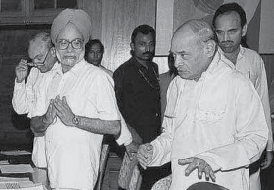
The Rao-Singh Watershed: Unleashing the Markets
However, by 1991, the heavy state-control model had run its course, culminating in a severe balance-of-payments crisis. It was here that India witnessed its most genuine, value-adding phase of organic poverty reduction, orchestrated by Prime Minister P.V. Narasimha Rao and his Finance Minister, Dr. Manmohan Singh.
Rao provided the ultimate political shield while Dr. Singh executed the macroeconomic surgery required to dismantle the suffocating Licence Raj. By liberalising the economy, devaluing the currency to boost exports, and opening the doors to foreign direct investment, the Rao-Singh duo fundamentally altered India’s destiny. They did not just distribute wealth; they unlocked the mechanisms to create it. This era birthed the modern Indian middle class and the booming IT and services sectors. The economic liberalisation organically pulled millions out of poverty. The tax revenues generated by the massive wealth creation of the Rao-Singh reforms are precisely what fund the massive welfare schemes of the present day.
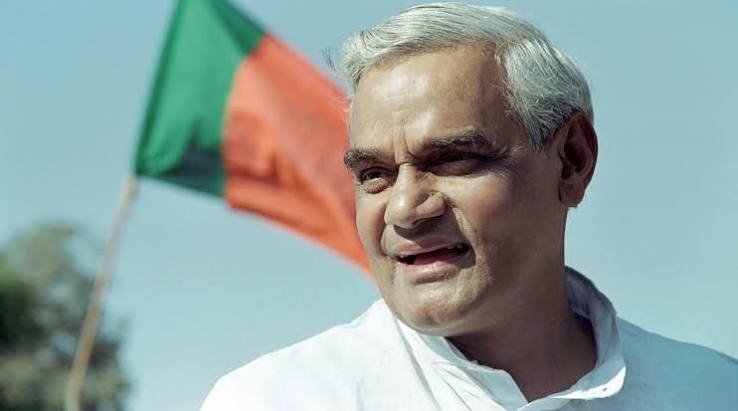
The Visionary Statesmanship of Vajpayee
Building seamlessly upon this liberalised foundation, Atal Bihari Vajpayee emerged as a visionary statesman. Vajpayee’s defining economic genius lay in his pivot toward massive capital expenditure to support the newly freed markets.
Recognising that India’s growth was severely constrained by its dilapidated physical infrastructure, he initiated the Golden Quadrilateral highway project. By drastically reducing logistical frictions, Vajpayee physically integrated a highly fragmented domestic market. Furthermore, his telecom reforms and strict adherence to fiscal responsibility created an environment where private enterprise could truly flourish. He understood that true national integration required a seamless economic geography.
The Modi-Shah Era: Multi-Trillion-Dollar Boasts and the Grand Illusion
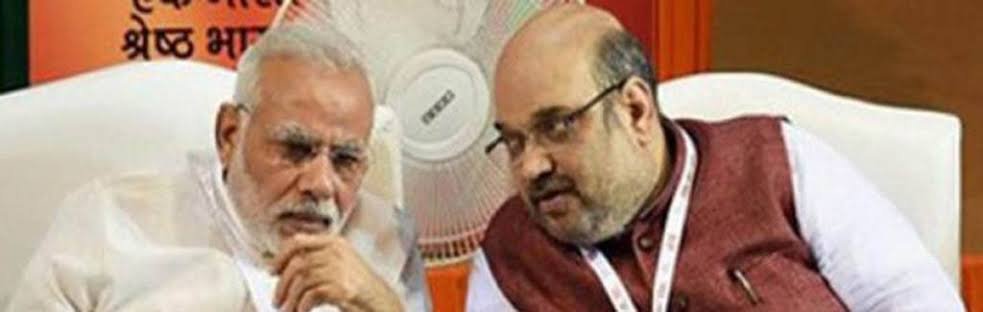
This brings the analysis to the contemporary Modi-Shah era, a period characterised by unparalleled political centralisation and a highly aggressive public relations machinery. The macroeconomic irony of this era is glaringly tragic. A nation loudly boasting of its multi-trillion-dollar might simultaneously relies on state-funded free grain to keep 800 million of its citizens—more than half its population—from starving.
To be fair, the administration has engineered a logistical marvel in welfare distribution. Through the Direct Benefit Transfer (DBT) programme, anchored by biometric identification, government subsidies now bypass corrupt middlemen. But declaring total victory over poverty based on these metrics is pure propaganda. The Indian model of poverty reduction under the current regime is fundamentally fiscal, not structural. When one examines China or Indonesia, their poverty reduction was organic. They transitioned hundreds of millions of workers into massive factory floors. Their citizens escaped poverty because their inherent productivity increased.
Conversely, the current Indian model resembles a brilliantly administered life-support system. The underlying earning capacity of the masses has barely shifted because the promised manufacturing boom has largely failed to generate mass employment. If the state were to halt the distribution of free food tomorrow, an enormous segment of the population would immediately plummet back below the poverty line.
Agriculture, Slums, and the Bulldozer Economy
The roots of this structural failure lie deep within the rural hinterland. For the average Indian farmer, agriculture has devolved into an exercise in dark comedy. Faced with erratic monsoons, exorbitant input costs, and highly unyielding market prices, cultivating the land is a guaranteed path to debt. The rural youth now simply boards a train bound for the metropolis.
Upon arriving, this migrant workforce discovers a glaring absence of factory jobs. The former agro-worker is quickly absorbed into the informal gig economy. Unable to afford conventional real estate, these workers establish residences under tarpaulin sheets next to open drains.
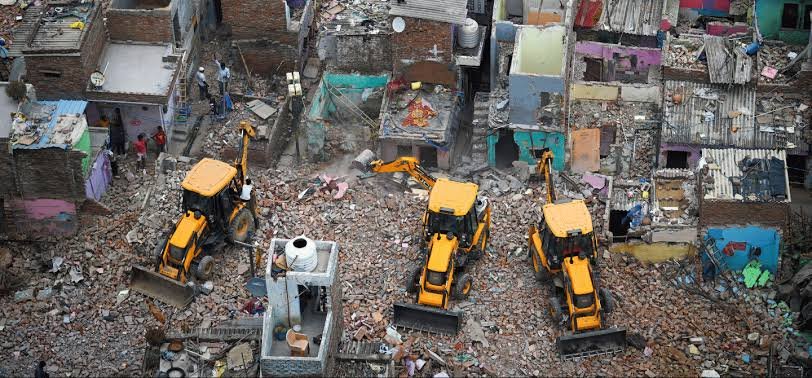
The administrative response to this urban poverty exposes the hollowness of the superpower narrative. Instead of providing robust public housing, the state frequently manages poverty via the bulldozer. Whenever a global summit is hosted to showcase India’s trillion-dollar glory, the state suddenly discovers an urgent need for urban ‘beautification’. Slums are promptly demolished or concealed behind large green screens. Poverty is not solved; it is merely hidden from the VIP motorcade.
Praise Where Due: The Concrete Triumphs
Yet, before concluding, an objective analysis must acknowledge the staggering physical transformation occurring under the current regime. The Modi-Shah administration has executed infrastructure projects of breathtaking scale and engineering audacity. The landscape is being rapidly rewritten with world-class, six-lane expressways cutting through formidable terrains. The nation has successfully engineered architectural marvels like the Chenab Bridge—the highest railway bridge in the world—and bored complex railway tunnels through the unforgiving Himalayas to connect remote frontiers. The advent of semi-high-speed train networks and dedicated freight corridors is genuinely revolutionising domestic travel and logistics. These are monumental, praiseworthy achievements of state capacity.
However, the tragic paradox remains: the state has built world-class six-lane highways and high-speed rail tracks, but the rural youth primarily use them to travel away from their failing farms toward metropolitan gig-economy destitution.
The Objective Conclusion and the Path Forward
An objective economic synthesis of India from 1947 to the present reveals a complex journey. Nehru provided the foundational intellect; Indira Gandhi provided the heavy-handed socio-economic inclusion; Narasimha Rao and Manmohan Singh provided the organic, wealth-creating liberalisation; and Vajpayee provided the physical integration of markets. The Modi-Shah administration has mastered the logistics of survival and built magnificent physical infrastructure, but substituting structural industrialisation with digital doles cannot yield sustainable development.
To pivot back toward genuine, value-adding job creation and transform this synthetic illusion into an organic reality, India must adopt highly practicable, innovative plans:
- Decentralised Agro-Processing Clusters: Instead of forcing farmers to abandon agriculture, the state must incentivise hyper-local food processing industries at the block level. Turning raw agricultural produce into packaged, value-added goods within rural areas will generate massive local employment and halt the urban exodus.
- Revitalising Labour-Intensive MSMEs: The obsession with highly automated, capital-intensive mega-factories must be balanced by aggressively funding Micro, Small, and Medium Enterprises (MSMEs). Sectors like textiles, footwear, and electronics assembly—which naturally absorb low-skilled labour—require immediate tax holidays and frictionless credit.
- Apprenticeship Subsidies: The state should redirect a portion of its massive welfare budget to directly subsidise wages for unskilled workers undergoing apprenticeships in the private manufacturing sector, effectively paying companies to train the workforce.
Until the nation marries its spectacular physical infrastructure with an engine of mass manufacturing employment, the loud chest-thumping about being a global leader in poverty reduction will remain exactly what it is: a beautifully packaged, digital illusion.

The writer is a Socio-Political thinker and Commentator.