

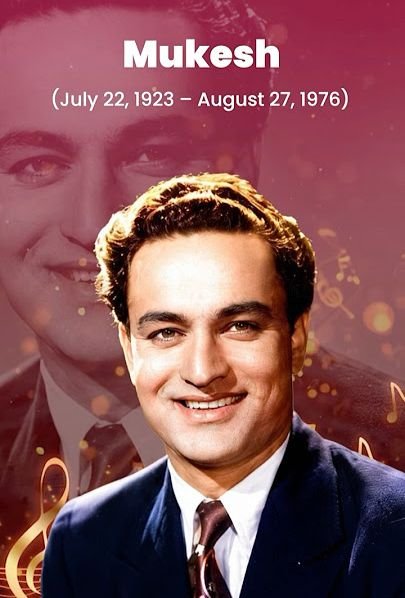
“Our sweetest songs are those that tell of saddest thought,” wrote Percy Bysshe Shelley. Few voices in Indian cinema embodied this truth as profoundly as Mukesh Chandra Mathur—known simply as Mukesh—whose melancholic timbre turned sorrow into solace for generations.
On the 50th anniversary of his passing, his songs remain not just memories, but companions in moments of quiet ache.
A Life Cut Short, A Legacy Immortal
Mukesh was born on 22 July 1923 in Delhi-6, into a middle-class Kayasth family. His father, an engineer, hoped he would follow a conventional path, but young Mukesh dreamed of becoming a singer-actor like his idol, K L Saigal. After a brief, unsuccessful stint as an actor in the early 1940s—including a phase where he sold dry fruits to survive—he found his true calling behind the microphone.
Over three decades, he sang for more than 200 films, recording thousands of songs. He won four Filmfare Awards and the National Film Award for Best Male Playback Singer in 1974 for “Kai Baar Yuhi Dekha Hai” from Rajnigandha. Yet, it is his sad songs—haunting, humane, and deeply personal—that define his immortality.
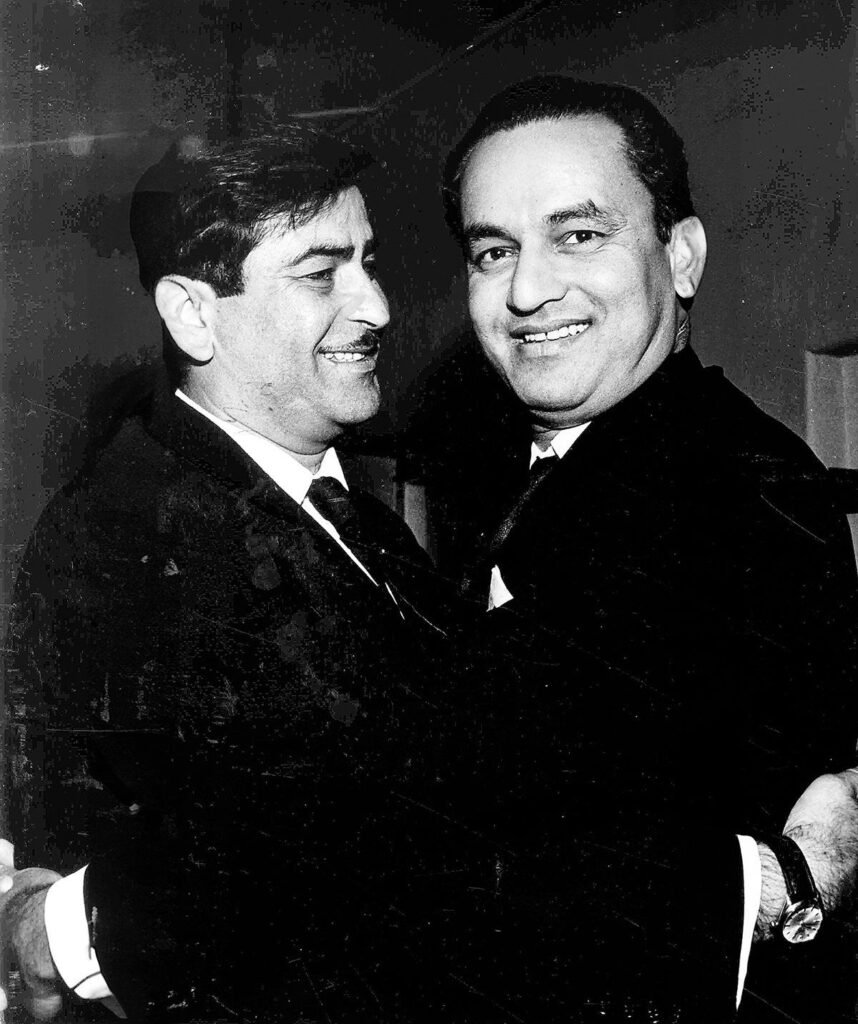
His life ended as abruptly as a minor chord resolving mid-phrase. On 27 August 1976, in Detroit, Michigan, Mukesh suffered a fatal heart attack just hours before a sold-out concert with Lata Mangeshkar. He was 53. Lata brought his body back to India; Raj Kapoor, for whom he sang 110 songs, broke down, saying, “I lost my voice.”
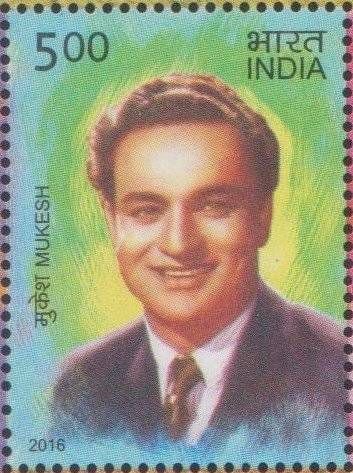
The Bard of Pain
Mukesh’s sad songs were never merely about heartbreak—they were meditations on existence, loss, and the quiet dignity of suffering. His voice carried a rare vulnerability, as if each note were whispered from personal experience.
In Anand (1971), he sang:
“Kahin door jab din dhal jaye, saanjha dhuan sa chha jaye…”
(“When the day fades far away, and evening spreads like smoke…”)
A song not of despair, but of gentle acceptance—much like the film itself.
From Bandini (1963):
“O janewale ho sake to laut ke aana…”
(“O traveller, if you can, return…”)
A plea wrapped in resignation, capturing the paradox of letting go while hoping for return.
And perhaps his most iconic elegy to friendship and betrayal, from Sangam (1964):
“Dost dost na raha, pyar pyar na raha…”
(“Friend remained no friend, love remained no love…”)
A lament that transcended cinema to become a cultural refrain for broken bonds.
Songs That Became Solace
Mukesh’s sadness was never theatrical. It was intimate, almost confessional. In Parvarish (1958), he sang:
“Aansoo bhari hai yeh jeevan ki raahen…”
(“The paths of life are filled with tears…”)
Not as complaint, but as observation—a truth spoken softly.
In Teesri Kasam (1966), the rustic poignancy of:
“Sajan re jhoot mat bolo, khuda ke paas jaana hai…”
(“Beloved, do not lie; you must one day face God…”)
revealed his ability to blend moral gravity with emotional tenderness.
Even in lighter films, his sad songs carried philosophical weight. From Himalay Ki God Mein (1964):
“Main to ek khwab hoon…”
(“I am but a dream…”)
A reminder of life’s impermanence, sung with such grace that it comforted rather than disturbed.
The Man Behind the Melancholy
Despite his association with sorrow, those who knew Mukesh described him as warm, humorous, and deeply human. His son Nitin Mukesh, now a celebrated singer himself, recalls a father who lived fully—even as his songs explored life’s shadows.
On this 50th anniversary, Nitin has spoken of how the world continues to remember his father daily, a testament to the timeless resonance of his art.
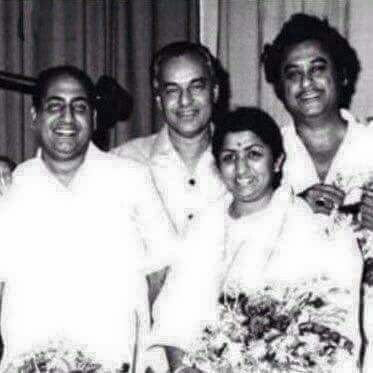
His grandson, actor Neil Nitin Mukesh, has shared rare photographs and memories, including moments with Lata Mangeshkar and Raj Kapoor, underscoring how Mukesh’s legacy lives on not just in recordings, but in the affection of those who knew him—and those who never did, yet feel they have.
A Voice That Refuses to Fade
Half a century later, Mukesh’s songs still play on radio shows, streaming playlists, and in quiet rooms where someone needs to feel understood. His voice did not dramatize pain—it sanctified it. In “Sab Kuchh Seekha Humne” from Anari (1959), he sang:
“Sab kuchh seekha humne, seekhi na hoshiyari…”
(“We learned everything, except cunning…”)
A line that captures the tragedy of innocence in a world that rewards guile.
And in Purab Aur Paschim (1970):
“Koi jab tumhara hriday tod de, usko phir bhi pyar karo…”
(“When someone breaks your heart, love them still…”)
Not as weakness, but as wisdom—a moral stance sung with such conviction that it feels less like advice, more like lived truth.
The Eternal Skylark
Shelley’s skylark sang of sadness not to depress, but to elevate—to transform pain into beauty. Mukesh did the same. His voice was India’s skylark: unseen, yet ever-present; gone, yet never silent.
As we mark 50 years since his departure, let us not mourn the man who died in Detroit, but celebrate the voice that still lives in every heart that has ever found comfort in a sad song. For in the words of another of his classics, from My Love (1970):
“Woh tere pyar ka gham, woh teri yaad ka gham…”
(“The sorrow of your love, the sorrow of your memory…”)
These, too, are sweetest songs—because they tell of saddest thoughts, and in doing so, make them bearable.
Mukesh is gone. But his voice? It remains—eternal, empathetic, and endlessly alive.
PS: Mukesh died in Detroit on August 27, 1976. Because it was already August 28 in India, his death anniversary is commemorated in India on August 28. Thus, August 28, 2026 marks 50 years since his passing in Indian reckoning.

~Hasnain Naqvi is a former member of the history faculty at St. Xavier’s College, Mumbai….
The opinions expressed here are solely those of the author.

