

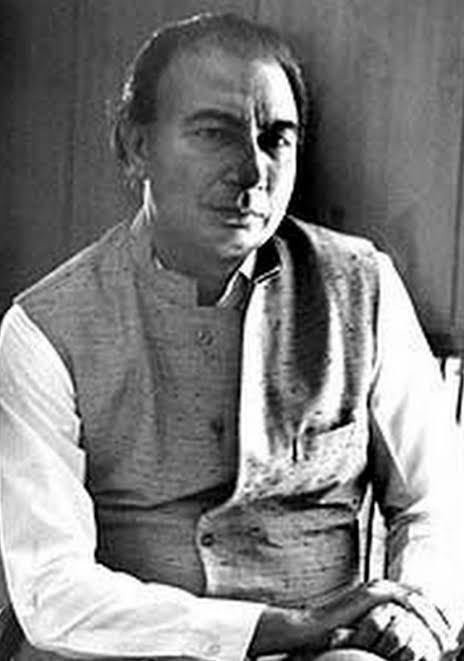
In the turbulent 20th century, two luminous voices rose from Punjab’s soil to redefine Urdu poetry—Faiz Ahmad Faiz (1911–1984) and Sahir Ludhianvi (1921–1980). Born a decade apart in undivided India, both were forged in the crucible of colonial oppression, the Progressive Writers’ Movement, and the wounds of 1947 Partition. Faiz became Pakistan’s conscience, imprisoned yet unbroken; Sahir became India’s people’s poet, carrying his rebellion into the heart of Bollywood. Though separated by borders, they spoke the same language of resistance, turning personal longing into collective fire. Their verses remain anthems—from Lahore’s protest squares to Delhi’s Shaheen Bagh.
Shared Roots in a Burning Era
Both poets were children of colonial Punjab—Faiz in Sialkot, Sahir in Ludhianvi’s Ludhiana—and both found their calling in the Progressive Writers’ Association. Founded in the 1930s and galvanised at its 1936 Lucknow session under Premchand, the movement demanded literature serve the oppressed. Faiz, an English lecturer in Amritsar, and Sahir, a fiery student-editor in Lahore, drank deep from the same well: Marxism, anti-imperialism, and the dream of a just tomorrow.
Personal grief sharpened their vision. Orphaned early, Faiz rose through self-study; Sahir, born Abdul Hayee, survived a scandalous parental divorce that left scars of abandonment. The Bengal famine, communal riots, and Partition’s blood-soaked dawn stained their early work. Yet both refused despair. In Subh-e-Azadi Faiz mourned a freedom “stained with blood”, while Sahir’s lines in Pyaasa asked where the proud patriots had vanished. Atheists both, they still borrowed spiritual hues—Faiz from Sufi longing, Sahir from bhajans invoking Rama and Krishna—to imagine justice beyond dogma.
From Romantic Ghazal to Revolutionary Nazm
Masters of nazm, they lifted the ghazal’s melody into the service of revolution. Classical lovers became the motherland; wine became the blood of martyrs. Where traditional poets sighed for the beloved’s tresses, Faiz and Sahir made the beloved the dispossessed.
Faiz began with exquisite romantic lyricism. A couplet from Nuskha-e-Wafa still melts hearts:
“Raat yun dil mein teri khoi hui yaad aayi
Jaise virane mein chupke se bahaar aa jaye”
(“Last night your lost memory came to my heart
As spring stealthily arrives in a wilderness”)
Yet even here, spring is never merely seasonal; it is revolution creeping into barren times.
Sahir’s early collection Talkhiyaan (Bitterness) announced a harsher tone, but he too could wound with tenderness before delivering the ideological blow.
Love Reimagined: Beyond the Personal
No two poems better illustrate their shared pivot from private to political love than Faiz’s Mujh Se Pehli Si Mohabbat and Sahir’s Taj Mahal.
Faiz pleads with aching gentleness:
“Mujh se pehli si mohabbat mere mehboob na maang
Aur bhi dukh hain zamane mein mohabbat ke siwa”
(“Do not ask me, my love, for the love I once gave you
There are other sorrows in the world besides love”)
Sahir, visiting the marble monument, strips romance of its glamour:
“Anginat logon ne duniya mein mohabbat ki hai
Kaun kehta hai ke sirf tum hi aziz ho hamare”
(then, famously)
“Yeh imarat-o-mazarat ki shaan aur numaish
Ismein marne walon ka khoon hai, aur kuchh nahin”
Sahir turns the Taj from monument of love into monument of exploitation.
Style and Symbolism: Ambiguity versus Directness
Faiz was the master of layered metaphor. The beloved, the rival, the morning breeze—every classical image carried double meaning. Love and revolution became the same wound, the same desire. This ambiguity protected him under dictatorship and gifted his lines immortality.
Sahir spoke like a headline. His diction was spoken Urdu, sometimes cinematic, always piercing. Where Faiz veiled tyranny in night and moonlight, Sahir named it: landlords, capitalists, warmongers, hypocrites. His secular imagery—Krishna playing flute for the poor, Rama returning to a just Ayodhya—made him India’s bridge across religious divides.
Two Visions of Revolution
The difference crystallises in their most famous “We shall see” poems.
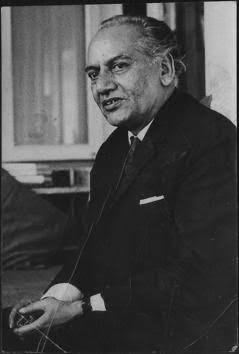
Faiz wrote Hum Dekhenge in 1979 against Zia-ul-Haq’s darkness, blending Quranic cadence with Marxist certainty:
“Hum dekhenge
Lazim hai ke hum bhi dekhenge
Woh din ke jiska wada hai
Jo lauh-e-azal mein likha hai
…Bas naam rahega Allah ka”
(“We shall see
Surely we too shall see
The day that has been promised
Written on the eternal tablet
…Only the name of Allah will remain”)
Sahir had written decades earlier, forced to flee Lahore for the same words:
“Zulm ki baat nahin, zulm ki umar bhi dekheinge
Dabegi kab talak aavaaz-e-Aadam hum bhi dekhenge”
Both declare “hum bhi dekhenge”, yet Faiz’s revolution arrives with divine inevitability; Sahir’s is forged by human fury.
Prison and the Pen: Lives Under Fire
Faiz spent years in Pakistani jails—first the Rawalpindi Conspiracy Case, later Zia’s regime—writing Zindan-Nama by smuggling couplets on cigarette paper. Sahir, exiled from Lahore by offended elites, carried his rebellion to Bombay’s film industry, turning song into manifesto. Over 600 film lyrics—from Baazi to Trishul—made progressive thought sing in every household.
An Enduring Brotherhood Across the Border
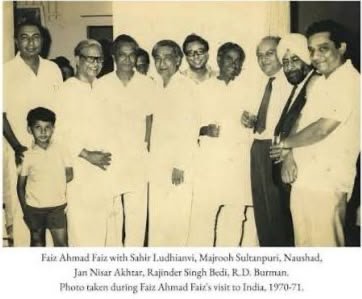
They admired each other deeply. Sahir called Faiz the greater poet; Faiz repaid small debts with large-hearted anecdotes. When Sahir died in 1980 and Faiz followed in 1984, the subcontinent lost its twin consciences.
Today Faiz’s Bol rings out against citizenship laws—“Bol ke lab azad hain tere” (“Speak, for your lips are still free”). Sahir’s Jinhe naaz hai Hind par woh kahan hain still stings corrupt rulers. From farmers’ protests to student marches, their words remain weapons.
Faiz gave us hope wrapped in beauty; Sahir gave us truth wrapped in pain. Together they proved that Urdu shayari can be both mirror and hammer—reflecting an unjust world, then breaking it open for light to enter.
In an age that still needs both tenderness and fury, Faiz and Sahir have not gone quiet. They simply wait, like spring in a wilderness, for the next heart ready to listen.

~Hasnain Naqvi is a former member of the history faculty at St. Xavier’s College, Mumbai….
The opinions expressed here are solely those of the author.