
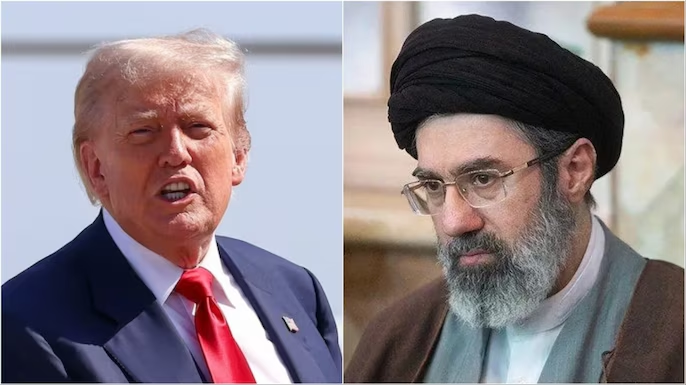
NEW DELHI: US President Donald Trump said Washington had just made a great settlement of the war with Tehran and that only final documentation remained before a deal could be signed. However, Iran refused to confirm that.
There might be peace ahead and the situation in the Middle East nearing normalcy as Donald Trump on Thursday expressed confidence that the US and Iran are on the verge of signing a landmark agreement aimed at extending a fragile ceasefire, reopening the Strait of Hormuz and launching negotiations over Tehran’s nuclear programme.
Speaking at the White House on Thursday, Trump said Washington had just made a great settlement of the war with Iran and that only final documentation remained before a deal could be signed.
Iran, however, has cautioned that no final agreement has yet been reached. Foreign Ministry spokesperson Esmaeil Baghaei said the proposed deal remains under review by Iranian decision-making bodies and insisted that Tehran would not compromise on its “red lines.”
Despite the differing public positions, officials involved in the negotiations say both sides have broadly agreed on a memorandum of understanding (MOU) that would establish a 60-day truce and create a framework for a more comprehensive settlement, according to Axios news agency.
WHAT’S THE DEAL ALL ABOUT?
60-Day Ceasefire Framework
The US and Iran would extend their ceasefire through a 60-day truce.
The agreement could be extended by mutual consent while negotiations continue on a permanent accord.
The framework is intended to halt further military escalation and provide space for diplomatic talks.
Reopening of the Strait of Hormuz
The strategic waterway would reopen immediately upon signing of the agreement.
Iran would ensure unrestricted maritime traffic through the waterway.
No tolls or transit fees would be imposed on commercial vessels.
Tehran would clear mines deployed during the conflict and restore safe navigation.
Shipping volumes are expected to return to pre-war levels within 30 days.
US Concessions and Economic Relief
The US would lift its blockade on Iranian ports. Washington would issue sanctions waivers allowing Iran to resume oil exports during the truce period.
Additional sanctions relief would be tied to Iran’s compliance with the agreement and progress in subsequent negotiations.
Discussions continue regarding access to frozen Iranian assets held abroad.
A mechanism is under consideration that would permit Iran to use some frozen funds for humanitarian purchases.
Nuclear Commitments
Iran would formally commit to never acquiring a nuclear weapon.
Tehran would enter negotiations on suspending uranium enrichment activities.
The future of Iran’s stockpile of highly enriched uranium would be addressed in follow-up talks.
Options under discussion include diluting the material under UN supervision or transferring it to a third country.
Any implementation measures related to Iran’s nuclear programme would require a second and more detailed agreement.
POSITIONS OF BOTH SIDES
The US has maintained that Iran must abandon any pursuit of nuclear weapons, resolve concerns surrounding its enriched uranium stockpile and guarantee freedom of navigation through the Strait of Hormuz.
Washington has also rejected any arrangement that would permit Iran to impose shipping tolls, exercise exclusive military control over the strait or require a complete withdrawal of US forces from the Middle East.
Iran, meanwhile, has sought broader sanctions relief, the release of frozen assets, guarantees against future military action and long-term international assurances for any final settlement.

We are a multimedia news network. Website : www.7xnews.com Based in New Delhi (India)
Youtube : umakantlakheraspeaks@gmail.com