

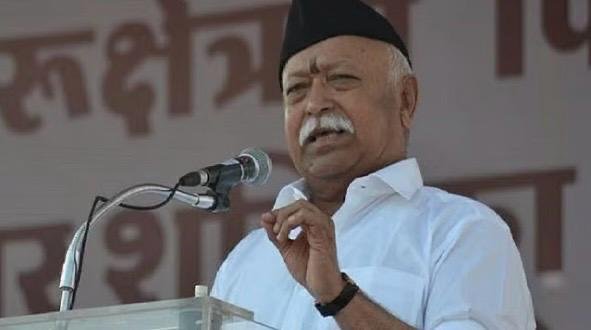
RSS Chief Mohan Bhagwat’s scheduled interaction with more than 2,000 high-school and college students in Mumbai on August 6 is no ordinary outreach. Taking place at the Nita Mukesh Ambani Cultural Centre to mark the 15th anniversary of the India’s International Movement to Unite Nations, the dialogue carries the theme “The Role of Youth in Uniting the World, the Indian Way.” It arrives hard on the heels of sustained student protests over examination paper leaks that forced the resignation of the Union education minister. The timing alone ensures the event will be read as more than a routine anniversary function.
The stated purpose and the unspoken one
Organisers present the gathering as an exercise in leadership formation rooted in Indian civilisational values, an opportunity for young people aged 15 to 19 from over a hundred cities to engage questions of democracy, nation-building and global responsibility. Behind the polished framing lies a clearer institutional objective: to offer an alternative intellectual and emotional vocabulary to a generation whose political consciousness has been shaped by digital saturation, competitive pressure and visible institutional failure.
Critics from the opposition see the event as classic damage control. After weeks of agitation at Jantar Mantar and elsewhere, the RSS and its affiliates appear eager to reclaim the narrative around youth discontent. The Sangh rejects the charge. It points to decades of youth shakhas and frames the Mumbai conversation as a natural extension of long-standing grassroots work rather than a panicked response. Both readings contain partial truth. The organisation has always cultivated the young; it has rarely done so under such intense public scrutiny of its ability to understand them.
A sharper internal note
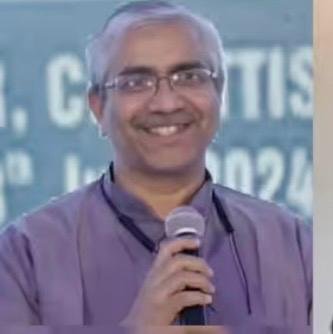
Yet even as Bhagwat prepares for dialogue, a markedly different tone has emerged from within the same organisation. Only days earlier, RSS joint general secretary Atul Limaye, addressing ABVP activists in Chhatrapati Sambhajinagar, described the recent Gen Z-led protests as “anti-national” and “anti-constitutional.” He urged that the agitation not be viewed merely through an anti-BJP lens but as a movement “weaponised against the Constitution” and “raised against the nation—against India.” Limaye acknowledged that the initial student anger over paper leaks was spontaneous and aimed at correcting wrongs in the education system, yet insisted the protests had fallen into the hands of the wrong people, been infiltrated by Left-leaning outfits, and become an experiment in subverting democracy through democratic means. He called for the entire chronology, methodology and support networks to be decoded as a case study so that such forces could be properly assessed and countered.
This characterisation sits in clear tension with the spirit of Bhagwat’s forthcoming outreach. Where Limaye frames large sections of the recent youth mobilisation as essentially hostile to the constitutional order and the nation itself, the Sarsanghchalak’s Mumbai programme is presented as an invitation to conversation—an acknowledgement, in Bhagwat’s own recent words, that the “era of obedience is over” and that today’s young people demand logical reasoning rather than top-down directives. The variance is instructive. One senior voice insists on ideological containment and forensic scrutiny of dissent; the other signals a willingness to engage, listen and recalibrate messaging for a sceptical generation. Whether this reflects genuine internal debate, a division of labour between hard and soft approaches, or simply different audiences remains an open question. What is unmistakable is that the Sangh is speaking in more than one register at the same moment.
Reframing activism
What remains consistent across both approaches is the attempt to redefine legitimate youth engagement. Street protest, in the Sangh’s recent public commentary, risks being portrayed as disruption weaponised against constitutional order. The preferred alternative is quieter: alignment with national purpose, cultural continuity and the larger project of a developed India. The goal is less the creation of a parallel demographic than an ideological reorientation within the existing one—redirecting energy from grievance to constructive nationalism.
Whether such a pivot can succeed depends on whether the conversation feels real. The elite venue and carefully selected school delegations raise the inevitable suspicion of a controlled environment. Yet Bhagwat himself has publicly conceded that the era of unquestioning obedience is over. Today’s young people demand reasoning, not directives. That acknowledgment creates a practical incentive for organisers to allow genuine questions, even if the range of topics remains bounded by leadership, digital distraction and global responsibility. Limaye’s sharper language, by contrast, leaves less room for such openness; it treats the very impulse behind the protests as something to be studied, decoded and neutralised rather than absorbed.
The generational gap is real
At over 75, Bhagwat faces a formidable cultural distance. Earlier remarks describing Gen Z as imitative and overly emotional, coupled with warnings about social media’s corrosive effects, sit uneasily with a cohort that prizes decentralised networks, digital autonomy and unfiltered transparency. Bridging that gap will require more than rhetorical adjustment. Emphasising dialogue over diktat, affirming that LGBTQ+ Indians form an integral part of society, and signalling visible authenticity rather than polished messaging are necessary first steps. They may not be sufficient. A generation confronting paper leaks, employment anxiety and questions of meritocracy may find abstract appeals to ancient values distant from its material anxieties. Connection, youth leaders argue, ultimately requires younger voices inside the conversation, not merely an elder statesman speaking carefully—and certainly not a simultaneous characterisation of their recent mobilisation as anti-national.
The contrast with Limaye’s remarks only sharpens this difficulty. When one senior functionary labels the protests anti-constitutional while the organisation’s highest voice prepares to meet the same demographic under the banner of national unity and the Indian way, young participants are left to wonder which message is authentic. Scepticism is already high; mixed signals from within the Sangh risk reinforcing it.
The test of authenticity
The success or failure of the Mumbai dialogue will not be measured by applause or carefully worded resolutions. If the interaction becomes a one-way lecture designed to paper over systemic failures in education and opportunity, a digitally literate and instinctively sceptical generation will dismiss it as public-relations theatre. If, instead, Bhagwat uses the platform to register and absorb concrete student concerns—jobs, fairness, free expression—the event could open a narrow but functional channel between India’s traditionalist core and its restless modern youth. Yet the simultaneous emergence of Limaye’s stark framing complicates that possibility. An outreach programme that seeks genuine listening sits uneasily alongside an internal assessment that treats the same youth energy as a threat requiring decoding and containment.
Whether the Sangh is prepared for the degree of listening its own chief appears to invite remains the open question. The Mumbai meeting will test not only Bhagwat’s ability to connect across a generational chasm, but also whether the organisation can reconcile its impulse toward dialogue with the harder edges of its own recent rhetoric. For a generation that has already forced a ministerial resignation through sustained protest, the answer will matter far more than any anniversary theme.

~Hasnain Naqvi is a former member of the history faculty at St. Xavier’s College, Mumbai….
The opinions expressed here are solely those of the author.

