

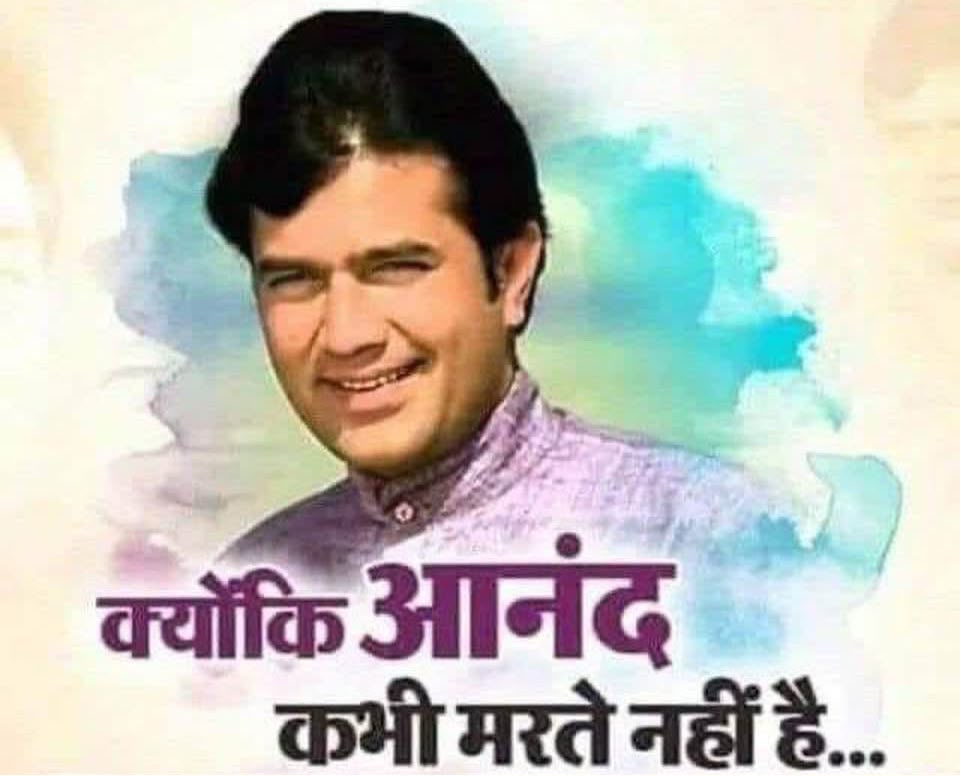
The enduring legacy of Hindi cinema’s first superstar
“Babumoshai, Zindagi badi honi chahiye…Lambi nahin”
(Babumoshai, life should be big, not long.”)
Few actors have ever scripted their own epitaph as poignantly as Rajesh Khanna did through the dialogues, songs and characters that defined his career. Even in death, the lines from Anand continue to echo with extraordinary poignancy, reminding generations that some artists never truly leave.
On his death anniversary, Rajesh Khanna is remembered not merely as a celebrated actor but as the phenomenon who transformed cinematic stardom into mass devotion.
When Rajesh Khanna passed away on a rain-soaked afternoon in Mumbai on 18 July 2012, an era came to a close. Outside his iconic residence, Aashirwad, admirers gathered in silence as a gentle drizzle seemed to mirror the collective grief of millions. It felt less like the passing of an actor than the farewell of a beloved member of the family. Like Anand, the unforgettable protagonist he immortalised in Hrishikesh Mukherjee’s masterpiece, he simply slipped away. But as the film memorably reminds us, “Anand kabhi mara nahin karte.”
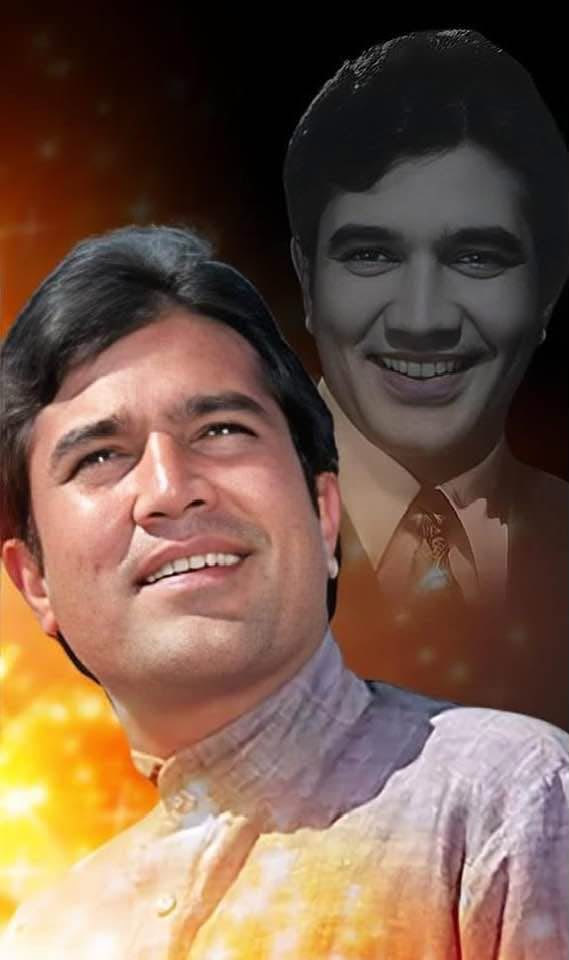
The birth of a phenomenon
Hindi cinema had already produced towering legends—Dilip Kumar, Raj Kapoor and Dev Anand had established themselves as icons, while contemporaries such as Dharmendra, Rajendra Kumar, Shammi Kapoor and Manoj Kumar commanded immense popularity. Yet Rajesh Khanna achieved something unprecedented. He became India’s first true “Superstar,” a title earned not by publicity but by an unparalleled emotional connection with audiences.
Between 1969 and 1974, he enjoyed an extraordinary run of success, delivering an unmatched string of consecutive hit films. Aradhana, Do Raaste, Bandhan, Sachaa Jhutha, Kati Patang, Safar, Anand, Amar Prem, Haathi Mere Saathi, Aap Ki Kasam, Namak Haraam, Daag, Ajnabee, Roti and many others established a record that remains one of Hindi cinema’s greatest achievements.
His appeal defied conventional definitions of heroism. His expressive eyes, gentle smile, distinctive head tilt and understated mannerisms became instantly recognisable. He was neither the conventional action hero nor the classical tragedian. Instead, he embodied romance, vulnerability and emotional sincerity. Audiences believed in him because he appeared profoundly human.
The hysteria no star had witnessed before
Rajesh Khanna’s success was measured not merely by box-office collections but by a level of public adoration that Indian cinema had never witnessed.
Young men copied his hairstyle, mannerisms and wardrobe. Bell-bottom trousers, colourful kurtas and side-parted hair became defining fashion statements of the early 1970s. His dialogues entered everyday conversation, while college campuses reverberated with songs picturised on him.
His female admirers elevated fandom into legend. Stories of letters written in blood, symbolic marriages to his photographs and lipstick marks left on his car have become part of Bollywood folklore. For an entire generation, Rajesh Khanna represented the ideal romantic hero—sensitive, charming and irresistibly charismatic.
It was this unprecedented devotion that distinguished him from every star before him.
The music that became the soundtrack of an era
No discussion of Rajesh Khanna is complete without acknowledging his extraordinary partnership with playback singer Kishore Kumar. Their collaboration produced some of the most memorable songs in Indian cinema, compositions that continue to resonate across generations.
Rajesh Khanna once described their partnership with characteristic humility: “Kishore was the soul; I was the body.”
Whether it was Mere Sapnon Ki Rani, Roop Tera Mastana, Yeh Shaam Mastani, Chingari Koi Bhadke, Kuchh Toh Log Kahenge, Zindagi Ek Safar Hai Suhana, Zindagi Kaisi Hai Paheli, or Zindagi Ke Safar Mein Guzar Jaate Hain Jo Maqaam, these songs became more than cinematic interludes. They articulated the hopes, heartbreaks and philosophical reflections of an entire generation.
An actor of remarkable range
Though remembered primarily as Hindi cinema’s ultimate romantic hero, Rajesh Khanna’s versatility deserves equal recognition.
He brought effortless tenderness to Aradhana, Kati Patang, Amar Prem and Aap Ki Kasam. In Khamoshi, Safar and Anand, he portrayed mortality, loneliness and resilience with remarkable sensitivity. Anand remains one of Indian cinema’s finest explorations of life and death, with Rajesh Khanna delivering a performance that continues to move audiences decades later.
His National Award-winning performance in Avishkaar revealed a restrained, deeply introspective actor capable of extraordinary emotional nuance. In Bawarchi, he demonstrated impeccable comic timing and warmth, while Red Rose showcased his ability to portray darker psychological complexities. Films such as Avtaar, Amrit, Agar Tum Na Hote and Swarg proved that even after his reign as a superstar had ended, he remained a compelling performer capable of anchoring powerful narratives.
The inevitable decline
No reign in cinema lasts forever.
The emergence of Amitabh Bachchan’s “angry young man” persona reflected a changing India. Public tastes evolved, and the romantic idealism that Rajesh Khanna had personified gradually gave way to narratives shaped by social anger and political disillusionment.
His personal life also underwent turbulent changes. His marriage to Dimple Kapadia, once celebrated as Bollywood’s fairy-tale union, eventually ended in separation. Although they remained connected through their daughters, the emotional upheavals of his private life often mirrored the melancholy visible in his later years.
Rajesh Khanna briefly entered politics, serving as a Member of Parliament, but public office never matched the emotional fulfilment he found before the camera. Cinema remained his natural home.
Yet even as his commercial dominance faded, the respect he commanded never diminished. Significantly, Amitabh Bachchan—whose rise symbolised the transition from one cinematic era to another—publicly acknowledged Rajesh Khanna’s immense influence and graciously presented him with the IIFA Lifetime Achievement Award in 2009.
The legend that endures
Rajesh Khanna’s influence extended beyond cinema. At the height of his popularity, the University of Bombay reportedly introduced a Foundation Course discussion examining “The Phenomenon Called Rajesh Khanna,” an extraordinary academic acknowledgement of the cultural impact he had created. Few entertainers have inspired such scholarly attention during their lifetime.
His contribution cannot be measured merely through awards or commercial records. He transformed the relationship between actor and audience. Before Rajesh Khanna, there were stars. After him, there was superstardom.
Fourteen years after his passing, his films continue to attract new viewers, his songs remain staples on radio and streaming platforms, and his dialogues continue to evoke nostalgia among generations that grew up with him.
The story of Rajesh Khanna is ultimately not one of rise and decline but of permanence. Stardom faded, fashions changed and cinema evolved, but the emotional universe he created remains untouched by time.
Some actors entertain. Some become icons. A rare few become memories woven into the cultural consciousness of a nation.
Rajesh Khanna belonged to that rarest category.
Like Anand, he never really said goodbye.

~Hasnain Naqvi is a former member of the history faculty at St. Xavier’s College, Mumbai….
The opinions expressed here are solely those of the author.