

For a long time, India’s Armed Forces have been regarded as a professional, disciplined, and politically neutral institution whose highest loyalty has remained solely towards the Constitution, the nation, and military traditions. This is precisely why the Indian Army is considered one of the most trusted institutions in the country. However, in recent years, a new debate appears to be emerging regarding the public image of the military and its senior leadership.
This debate is no longer limited to military capability, modernization, or national security; rather, it is increasingly raising the question of whether the public and institutional conduct of certain senior military officers appears to be moving closer to the current political establishment, Hindutva-based cultural nationalism, and the prevailing power structure.It is a public and undisputed fact that the present central government’s political identity is deeply associated with Hindutva, cultural nationalism, and saffron ideological symbolism.
Against this backdrop, when senior military officers are seen participating in religious events, appearing symbolically in temple-related or cultural campaigns, or displaying public gestures that seem aligned with the ideological discourse of the ruling establishment, it naturally raises concerns among a section of society about whether the traditional institutional neutrality of the armed forces is being affected.
Over the past few years, several developments have become subjects of public discussion and have further strengthened these concerns. For example: 1. During the inauguration of the Ram Temple in Ayodhya and related events, there was widespread discussion regarding the symbolic participation of military officers and military establishments.
2. The increasing public visibility of religious symbols and ceremonies within various military units and establishments also generated debate.3. Certain public statements made by senior military officers were interpreted by many analysts as being closer to the government’s political-cultural narrative.
4. Questions regarding military traditions and institutional neutrality deepened further when religious-cultural symbolism began appearing more prominently in military-linked events and public representations.
5. Another highly significant issue in this context is the plan to develop nearly 100 Sainik Schools across the country through private participation under the PPP (Public-Private Partnership) model. Public debate has also emerged regarding the possible role and influence of large corporate groups, particularly the Adani Group, in this initiative. Critics argue that Sainik Schools are not merely educational institutions; they have historically served as centers for military culture, national character building, and leadership development. Therefore, excessive privatization, corporate influence, and ideological inclination could potentially affect future military thinking and institutional culture.
6. In the same context, serious questions have also been raised regarding the construction of the “Sainya Dham” in Guniyal village, Dehradun, Uttarakhand. Uttarakhand’s military traditions have always been associated with humility, sacrifice, national service, and military dignity. Critics argue that the concept and political-cultural presentation of the Sainya Dham appear to be influenced more by political symbolism than by the natural dignity of military traditions. Among several veterans and sensitive citizens, a perception has emerged that an attempt is being made to associate the spirit of military sacrifice with a particular ideological-cultural narrative.
7. Furthermore, from time to time, allegations and apprehensions have also surfaced in public discourse suggesting that certain senior appointments appear to favor officers who are not only professionally competent but are also perceived as being ideologically aligned with the priorities of the ruling establishment. Although direct and conclusive evidence supporting such allegations is generally not publicly available, institutional behavior, public signals, priorities, and symbolic conduct often become the basis of analysis in democratic societies.In this context, discussions have also continued regarding appointments to the post of Chief of Defence Staff (CDS). General Bipin Rawat became India’s first CDS and hailed from the Garhwal region of Uttarakhand. He was succeeded by General Anil Chauhan, who also has roots in Uttarakhand.
National Security Advisor too comes from a similar regional background. Now, with discussions surrounding Lieutenant General Raja Subramani’s rise within the senior military leadership, political and ideological analyses have naturally begun to emerge.Lieutenant General Raja Subramani is associated with the Garhwal Rifles and has commanded the Indian Army’s Central Command. During his tenure, the inauguration of the Ram Temple in Ayodhya — an event of immense religious and political significance — took place and attracted nationwide attention. During the same period, there were also public discussions regarding arrangements made for soldiers’ visits and participation. Observing these developments, some analysts and former servicemen formed the perception that a section of the Army appeared to be moving closer to the prevailing political-cultural discourse.
However, it is equally important to recognize that the competence, leadership, and professional capability of any senior military officer cannot be judged solely through a political or ideological lens. Senior appointments in the Indian Army are based on multiple factors, including experience, seniority, operational record, strategic understanding, institutional acceptance, and the confidence of the government. Therefore, to conclude that any appointment has been made solely due to ideological proximity would be an extremely serious assertion, for which direct and conclusive evidence is generally not publicly available.Yet, there is another equally important reality.
The nature of power, governance, and institutional influence often manifests not through explicit declarations, but through signals, behavior, priorities, public symbolism, and institutional conduct. In any democratic system, it is unrealistic to expect governments or institutions to openly acknowledge that ideological motivations influence appointments, decisions, or institutional tendencies. Consequently, society, intellectual circles, the veterans’ community, and concerned citizens are compelled to form their assessments based on observable events, patterns, and public conduct.This is precisely the point where democratic discourse becomes essential. Such discourse should not be seen as a personal attack on the loyalty or competence of any individual officer, but rather as an effort to preserve institutional character.
The greatest strength of India’s Armed Forces has not merely been their combat capability, but their secular, pan-Indian, and politically neutral character. Soldiers from every religion, caste, language, and region serve with equal honor and equal responsibility. That is why the Army continues to remain one of the most trusted institutions in India.If a section of society begins to feel that the public character of the Army appears to be moving closer to a particular political or ideological stream, then the matter transcends ordinary political debate and becomes a question of institutional trust, national balance, and democratic sensitivity. Therefore, it is essential that both the military leadership and the government understand this sensitivity and ensure that the image of the Army remains above political ideology, religious symbolism, or power structures — as an institution dedicated solely to the Constitution, national duty, and professional military values.
Jai Hind Brigadier Sarvesh Dutt Dangwal
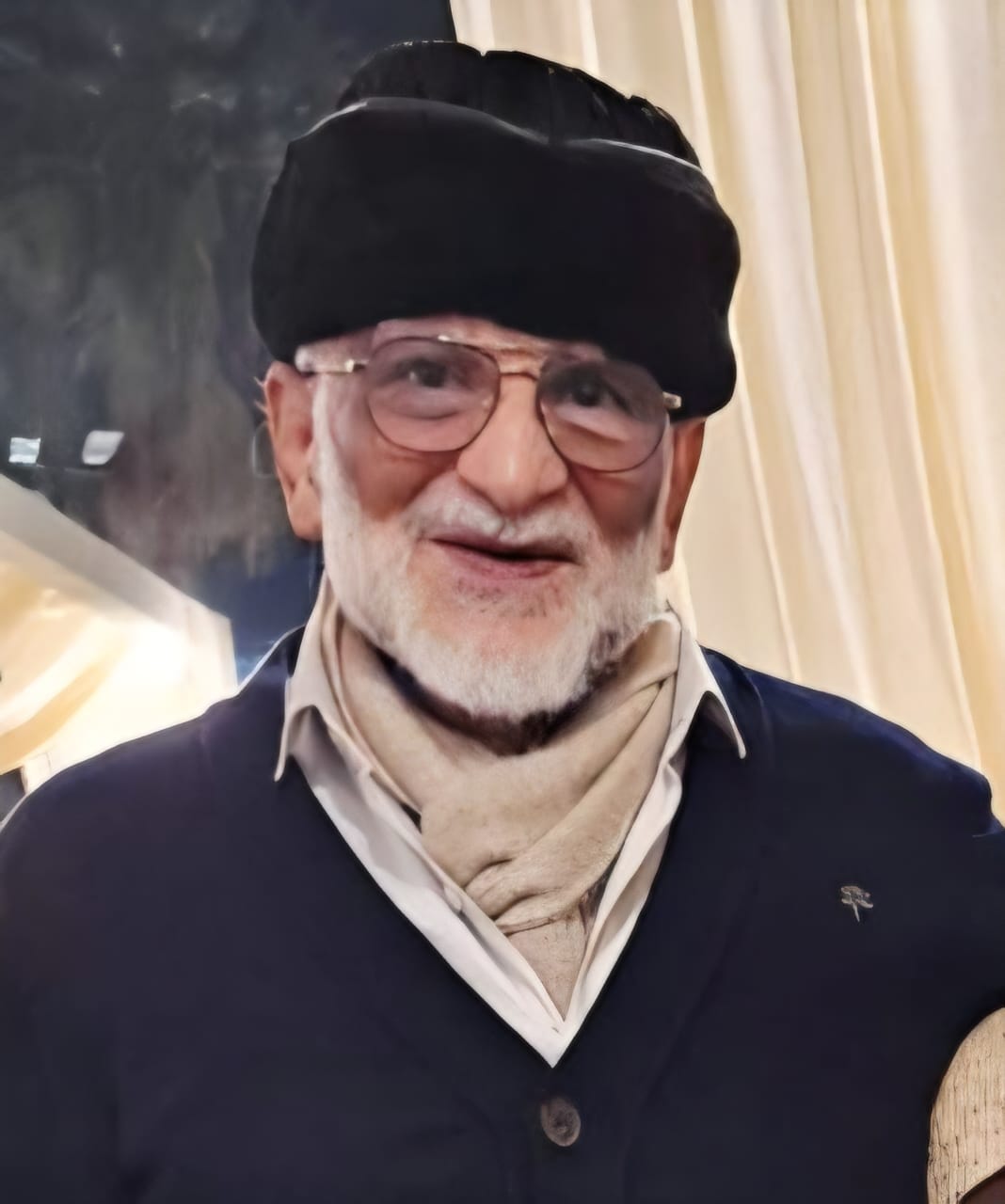
BRIG. Sarvesh Dutt Dangwal, The author is a social activist….
The opinions expressed here are solely those of the author.