

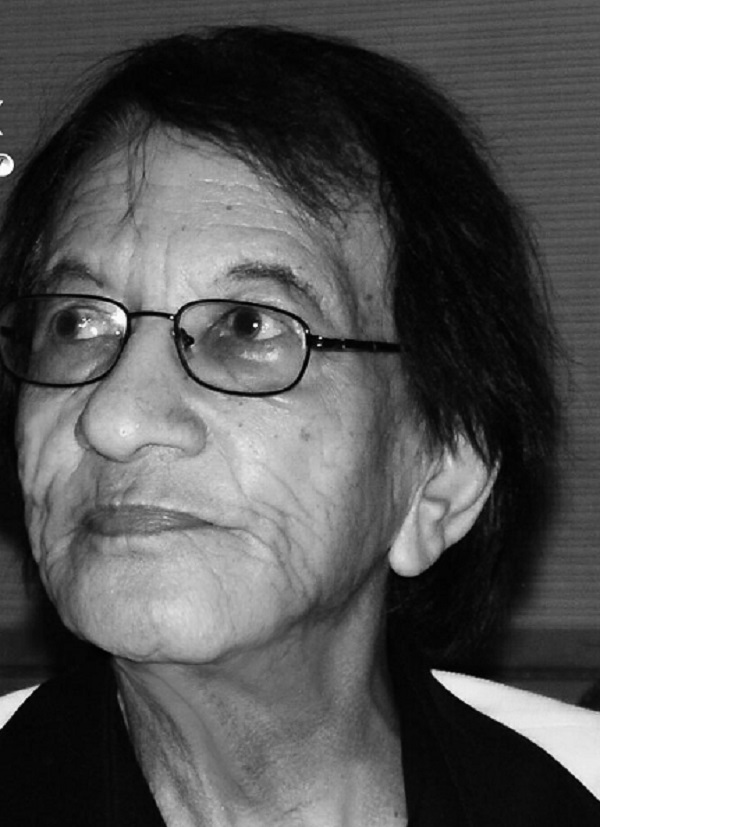
On 29 May 2020, Hindi cinema lost one of its gentlest and most understated voices when lyricist-poet Yogesh Gaur passed away in Mumbai at the age of 77. His death did not generate the kind of national mourning that usually accompanies the passing of celebrated film personalities. There were no grand television retrospectives, no endless debates on prime-time news, and no extravagant public tributes. Yet, for countless lovers of Hindi film music, the news felt deeply personal — as though a soft, familiar voice that had accompanied their loneliest evenings had suddenly fallen silent.
Yogesh belonged to that rare breed of lyricists who never needed verbal ornamentation to move listeners. His poetry did not announce itself loudly. It arrived quietly, almost like an intimate conversation with the self. In an age when film songs increasingly leaned towards spectacle and flamboyance, Yogesh remained devoted to simplicity, emotional truth, and literary grace.
His songs continue to endure because they speak not merely to the ear, but to the inner life of ordinary people.
The Lucknow Boy Who Carried Poetry to Bombay
Born on 19 March 1943 in Lucknow, Yogesh Gaur grew up amid the rich cultural and literary traditions of the city. Lucknow’s atmosphere of Urdu poetry, Hindi literature, mushairas, and kavi sammelans left a lasting impression on the young boy, who began writing poetry early in life. Like many dreamers of his generation, he eventually arrived in Bombay carrying little except hope and notebooks full of verses.
The struggle in Bombay was long and unforgiving. Yogesh spent years writing for obscure films and advertisement projects, surviving on meagre earnings while waiting for recognition. His first break came with the little-known film *Sakhi Robin* in 1962, but success remained elusive.
The turning point arrived nearly a decade later with Hrishikesh Mukherjee’s *Anand* (1971).
Few lyricists in Hindi cinema have announced themselves with such haunting permanence. In one film alone, Yogesh gave Indian cinema two philosophical masterpieces that continue to define existential reflection in popular culture.
“Kahin door jab din dhal jaaye
Saanjh ki dulhan badan churaye…”
(Somewhere, as the day fades away,
the bride of dusk quietly withdraws into herself…)
and
“Zindagi kaisi hai paheli haaye
Kabhi toh hasaaye, kabhi ye rulaaye…”
(What an enigma life is —
sometimes it makes us laugh, sometimes it makes us cry.)
These were not merely songs; they were meditations on loneliness, mortality, hope, and the fragile beauty of existence.
The Poet of the Common Man
Yogesh often acknowledged the legendary Shailendra as his greatest inspiration, and the influence is visible in his writing. Like Shailendra, he possessed the extraordinary ability to transform everyday emotions into timeless poetry. His lyrics never sounded artificially intellectual; they emerged from lived human experience.
Directors such as Hrishikesh Mukherjee and Basu Chatterjee found in Yogesh the ideal lyricist for their middle-class universe of modest dreams, hesitant romances, emotional silences, and urban solitude. Together, they created some of the most memorable songs in Hindi cinema.

~Hasnain Naqvi is a former member of the history faculty at St. Xavier’s College, Mumbai….
The opinions expressed here are solely those of the author.

