
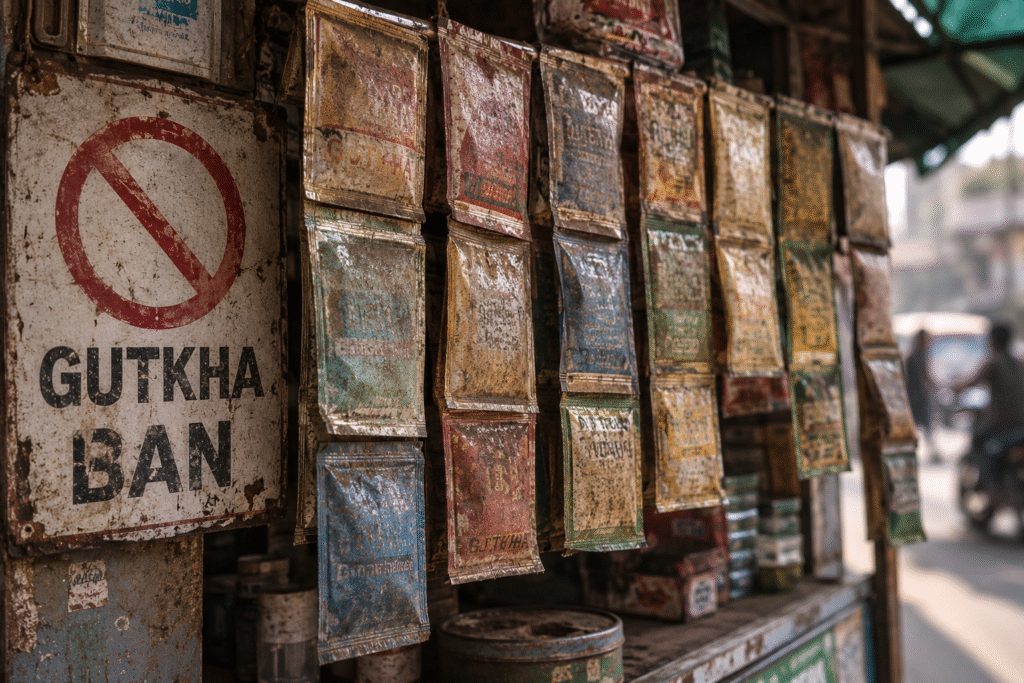
New Delhi : Several Indian states have imposed a ban on the manufacture and sale of gutkha to protect public health, particularly that of young people. The move was aimed at reducing the growing number of tobacco-related diseases and cancers. However, years after these bans were introduced, an important question remains: Is the gutkha ban truly effective, or does it exist only on paper?
In many cities and towns, gutkha continues to be available despite the restrictions. Consumers often find it easily through local vendors, while illegal supply networks ensure that the product reaches the market. This raises concerns about the effectiveness of enforcement and the challenges authorities face in completely curbing its sale.
Health experts have repeatedly warned about the dangers of gutkha consumption. It is strongly linked to oral cancer, gum disease, tooth decay, and several other serious health conditions. India continues to report a high number of oral cancer cases, many of which are associated with the use of smokeless tobacco products such as gutkha.
While banning the product was an important step, experts argue that a ban alone cannot solve the problem. Stronger enforcement, regular inspections, stricter penalties for violators, and sustained public awareness campaigns are equally necessary. Educating people about the health risks of tobacco use is essential to reducing demand.
The intention behind the gutkha ban is commendable, but the continued availability of the product suggests a gap between policy and reality. For the ban to achieve its intended purpose, authorities must ensure that regulations are enforced effectively and consistently. Only then can the fight against tobacco-related diseases make meaningful progress.

Umakant Lakhera is a Senior Journalist and Political Commentator

