

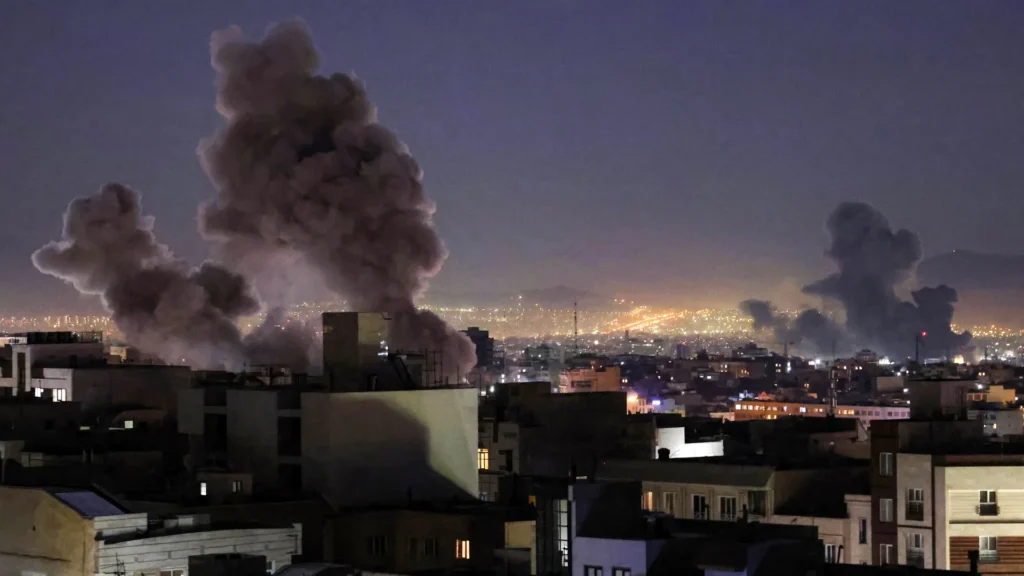
From Revolution to Regional Rupture: The Long Road to the US-Israel Confrontation with Iran
The 100-day mark of the US-Israel war on Iran should force one uncomfortable truth into the open: this conflict did not suddenly happen. It was assembled over decades through regime change, sanctions, covert operations, proxy warfare, and a regional security order built on fear rather than diplomacy.
The roots of the rupture
The decisive break came in 1979, when the Iranian Revolution transformed Iran from a US-aligned monarchy into a revolutionary state that defined itself against Washington and Tel Aviv. From that point onward, Iran was treated not as a difficult regional actor to be engaged, but as a permanent target to be contained.
That decision hardened into policy. Sanctions replaced dialogue, covert pressure replaced trust, and the nuclear issue became the pretext for an ever-deeper escalation. What began as a political rupture matured into a full strategic doctrine: isolate Iran, weaken Iran, and if necessary, strike Iran.
Israel’s doctrine of permanent threat
Israel’s hostility toward Iran is not merely about nuclear technology. It is about a regional balance of power that shifted after 1979, when Iran built influence through armed allies and asymmetric warfare rather than conventional armies. That left Israel facing an adversary it could not deter in the old way.
As a result, Israel increasingly treated Iran’s every advance as an existential threat. This logic normalized sabotage, assassinations, cyberwarfare, and preventive strikes as if they were not exceptional acts but routine statecraft. The effect has been to make war seem like a policy instrument rather than a catastrophe.
The Arab states’ double game
The role of the so-called Islamic Arab countries is central, and deeply revealing. Many Gulf and Arab governments publicly condemn Israeli violence while privately aligning with the US security order that protects them from Iran and preserves their own ruling systems.
This contradiction is not accidental; it is structural. For several regimes, Iran is seen as the greater immediate threat, while Israel is treated as a manageable problem behind diplomatic language and public outrage. That is why normalization, quiet basing arrangements, intelligence sharing, and air-defense coordination have all expanded in the shadow of official rhetoric.
Why the region keeps burning
The deeper tragedy is that the region has been organized around managed instability. Washington wants deterrence without war, Israel wants security without compromise, and several Arab regimes want American protection without political accountability. Iran, meanwhile, has built its strategy around resistance, retaliation, and strategic depth.
Put together, these choices create a system that rewards escalation and punishes restraint. Each side claims to be acting defensively, but the cumulative result is a region where crisis has become normal and peace has become an abstract slogan.
The real lesson of 100 days
After 100 days of war, the lesson is not that the conflict has gone too far. It is that it was designed to go this far. The architecture of confrontation was built long before the first strike, and it has been sustained by governments that prefer strategic convenience to political courage.
If this war is ever to end, the language of inevitability must end first. The region does not suffer from a lack of military power; it suffers from a surplus of rulers who have mistaken escalation for strategy and silence for stability

~Hasnain Naqvi is a former member of the history faculty at St. Xavier’s College, Mumbai….
The opinions expressed here are solely those of the author.