

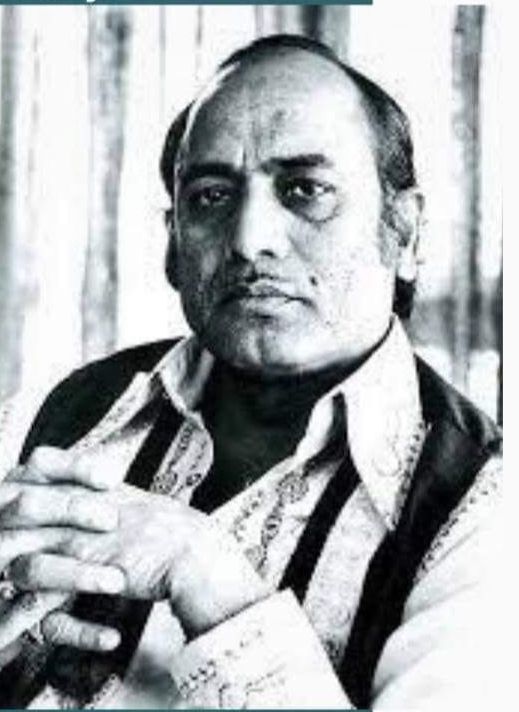
Ab Ke Hum Bichhde Toh Shayad Kabhi Khwaabon Mein Milein”
( “If we part now, perhaps we shall meet in dreams.”)
Fourteen years after his passing, the voice of Mehdi Hassan continues to inhabit those dreams.
On June 13, 2012, South Asia lost one of its greatest musical treasures. Yet, the passage of time has done little to diminish the presence of the man affectionately known as the Shahenshah-e-Ghazal—the Emperor of the Ghazal. If anything, the years have only deepened the aura surrounding a singer whose artistry transcended borders, generations, languages, and politics.
For millions across India, Pakistan, Bangladesh, and the wider diaspora, Mehdi Hassan remains more than a vocalist. He is a memory, an emotion, a companion in moments of solitude, heartbreak, longing, and reflection. His ghazals are not merely songs; they are lived experiences preserved in melody.
A Voice That Seemed Touched by the Divine
Few singers have inspired the kind of reverence reserved for Mehdi Hassan.
His voice possessed a rare combination of technical perfection and emotional vulnerability. It carried the discipline of classical music and the intimacy of a whispered confession. Every note appeared measured, yet every phrase felt spontaneous, as though born in that very moment.
The legendary singer Lata Mangeshkar once famously observed that “God himself speaks through his voice.” It was not a casual compliment. It reflected a widely shared sentiment among musicians who found in Hassan’s singing a level of purity that bordered on the mystical.
Whether rendering the poetry of Faiz Ahmad Faiz, Ahmed Faraz, Qateel Shifai, or Mirza Ghalib, he transformed verse into an emotional landscape where listeners could lose themselves.
His ghazals spoke of love and separation, hope and despair, memory and regret. Yet they never felt trapped within personal sorrow. Instead, they touched something universal.
“Ranjish Hi Sahi, Dil Hi Dukhane Ke Liye Aa”
( “Come, even if only to break my heart once more.”)
In these simple words lay the essence of Mehdi Hassan’s art—the ability to transform pain into beauty.
From Rajasthan to Karachi: A Journey of Resilience
Born on July 18, 1927, in Luna, a village in Rajasthan, Mehdi Hassan inherited a rich musical legacy. He belonged to a family of renowned kalawants who practised the ancient Dhrupad tradition of Hindustani classical music.
His early years were devoted to rigorous training under the guidance of his father and uncle. Long before he became a household name, he was learning the discipline that would later define his artistry.
The upheaval of Partition in 1947 altered the course of his life. His family migrated to Pakistan and, like countless others displaced by history, faced severe economic hardship.
The future emperor of ghazal singing spent years working in bicycle repair shops, driving tractors, and repairing engines to support his family. Yet music never left him. After exhausting days of labour, he would spend his nights immersed in riyaz, refining his voice and deepening his understanding of classical music and Urdu poetry.
Those years of struggle forged the singer the world would eventually celebrate.
The Birth of a Legend
Mehdi Hassan’s breakthrough came through Radio Pakistan in the 1950s. But it was his unforgettable rendition of Faiz Ahmad Faiz’s “Gulon Mein Rang Bhare” that announced the arrival of a phenomenon.
“Gulon Mein Rang Bhare, Baad-e-Nau Bahaar Chale”
( “Let the flowers bloom with colour; let the winds of spring begin to blow.”)
The ghazal became an enduring masterpiece and established Hassan as a singer capable of carrying poetry to unprecedented heights.
What followed was one of the most remarkable careers in South Asian music. Over the decades, he elevated the ghazal from a niche literary form into a widely cherished musical genre. His recordings travelled far beyond the subcontinent, introducing audiences across the world to the elegance of Urdu poetry.
Every performance demonstrated his extraordinary command over classical technique. Yet his greatest achievement lay in making that sophistication accessible. One did not need formal musical training to be moved by Mehdi Hassan. His songs spoke directly to the heart.
A Cultural Bridge Across Borders
In a region often divided by politics, Mehdi Hassan became a symbol of shared cultural heritage.
His admirers included musicians, actors, writers, and ordinary listeners on both sides of the India-Pakistan border. When he visited India in 1978, audiences welcomed him not as a foreign artist but as a beloved member of a common artistic tradition.
His influence on generations of singers remains immeasurable. Ghazal maestros, playback singers, and classical musicians alike have acknowledged him as a guiding force.
One of the most cherished moments in South Asian musical history remains his collaboration with Lata Mangeshkar on “Tera Milna Bahut Achha Lagta Hai.” The duet represented more than a musical achievement; it stood as a reminder that art can succeed where politics often fails.
For listeners across the region, Mehdi Hassan’s music created a space where borders disappeared and only emotion remained.
The Poetry of Longing
No discussion of Mehdi Hassan can be complete without acknowledging his unmatched ability to interpret poetry.
His rendition of Ahmed Faraz’s celebrated ghazal remains one of the finest examples of emotional expression in South Asian music.
*“Ab Ke Hum Bichhde Toh Shayad Kabhi Khwaabon Mein Milein,
Jis Tarah Sookhe Hue Phool Kitabon Mein Milein.”*
(“If we part now, perhaps we shall meet in dreams,
Like dried flowers discovered between the pages of a book.”)
The couplet captures everything that made Hassan extraordinary. He did not merely sing words; he inhabited them. Every pause, every inflection, every lingering note seemed to reveal another layer of meaning.
His interpretations gave poetry a second life.
The Silence After the Song
The final years of Mehdi Hassan’s life were marked by illness. Pulmonary complications and strokes gradually limited his ability to perform and speak.
For admirers accustomed to hearing that majestic voice, the silence was painful.
Yet even as his health declined, his stature only grew. Recordings old and new continued to attract listeners. Young musicians discovered him through digital platforms. Veteran admirers returned to his music with renewed affection.
When he passed away in Karachi at the age of 84, tributes poured in from across the world. Statesmen, artists, scholars, and ordinary listeners mourned not merely the death of a singer, but the loss of an era.
An Eternal Presence
Fourteen years later, Mehdi Hassan remains astonishingly relevant.
In cafés and concert halls, on streaming platforms and radio stations, his voice continues to find new audiences. Young listeners who were not even born during the peak of his career discover him and wonder how a voice recorded decades ago can still feel so immediate and intimate.
Perhaps the answer lies in the timeless emotions he sang about. Love, separation, memory, hope, regret—these remain unchanged even as the world transforms around us.
“Zindagi Mein Toh Sabhi Pyaar Kiya Karte Hain”
(“Everyone loves at some point in life.”)
Mehdi Hassan understood that human emotions are the most enduring language of all. Through that understanding, he achieved something rare: immortality.
The man may have departed, but the voice remains.
And as long as hearts continue to ache, remember, dream, and hope, the melodies of the Shahenshah-e-Ghazal will continue to echo across generations—gentle, timeless, and eternal.

~Hasnain Naqvi is a former member of the history faculty at St. Xavier’s College, Mumbai….
The opinions expressed here are solely those of the author.

