

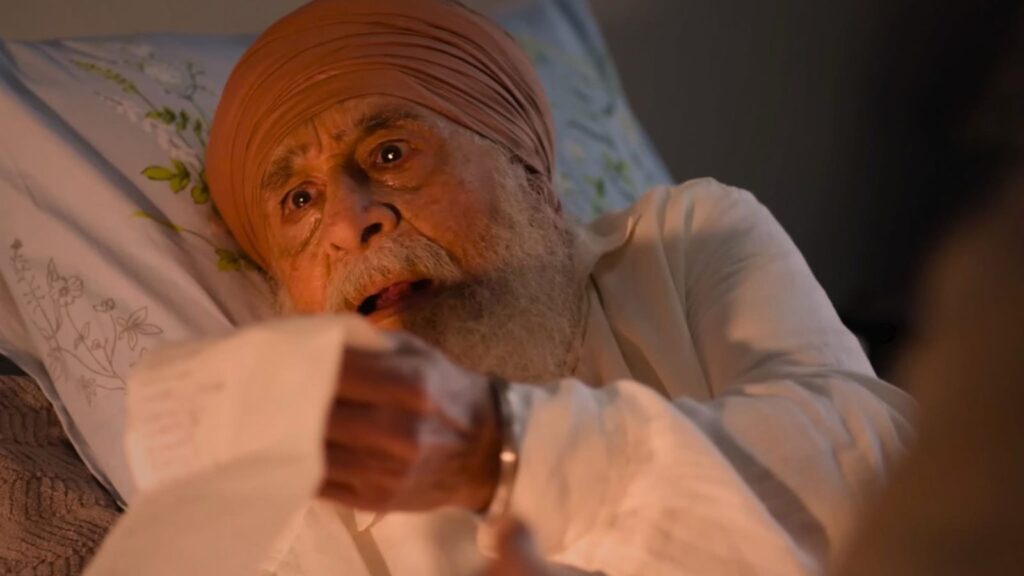
Naseeruddin Shah as 95 – year old Keenu in “Main Vaapas Aaunga”
In the summer of 1947, as British India lurched toward independence, a hastily drawn line by Cyril Radcliffe—a British barrister unfamiliar with the subcontinent—cleaved Punjab and Bengal. Announced on August 17, two days after Independence, this boundary triggered one of history’s largest forced migrations. Estimates of the dead range from several hundred thousand to two million, with 12 to 20 million uprooted amid communal riots, massacres, and desperate flights across new borders.
The Human Cost of a Hasty Divide
Partition was more than a political event; it was a profound human tragedy. Oral histories, preserved in archives like the 1947 Partition Archive, and works such as Urvashi Butalia’s *The Other Side of Silence* and Yasmin Khan’s *The Great Partition*, reveal families torn apart, homes lost forever, and generations carrying unspoken grief. It fractured not just maps but shared cultures, languages, and lives in undivided Punjab. Rehabilitation efforts varied, but the psychological wounds lingered, shaping identities across borders.
Imtiaz Ali’s Main Vaapas Aaunga, released on June 12, 2026, approaches this terrain not as spectacle or propaganda but as an intimate elegy. It marks a mature evolution in Ali’s filmmaking, transforming his signature motif of restless souls in transit into a confrontation with history’s immovable lines.
Memory, Longing, and the Long Shadow of 1947
The story unfolds across generations. At its heart is Keenu, an elderly man older than independent India, portrayed with quiet devastation by Naseeruddin Shah. Suffering from dementia, Keenu awakens one day seemingly oblivious to Partition’s reality. He insists on returning “home” to Sargodha, now across the border in Pakistan. His grandson Nirvair (Diljit Dosanjh) steps in to unravel the family’s buried past.
Flashbacks transport viewers to pre-Partition Punjab, where young Keenu (Vedang Raina) shares a tender romance with Jiya (Sharvari Wagh). Their world of poetry, song, and youthful passion in luminous fields shatters with the violence of 1947. Ali weaves metaphors of celestial distance—Mars, the Moon—to evoke separations wrought by time, trauma, and geography. The narrative flows between a present-day hospital bedside and the fragile idyll of the 1940s, blending nostalgia with sorrow.
Performances That Carry the Weight of History
Naseeruddin Shah delivers a masterclass in restrained anguish, conveying decades of unresolved longing from a hospital bed. Diljit Dosanjh brings grounded warmth and subtle levity as the caregiving grandson. Vedang Raina impresses as the young Keenu, while Sharvari Wagh lends grace to Jiya. Their collective work anchors the film’s emotional depth, making abstract historical pain intimately felt.
Cinematic Craft at Its Finest
A.R. Rahman’s haunting score, paired with Irshad Kamil’s lyrics, perfectly complements the poetic mood. The cinematography captures pre-Partition Punjab’s beauty with golden-hour warmth that gradually yields to shadow, using light and composition to mirror themes of hope and loss. These elements elevate the film beyond conventional drama into a sensory experience best absorbed on the big screen.
Strengths Outweigh the Pacing Challenges
Main Vaapas Aaunga stands apart from earlier Partition cinema—be it the humanism of Garam Hawa and Pinjar, the epic sweep of Gadar, or the intensity of Manto—through its refusal to assign communal blame or fuel jingoism. It frames the events as a shared catastrophe born of colonial haste and political expediency. The closing credits subtly link 1947’s displacements to contemporary global crises, including in Palestine and Gaza, reinforcing its relevance as a universal commentary on borders and dehumanization.
That said, the deliberate pacing, particularly in the first half, may test some viewers’ patience as it methodically builds character foundations. The central romance, though tenderly rendered, occasionally lacks the fiery chemistry needed to fully justify a lifetime of obsession. These are minor reservations against the film’s broader achievements.
A Call to Remember and Heal
In an era of spectacle and ideological retellings, Main Vaapas Aaunga demands repeated viewings not for thrills but for reflection. It invites audiences to sit with discomfort, memory, and the quiet possibility of healing inherited wounds. Imtiaz Ali has crafted his most significant work yet—a cinematic act of return that honours the past without being defined by it.
In Keenu’s fragile quest, viewers glimpse a timeless truth: to love amid history’s shadows is often to remember, and remembering remains the surest path toward a kind of homecoming. This is essential viewing for anyone seeking to understand not just India’s past, but the enduring human cost of division.

~Hasnain Naqvi is a former member of the history faculty at St. Xavier’s College, Mumbai….
The opinions expressed here are solely those of the author.