

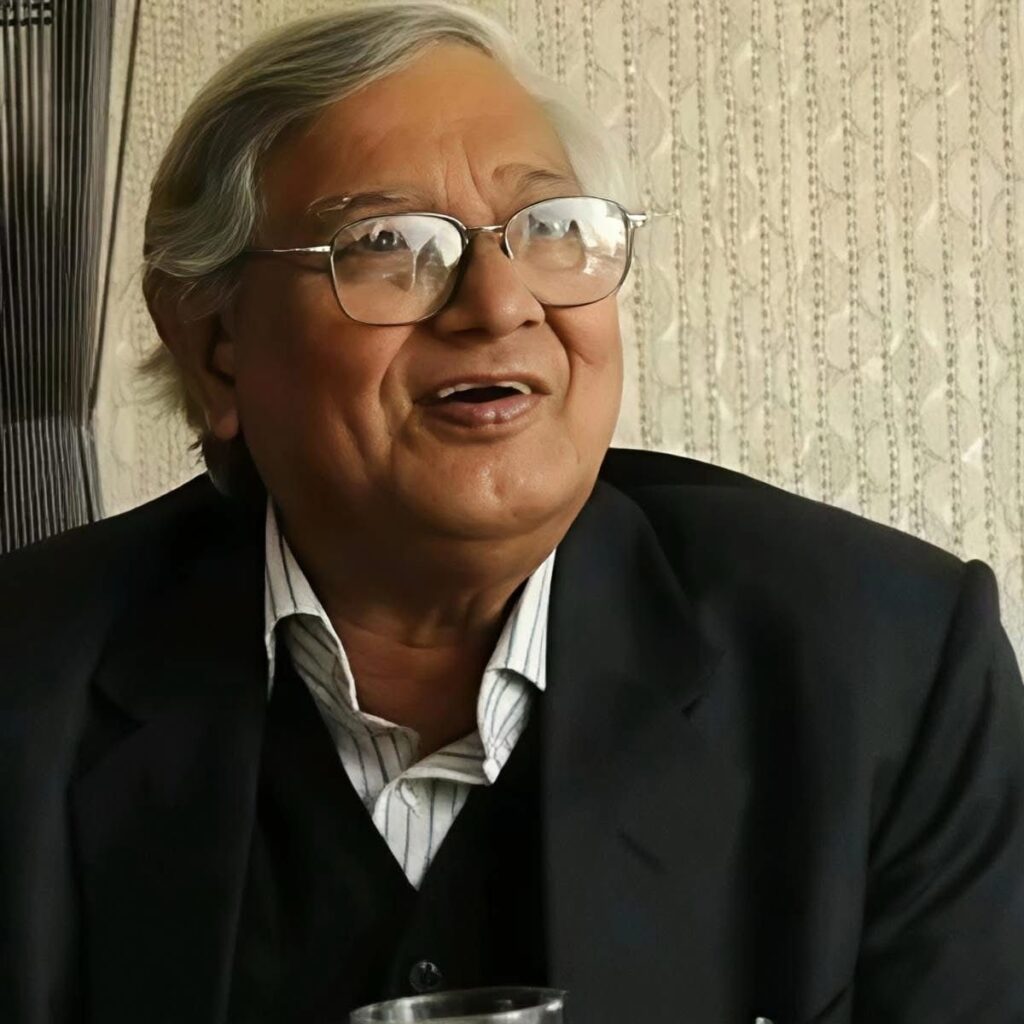
On June 16, 2026, the literary landscape pauses to remember one of its finest architectural minds on what would have been his 90th birth anniversary. Akhlaq Mohammad Khan, known universally by his pen name *Shahryar*, remains a monumental bridge between the classical depth of Urdu modernism (*Jadidiyat*) and the golden, melancholic soul of Indian cinematic music.
Born in 1936 in the historical soil of Aonla, Bareilly, and passing into eternity on February 13, 2012, Shahryar was a man who achieved towering fame entirely on his own terms—refusing to leave the scholarly calm of Aligarh Muslim University (AMU) even when the glittering call of Bollywood knocked fiercely at his door.
The Scholar Who Ran Away to Find His Voice
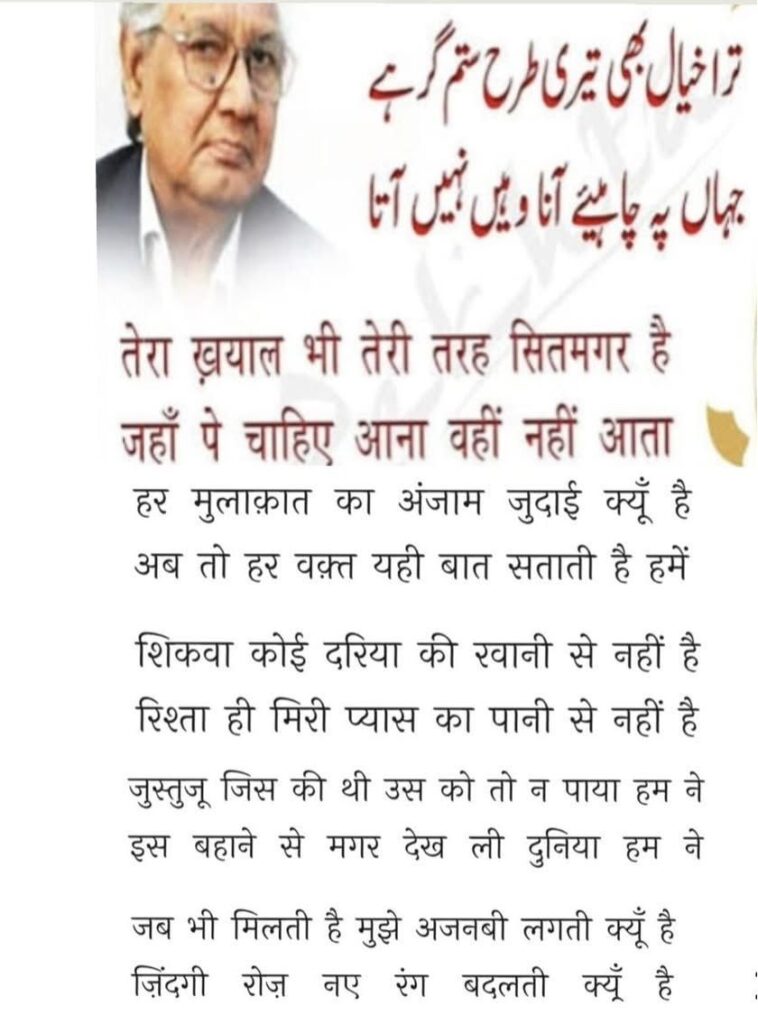
*Ummid se kam chashm-e-kharidar mein aaye / Hum log zara der se bazaar mein aaye*
> (We arrived with fewer expectations in the buyer’s eye / We came to the market a little late)
>
Shahryar’s journey into the pantheon of Urdu literature was born out of defiance. Coming from a traditional Muslim Rajput family, his childhood was defined by a burning desire to become an athlete, while his father, a police officer, was determined to see his son don the uniform. Resisting a predetermined fate, the young Akhlaq ran away from home to carve out his own destiny.
Fate intervened in the form of the legendary critic and poet *Khaleel-Ur-Rehman Azmi*, who recognized the restless creative spark within the young boy and took him under his wing. Under Azmi’s mentorship, Akhlaq’s academic and poetic roots deepened at AMU, where he earned his M.A. in Urdu in 1961, followed by a Ph.D.
Beginning his professional career as a literary assistant at the *Anjuman Tarraqi-e-Urdu*, he later transitioned into academia, joining the Urdu Department at AMU as a lecturer. He eventually rose through the ranks to retire as the Head of the Department in 1996. Along with poet Mughni Tabassum, he founded and co-edited the highly influential literary magazine *Sher-o-Hikmat* out of Hyderabad, anchoring the modernist era that emerged just as the progressive writers’ movement began to recede in the late 1950s and early 1960s.
Bringing Soul Back to the Silver Screen
*Seene mein jalan aankhon mein toofan sa kyun hai / Is shehr mein har shakhs pareshan sa kyun hai*
> (Why is there a burning in the chest, a storm in the eyes? / Why is everyone in this city seemingly so troubled?)
>
In the late 1970s and 1980s, popular Hindi cinema was rapidly losing its poetic lyricism to formulaic commercial tropes. It was Shahryar who infused it with a second life, bringing classical grace and deep psychological interiority back to the silver screen. His foray into cinema was an extension of lifelong camaraderie; he broke his strict academic seclusion only for his close friend from student days, the visionary filmmaker *Muzaffar Ali*.
Their collaboration yielded masterpieces that are permanently etched into the cultural subconscious of the subcontinent. In Muzaffar Ali’s debut feature *Gaman* (1978), Shahryar captured the alienation, pain, and yearning of urban migration with staggering beauty. Then came *Umrao Jaan* (1981)—a cinematic milestone where Shahryar gave an immortal voice to the 19th-century courtesan of Lucknow. Songs like *”Dil cheez kya hai aap meri jaan lijiye”* did not merely serve as musical interludes; they became the emotional and narrative heartbeat of the film.
Despite his staggering cinematic success, Shahryar’s integrity was unshakeable. When the legendary director Yash Chopra offered him a lucrative contract for three more films after *Faasle* (1985), Shahryar famously turned it down. He proudly stated that he had no desire to turn his craft into a “song shop” or commodify his art. He wrote only for directors who truly valued the weight of his words, choosing the quiet solitude of Aligarh over the chaotic commercialism of Bombay.
The Landscape of Dreams and Sensuous Longing
*Gulab jism ka yun hi nahin khila hoga / Hawa ne pehle tujhe phir mujhe chhua hoga*
> (The rose of the body would not have bloomed just like that / The breeze must have touched you first, and then me)
>
Shahryar is frequently celebrated by critics as the premier poet of dreams and twilight. His verses inhabit that liminal space between consciousness and sleep, mapping the terrain of human intimacy and philosophical solitude. His publications—spanning seminal collections including *Ism-e-Azam* (1965), *Satvan Dar* (1969), *Hijr Ke Mausam* (1978), and *Khwab Ka Dar Band Hai* (1985)—solidified his status as an avant-garde voice.
His writing made bold, refreshing departures from standard romantic tropes to explore the deep, sophisticated sensuousness of love, as evidenced in his ethereal lyrics for Muzaffar Ali’s unreleased film *Anjuman* (1986):
> *Teri saansen mujh tak aate baadal ho jaayen / Mere jism ke saare ilaaqe jal-thal ho jaayen*
> (May your breaths turn into clouds by the time they reach me / May all the territories of my body be drenched overflowing)
>
This extraordinary command over language earned him India’s highest literary honors. His collection *Khwab Ka Dar Band Hai* won the prestigious *Sahitya Akademi Award* in 1987. In 2008, he was conferred the *Jnanpith Award*, becoming only the fourth Urdu poet in history to receive the honour, following in the illustrious footsteps of Firaq Gorakhpuri, Ali Sardar Jafri, and Qurratulain Hyder.
Behind his brilliance also stood an intellectual partnership; his wife, *Prof. Najma Mahmood*, was an accomplished academic who taught English at AMU and was deeply well-versed in both English and Urdu literature, providing a shared environment of profound literary devotion.
A Muted Yet Defiant Conscience
*Tumhare shahr mein kuchh bhi huwa nahin hai kya / Ke tumne cheekhon ko sachmuch suna nahin hai kya*
> (Has nothing happened in this city of yours / Have you really not heard the screams?)
>
Though Shahryar’s demeanor was quiet, polite, and deeply academic, his poetry possessed a fierce, muted power that confronted authority and social decay. He never shied away from questioning the administrative apathy of the state or the silence of citizens in the face of injustice. He wrote with the conviction that poetry must mirror the internal crises of its time, refusing to let the ruler of the city look away from the suffering of the common man.
As the world marks his 90th birth anniversary in 2026, Shahryar’s voice feels more urgent than ever. In an age increasingly fractured by noise, his legacy teaches us the value of artistic restraint, uncompromised integrity, and the timeless beauty of a well-crafted line.
*Siyah raat nahi leti naam dhalne ka / Yahi to waqt hai suraj tire nikalne ka*
> (The dark night shows no sign of fading / This is the very time for your sun to rise)
>
The sun of Shahryar’s poetry has never truly set. It continues to rise in the hearts of cinephiles, academics, and lovers of literature worldwide, shining down as an eternal beacon of literary grace and uncompromising artistic truth.

~Hasnain Naqvi is a former member of the history faculty at St. Xavier’s College, Mumbai….
The opinions expressed here are solely those of the author.