

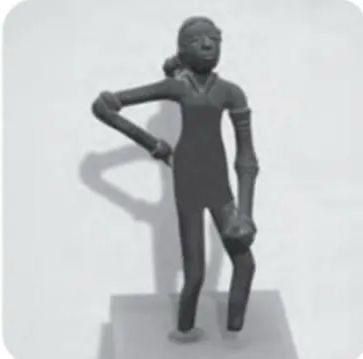
In a notable reversal, the National Council of Educational Research and Training (NCERT) has restored the original image of the iconic 4,500-year-old “Dancing Girl” bronze from Mohenjo-daro in its Class 9 arts textbook *Madhurima*. The figurine’s bare torso, digitally shaded over in the initial edition, will now appear unaltered in digital versions immediately and in all future print runs. NCERT Director Dinesh Prasad Saklani confirmed the decision amid strong criticism from historians, archaeologists, and educators.
A Needless and Ahistorical Alteration
The decision to cover the statue—unchanged in NCERT textbooks for over 25 years—sparked justified outrage. Critics rightly argued that tampering with a historical artifact undermines educational integrity and authenticity. The move was not only unnecessary but foolish. Applying the same logic of “appropriateness” would place celebrated temple sculptures at *Khajuraho* and *Konark*, *Gommateshwara* statue of Lord Bahubali at Shravanabelagola in Karnataka, along
with Vatsyayana’s *Kamasutra*, squarely in the crosshairs of future censorship. India’s cultural education cannot afford such selective prudery.
The Dancing Girl: A Masterpiece of Harappan Artistry
Discovered in 1926 by archaeologist Ernest Mackay at Mohenjo-daro (in present-day Pakistan), the 10.5 cm tall bronze figurine dates to around 2500 BCE during the mature phase of the Indus Valley Civilization. Housed at the National Museum in New Delhi, it exemplifies the lost-wax casting technique, showcasing the Harappans’ advanced metallurgical expertise.
The statuette’s lively pose—right hand on hip, left leg slightly forward—conveys confidence and naturalism rare for the era. Adorned with 24–25 bangles on one arm, four on the other, and a cowrie shell necklace, she offers valuable insights into ancient fashion, adornment, and possibly dance traditions. Unlike rigid depictions of rulers or priests, her expressive form hints at the active, prominent roles women may have held in Indus society.
Why This Matters Archaeologically and Educationally
British archaeologist Mortimer Wheeler famously highlighted her “insolent look” and Balochi-style features, recognizing her as a pinnacle of ancient craftsmanship. The Dancing Girl challenges simplistic views of the past and enriches understanding of a sophisticated civilization that flourished millennia ago. Altering her image deprives students of an authentic engagement with history’s nuances rather than shielding them from perceived impropriety.
This controversy echoes a prior incident: a clothed replica of the statue served as mascot for the 2023 International Museum Expo, drawing similar criticism. Such repeated attempts to impose modern sensitivities risk distorting India’s pluralistic heritage.
Broader Threats to India’s Cultural Legacy
India’s artistic traditions have long embraced the human form without shame. The erotic maithuna sculptures at *Khajuraho* (10th–11th century) and *Konark Sun Temple* (13th century) form integral parts of their architectural and philosophical vision, reflecting tantric ideas where the sensual and spiritual intertwine. These are not isolated elements but expressions of a holistic worldview integrating kama (desire) with dharma.
Likewise, the *Kamasutra* remains a profound ancient text on human relationships, far beyond superficial interpretations. Sanitizing the Dancing Girl sets a dangerous precedent that could extend to these treasures, transforming rich, multifaceted history into a sterile narrative stripped of its vitality.
Restoring Fidelity in Education
NCERT’s swift correction is a positive step, demonstrating responsiveness to expert feedback and public discourse. Yet the episode highlights the urgent need for vigilance. Textbooks must prioritize historical accuracy and critical thinking over transient discomfort. India’s civilizational strength lies in its fearless embrace of life’s full spectrum—from introspection to celebration, restraint to exuberance.
The Dancing Girl’s defiant gaze endures as a powerful reminder. By presenting her unshadowed, educators honour not only archaeological truth but also the confidence and sophistication of our ancient forebears. Anything less diminishes both students and the extraordinary legacy they inherit.

~Hasnain Naqvi is a former member of the history faculty at St. Xavier’s College, Mumbai….
The opinions expressed here are solely those of the author.

