

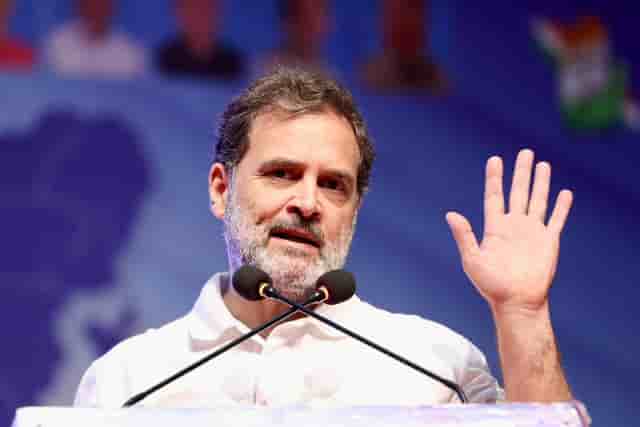
As Rahul Gandhi turns 56 on June 19, 2026, India’s political landscape bears the imprint of a leader who has evolved from a figure often underestimated to a combative Leader of the Opposition (LoP) in the Lok Sabha. Two years into the role, Gandhi has transformed the opposition benches into a platform of unyielding accountability, relentlessly challenging the Narendra Modi government on issues ranging from institutional integrity to the aspirations of the marginalized. His journey reflects not dynastic privilege alone, but a hard-won maturation forged through mass connect, parliamentary grit, and a commitment to constitutional values.
From Yatra to Parliament: Rebuilding Credibility
Gandhi’s resurgence gained momentum with the Bharat Jodo Yatra (2022-2023) and Bharat Jodo Nyay Yatra (2024), epic journeys that emphasized unity, justice, and empathy. These marches traversed thousands of kilometers, engaging directly with farmers in distress, unemployed youth, women, and Dalit-Adivasi communities. Analysts and reports credit them with revitalizing Congress’s grassroots presence, contributing to the party’s jump to 99 seats in the 2024 Lok Sabha elections—securing Official Opposition status after a decade. Constituencies along the yatra routes showed notable gains in vote share and seats, particularly in the Northeast, Uttar Pradesh, and Maharashtra, bolstering INDIA bloc alliances.
This groundwork enabled Gandhi’s assertive role as LoP. No longer the hesitant figure of earlier years, he has delivered sharp parliamentary interventions, forcing debates on governance failures and positioning himself as a shadow prime minister attuned to the voiceless.
Exposing Systemic Flaws: Education Scams and Youth Distress
One of Gandhi’s most visible campaigns has centered on India’s beleaguered youth. He has been vocal on the NEET-UG paper leak scandals, meeting affected students and demanding accountability, including the resignation of the Education Minister amid reports of irregularities, coaching mafia influence, and student suicides in hubs like Kota. Similarly, he highlighted the CBSE On-Screen Marking (OSM) fiasco, where technical glitches, mismatched answer sheets, and evaluation discrepancies left lakhs of Class 12 students in limbo. Gandhi’s press conferences and parliamentary questions underscored a pattern: repeated exam controversies—NEET, CBSE, SSC, CUET—affecting over a crore of aspirants, pointing to deeper failures in institutional oversight and privatization of education.
These efforts resonate as a defence of merit and opportunity for the poor and marginalized, who bear the brunt of such systemic breakdowns. By amplifying student voices, Gandhi has framed education not as a privilege but a right imperiled by governance lapses.
Championing Social Justice: The Caste Census
Imperative
Gandhi’s persistent advocacy for a nationwide caste census stands as a cornerstone of his politics. He argues it is essential to reveal entrenched inequalities and inform equitable policy-making, countering claims that it divides society. His pressure contributed to governmental movement on the issue, which he welcomed as a step toward deep social reform. This stance aligns with his broader critique of crony capitalism, where he has repeatedly highlighted the concentration of economic power among a few conglomerates at the expense of small businesses, farmers, and OBC-Dalit-Adivasi representation in corporate and institutional hierarchies.
In Parliament and public forums, Gandhi has linked these themes to demands for a legal guarantee on Minimum Support Price (MSP) for farmers and scrapping schemes like Agnipath, which he says exacerbate youth unemployment and insecurity.
Holding Power Accountable: Corruption, Economy, and Foreign Policy
As LoP, Gandhi has aggressively targeted alleged corruption and cronyism, questioning the government’s nexus with select business houses and privatization drives that, in his view, undermine public assets and sovereignty. His interventions on economic policy critique jobless growth, inflation’s bite on the poor, and policies favoring the affluent few.
On foreign policy and trade, Gandhi has been unflinching. He slammed the India-US interim trade deal, alleging it represented a “surrender” under pressure—compromising agricultural interests, data sovereignty, and energy security while favoring U.S. terms on tariffs and market access. He warned it could devastate Indian farmers and small industries, echoing broader concerns about the Modi government’s handling of bilateral negotiations.
These critiques extend to electoral integrity. Through press conferences and floor speeches, Gandhi has spotlighted alleged malpractices, demanding reforms to safeguard democratic processes.
A Fearless Voice in Polarized Times
Gandhi’s style—direct, empathetic, and unafraid of confrontation—has redefined opposition politics. International engagements, including his U.S. visits, have amplified his vision of an inclusive India rooted in constitutionalism, contrasting it with divisive majoritarianism. Supporters see him as a “one-man army” walking alongside the marginalized, whether consoling families in Manipur or rallying in student hubs.
Challenges persist: coalition management, regional strongholds of the BJP, and legal distractions. Yet, Gandhi’s record as LoP—16 notable speeches in his first year, sustained pressure on key issues, and coalition-building—signals resilience.
At 56, Rahul Gandhi embodies a politics of perseverance and moral clarity. In an era of deepening inequalities and institutional strains, his fearless advocacy offers a counter-narrative centered on justice, opportunity, and unity. As India navigates its future, this coming-of-age leader continues to remind the nation that opposition is not obstruction, but the vigilant guard of its democratic promise.
Happy Birthday, and may his resolve strengthen the fight for a more equitable Bharat.

~Hasnain Naqvi is a former member of the history faculty at St. Xavier’s College, Mumbai….
The opinions expressed here are solely those of the author.