

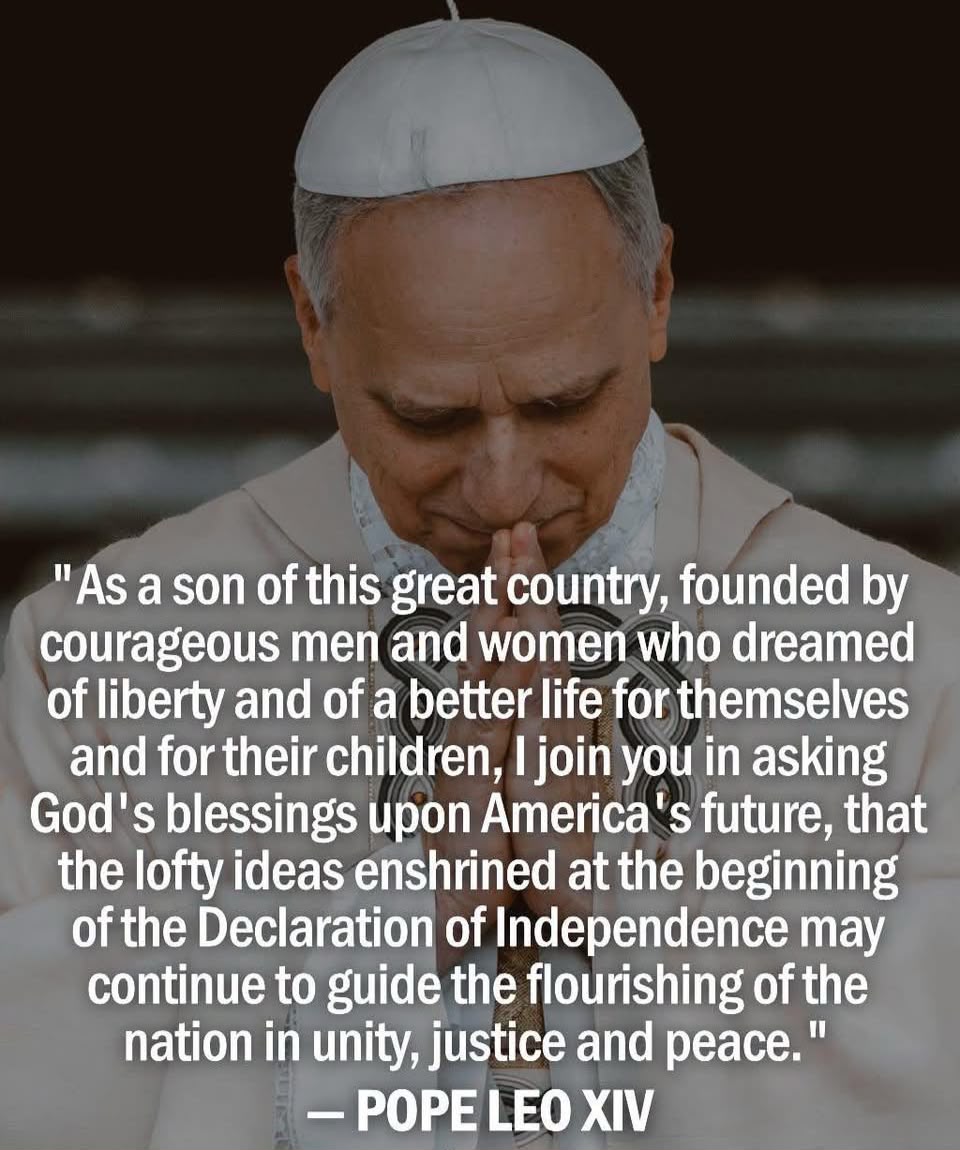
As the United States marks the 250th anniversary of its independence, Pope Leo XIV—the first American to lead the Catholic Church—has delivered a poignant reminder of the nation’s foundational ideals. Accepting the Liberty Medal at a ceremony hosted by the National Constitution Center in Philadelphia, the pontiff spoke virtually from the Vatican, urging his fellow countrymen to recommit to principles of human dignity, inclusive freedom, and peace both at home and abroad.
A Historic Honour Rooted in Conscience
The Liberty Medal, awarded to figures such as John Lewis, Ruth Bader Ginsburg, and Malala Yousafzai, recognizes lifelong advocacy for liberty and freedom of conscience. For Pope Leo, this distinction carries special resonance. His address, delivered while wearing the medal, transcended a simple acceptance speech. It became a meditation on the enduring American experiment, delivered at a moment of national reflection.
At the heart of his message was a foundational assertion: human dignity precedes the establishment of any state. This theological and moral claim underscores a vital truth—that no government policy or executive action can erase the inherent worth of individuals. In praising the generations of immigrants who helped forge America as a beacon of freedom, the Pope invoked the nation’s history as one of welcome and renewal, not exclusion.
E Pluribus Unum: Unity in Diversity
Pope Leo XIV eloquently reclaimed the American motto E Pluribus Unum—“Out of Many, One.” He blessed the country’s rich diversity as a source of strength, even as debates over immigration and national identity intensify. His words served as a gentle yet firm call for Americans to look beyond divisions and rediscover the unifying spirit that has defined the republic since its founding.
The address also emphasized peace as a non-negotiable imperative. Referencing ongoing global conflicts, the Pope reiterated that no war receives divine sanction, positioning moral clarity and reconciliation as essential to both domestic harmony and international relations. This stance echoes the Church’s long tradition of advocating for the vulnerable, including migrants seeking safer shores.
A Counterpoint of Values
On July 4th, while much of America celebrates with parades and rallies, Pope Leo plans to visit the island of Lampedusa, a key entry point for migrants to Europe. There, he will lay flowers at the graves of those who perished in their search for a better life. This deliberate act of remembrance stands as a powerful counterpoint to policies centred on restriction and nativism, reinforcing his message to compatriots: true patriotism honours the dignity of all, especially the stranger at the gate.
The Pope’s decision not to name specific political figures lent his remarks even greater weight. The critique was implicit but unmistakable, landing with precision on issues of deportation, border policies, and the human cost of conflict. In doing so, he invited reflection rather than confrontation—urging Americans to measure current choices against their highest aspirations.
Recommitting to the Founding Promise
Pope Leo XIV’s acceptance of the Liberty Medal arrives at a symbolic crossroads. The 250th anniversary offers an opportunity not merely for commemoration, but for renewal. His message to his countrymen is clear: the genius of the American founding lies in its commitment to liberty for all, grounded in shared dignity and mutual respect. As the nation looks ahead, heeding this call could help bridge deepening divides and restore faith in the “more perfect union” envisioned by the Founders.
In a polarized age, an American Pope speaking from the Vatican to the land of his birth provides a rare voice of moral authority. Whether one agrees with every policy implication, his emphasis on unity, dignity, and peace deserves serious consideration. America’s future strength may well depend on how faithfully it answers this summons to its better angels.

~Hasnain Naqvi is a former member of the history faculty at St. Xavier’s College, Mumbai….
The opinions expressed here are solely those of the author.